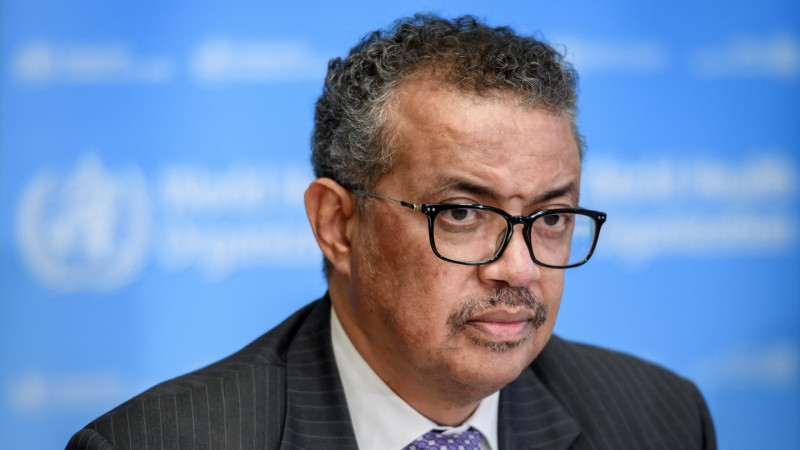
GENEVA – The World Health Organisation said yesterday it hoped that Covid-19 would no longer be a public health emergency in 2023, as it urged China to share information that could pinpoint how the pandemic started.
As the third anniversary of the original outbreak rolls around, WHO said the virus was here to stay but would need managing alongside other respiratory illnesses.
WHO chief Tedros Adhanom Ghebreyesus said the weekly Covid-19 death toll was now around a fifth of what it was a year ago – but was still far too high.
“Last week, less than 10,000 people lost their lives. That’s still 10,000 too many and there is still a lot that all countries can do to save lives,” he told a press conference.
“But we have come a long way. We are hopeful that at some point next year, we will be able to say that Covid-19 is no longer a global health emergency.”
WHO’s emergency committee on Covid-19, which advises Tedros on whether the virus constitutes a public health emergency of international concern (PHEIC), will discuss the criteria for declaring an end to the emergency phase when they next meet in January.
Maria Van Kerkhove, WHO’s Covid-19 technical lead, said the committee would look at the epidemiology, variants like Omicron, and the impact of the virus.
While waves of infection are still expected, the pandemic “is not what it was in the beginning”, with cases resulting in fewer hospitalisations and deaths, she said.
“These deaths are largely happening among people who are not vaccinated” or have not received their full course of jabs, Van Kerkhove said.
While WHO says more than 13 billion vaccine doses have been administered, around 30% of the world has not received a single dose, she added.
Nearly 650 million confirmed Covid-19 cases and more than 6.6 million deaths have been reported to WHO, though the UN health agency acknowledges this will be a vast undercount.
Tedros said that as the world looks to end the Covid-19 emergency, which has upended economies and left millions suffering ongoing symptoms, it needs to understand how the pandemic began.
The first cases of Covid-19 were recorded in the Chinese city of Wuhan in December 2019.
“We continue to call on China to share the data and conduct the studies that we have requested, to better understand the origins of this virus,” Tedros said.
“All hypotheses remain on the table," he said, adding that this includes the theory that the virus escaped from Wuhan’s virology laboratories.
WHO emergencies chief Michael Ryan said the organisation could not simply stop engaging with Beijing “because you’re not cooperating with us on the origins”, as a huge chunk of the world’s population live in China.
Tedros said the virus had been around so long, it was almost part of the family.
“This virus will not go away. It’s here to stay and all countries will need to learn to manage it alongside other respiratory illnesses,” he said.
WHO’s vaccines chief Kate O'Brien said that the current crop of Covid-19 jabs do not prevent people from catching the virus to the level that had been hoped for.
“We would love to have vaccines that are more effective against infection and transmission and have greater duration of protection,” O'Brien said, calling for more ongoing investment in research and development.
On Mpox – formerly known as monkeypox – Tedros said the global outbreak this year had taken the world by surprise.
But like Covid-19, the emergency phase should be over within 12 months, he said.
More than 82,000 cases have been reported from 110 countries, although the mortality rate has remained low, with 65 deaths.
“Thankfully, the number of weekly reported cases has declined more than 90% since I declared a PHEIC in July,” said Tedros.
“If the current trend continues, we’re hopeful that next year we’ll also be able to declare an end to this emergency.” – AFP, December 15, 2022