KOLKATA – Mafatlal, 65, a Rohingya refugee, told researchers he did not initially allow his son to “risk his life” by leaving the relative safety of their refugee camp to cross the Bay of Bengal in the northern Indian Ocean. Death is likelier than ever for South Asian migrants who travel across raging seas in dire uncertainty – yet the number who try to migrate has remained consistent, particularly for the Rohingya.
“He crossed the sea over to Malaysia and is working in the fishing market there”, Mafatlal said.
“Neither I nor my wife have any hope left for us to go back (to Myanmar), but it gives us some hope to see that (our) son is at least able to work.”
Many others aren’t as lucky. In January 2022, seven Bangladeshi nationals died of hypothermia while trying to reach Italy in a boat with 273 other migrants from Bangladesh and Egypt. With three people aboard already dead, the boat was intercepted at the Italian island of Lampedusa. Another four passengers later died because of the extreme cold.
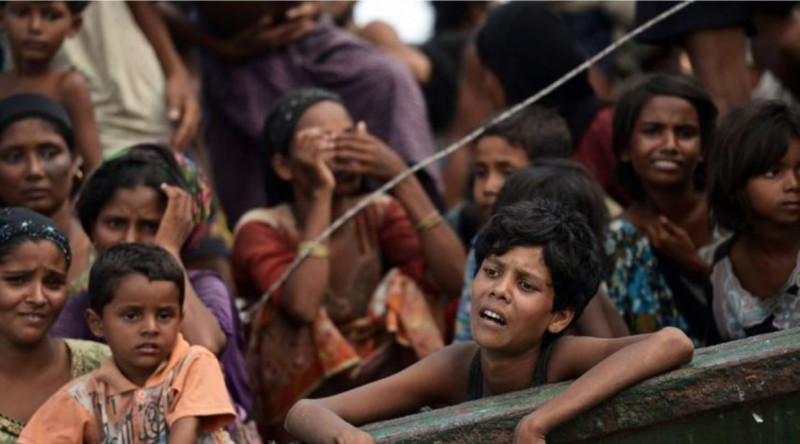
The Rohingya people are an ethnic minority group scattered across borders. They have fled persecution in Myanmar and have migrated as economic refugees escaping camps in Bangladesh. Their statelessness has left them vulnerable to trafficking to Southeast Asia, West Asia and Australia, landing them in border detention camps or turning them into bonded labourers.
Much of the world learned about the Rohingya boat crisis in 2015 when at least 5000 people in distress were denied asylum or life-saving amenities. But 2020 was worse still: it was the deadliest year for refugees travelling across the Bay of Bengal, according to the United Nations High Commissioner for Refugees (UNHCR). The Rohingya have few countries to negotiate with as they seek a place to settle, and their forced mobility has sent them on perilous journeys with no destination.
These journeys often begin when they are ferried into small boats such as fishing trawlers, and from there to large ships where they are grouped with people from other small boats. The larger ship then carries them to their destination – usually Malaysia or other parts of Southeast Asia – across the Bay of Bengal, through the Andaman Sea and along the Malacca Strait. It is as if the sea holds the promise of a sacrosanct destination just on the other side – a “land of gold”.
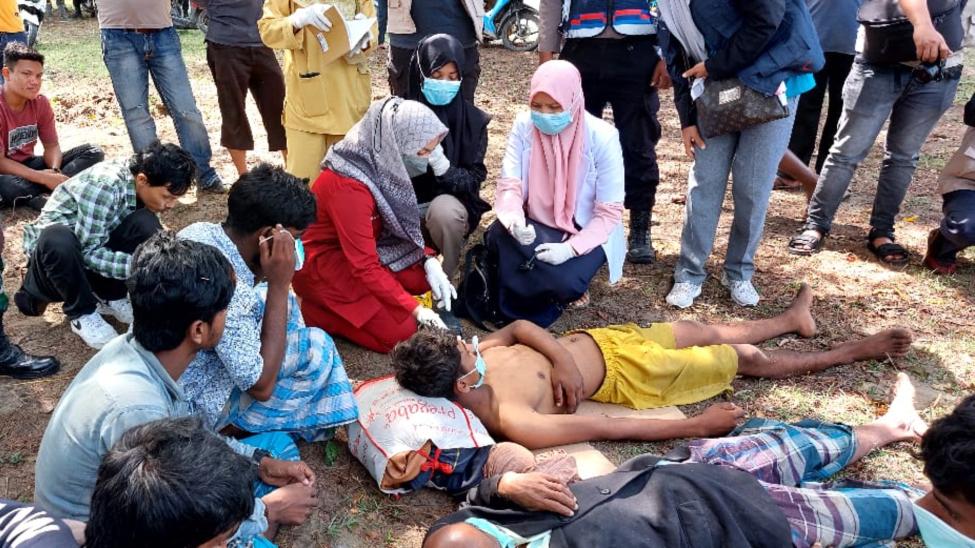
The sea provides opportunities for the movements of migrants and refugees, but also nomads, fishermen, smugglers and pirates. Maritime journeys have always been more vulnerable than their terrestrial counterparts – they can be tracked more easily, they can be identified as pirates, or they can simply drown. People taking to the sea to seek asylum, colloquially known as “boat people”, have historically been perceived as a threat. There are countless incidents of destination countries pushing back vessels and refusing shelter to those aboard.
Bangladesh is one of the world’s highest-ranking countries in terms of sending workers overseas, and the earnings they send home are one of the country’s major sources of capital worth around US$1.7 billion (RM7.5 billion) per year.
Many other factors produce these migration patterns, including easy access to the sea, the economic prosperity of some Southeast Asian countries, success stories of camp-dwellers and Malaysia’s initial acceptance of migrant workers in its rubber plantations.
India used to be a preferred destination for Rohingya because of its land border with Bangladesh, but New Delhi’s recent clampdowns and deportations have triggered fear and contributed to an increase in sea migration.
The bay is of paramount importance in international politics. The sea plays a crucial role in boosting interconnectivity and mobility in Asia, bringing South and Southeast Asia together through culture and trade. The entire region has grown economically, resulting in a massive flow of labour and capital, including illegal migration. But the pandemic has made the situation far more complicated: border restrictions have left many stranded at sea for days before they are rescued – or their boat capsizes.
“There is no easy solution to the irregular maritime movements of refugees and migrants”, according to the UNHCR. Deterring the movements of people is “ineffective” and would violate human rights, it says, and saving the lives of those stranded at sea should instead be the top priority.
Illegal migration and statelessness are not likely to be solved by arresting traffickers. More effective cooperation between nations and humanitarian groups, as well as advocacy to highlight better policies to address South and Southeast Asian migration issues, will do more to change the situation.
This is particularly crucial as South Asian countries have housed a disproportionately large number of refugees since the partition of the subcontinent in 1947.
As 2022 sees case after case of boats capsizing in the Bay of Bengal, nations should ensure proper disembarkation and rescue operations. These are the key to protecting refugees and stateless people from discrimination, persecution, deprivation – and death. Statelessness is not a legal problem but a humanitarian crisis. – The Vibes, January 3, 2023
Sucharita Sengupta is a PhD candidate in the Anthropology and Sociology Department at the Graduate Institute, Geneva (IHEID), and a member of the Calcutta Research Group, India. Her research focuses on the survival and resilience of “stateless” Rohingya in the camps of Bangladesh. She received funding from the Calcutta Research Group for her 2015 fieldwork and received an ongoing scholarship from IHEID.
Published under Creative Commons and in partnership with 360info.org





.jpeg)