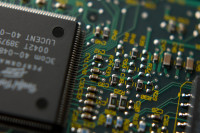
US semiconductor giant Intel Corp has denied reports that it plans to stop its 3D packaging and testing facility expansion in Penang amid financial challenges as the tech industry shifts towards AI servers and PC sales slow down.
A company spokesman confirmed there were no changes to Intel’s plans to expand its state-of-the-art facility in Penang, although there has been speculation that the multinational corporation may need to adjust its operations to cut costs.
“Malaysia will remain an important market as we build on our long and proud history here,” the spokesman said.
Since Intel disclosed its financial struggles last year, rumours have circulated about potential downsizing in Malaysia as the company shifts its focus to meet market demands in AI and other growth areas.
Earlier reports suggested Intel had partially paused its Penang expansion, which is part of a US$7 (RM30.) billion investment into Malaysia, first announced in 2021.
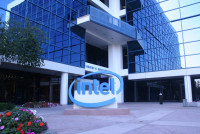
Intel, a pioneer in electronic investments in Penang since 1972, operates one of its largest plants outside the United States in Penang and Kedah, employing around 14,000 workers.
There have been reports that Intel plans to cut jobs, potentially affecting up to 15% of its 131,000 employees globally. There are signs Intel could introduce early retirement and voluntary separation schemes to reduce its workforce.
The US$7 billion investment includes expanding operations in Kulim, bringing Intel’s total investment in Malaysia to US$14 billion by 2032.
In its fiscal second-quarter report, Intel recorded losses of over US$1.6 billion, compared to a profit of US$1.48 billion in the same period last year.
Tech analysts suggest Intel must upgrade its processes to produce chips that meet the rising demand for AI services. The decline in PC sales, as users increasingly favour smartphones, tablets, and laptops, has further pressured Intel to adapt.
While the shift to remote working and studying during the pandemic briefly bolstered PC sales, the trend reversed as lockdowns were lifted.
The tech industry continues to evolve, and Intel, having fallen into a stagnant phase, is now striving to catch up with companies such as Nvidia Corp, the world’s largest firm by market capitalisation. – September 6, 2024.



.jpg)





_director_Datuk_M._Kumar.jpg)