THE MCA Economic and SMEs Affairs Committee today said reinstating the Goods and Services Tax (GST) was the most direct and structured solution to boost fiscal revenue.
Concerning the upcoming budget, it said over 160 countries worldwide have implemented GST/VAT, stabilising their fiscal foundations.
"For Malaysia, the GST’s return should start at a rate below 4 per cent, allowing the public time to adjust. This could reduce the national deficit by 3 per cent to 5 per cent, revitalise the stock market, and drive long-term growth.
"Many businesses support a lower GST rate and propose a 6-to-12-month preparation period, along with a streamlined GST refund system from the government," said Datuk Ir Lawrence Low, who is the committee chairman and an MCA vice president.
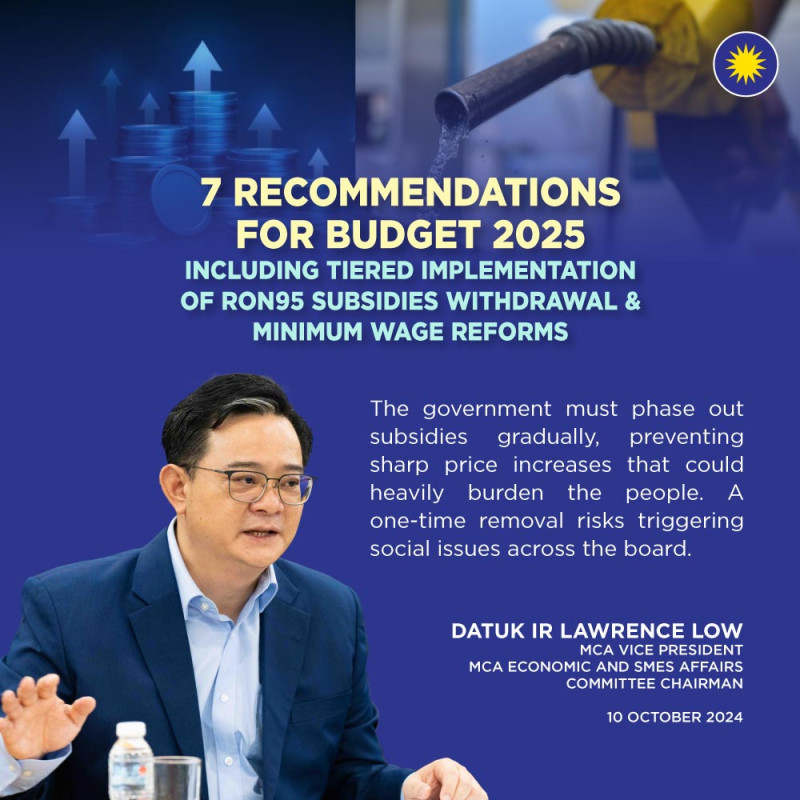
He also said the anticipated changes to the RON95 petrol subsidy, a key concern affecting everyday Malaysians, must be handled carefully.
"The government must phase out subsidies gradually, preventing sharp price increases that could heavily burden the people. A one-time removal risks triggering social issues across the board," he said.
As for the minimum wage, currently set at RM1,500, he said the committee recommended a phased approach to any increases to reduce the strain on small and medium-sized enterprises (SMEs).
Tailoring the minimum wage based on state or business size may also help balance business viability and employee welfare, especially in slower economic regions, he said.

"We also emphasise the concerns of SMEs, which have long encountered policy uncertainties. Frequent policy changes heighten operational costs and undermine business confidence.
"We urge the government to improve the business environment through tax reductions, incentives, simplified loan and tax processes, and better access to low-interest loans and financing," he said.
Attracting foreign investment is important, but we must also protect local businesses' competitiveness, he added.
Low said the government should ensure that foreign companies create local jobs, transfer technology, and prevent market monopolisation.
"Expanding exports through foreign investments would also bring long-term benefits," he said.
He said the committee also strongly opposed the introduction of the proposed inheritance tax which could lead to premature asset transfers to evade taxes, potentially causing societal problems, such as elderly abandonment.
"Additionally, wealthy individuals may transfer assets abroad, negatively impacting the economy. We believe this tax would be unfair to homebuyers, particularly those investing in real estate for their children," he added. - October 10, 2024