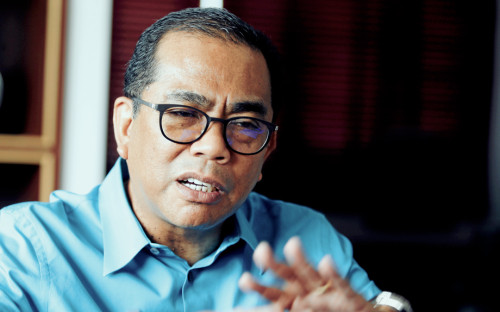
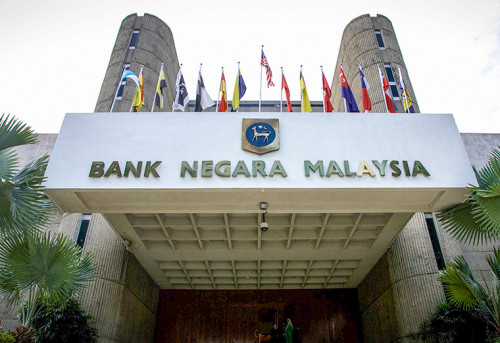
INTRA-ASEAN investment opportunities remain largely underutilized, and substantial efforts are still required to achieve regional regulatory alignment, according to Bank Negara Malaysia (BNM) Governor Datuk Seri Abdul Rasheed Abdul Ghaffour.
Speaking at the 2025 ASEAN Banking and Finance Summit today, Abdul Rasheed highlighted BNM’s vision for the financial sector to play a central role in driving the next phase of economic integration under the ASEAN Economic Community 2045.
He noted that achieving this vision would require strategic collaboration across three key drivers: funding, technology, and talent.
“Let’s begin with funding, which is essential for ASEAN’s economic growth. ASEAN faces significant funding gaps that need our immediate attention,” he said during his special luncheon address.
Abdul Rasheed said the financial sector is crucial to ASEAN’s progress, acting as the engine for economic flows within the region.
Over the past decades, ASEAN has made strides in facilitating regional capital flows, connecting payment infrastructures, and establishing frameworks like the ASEAN Banking Integration Framework to support banking system integration.
Citing a report by the Asian Development Bank, he pointed out that ASEAN will need at least US$2.8 trillion in infrastructure investments between 2023 and 2030 to sustain economic growth, alleviate poverty, and address climate change.
“Critical projects in the region requiring substantial financing include the ASEAN Power Grid, which is vital for the region’s climate and energy security agenda, as well as key highway and railway projects such as the Asian Highway Network, which are foundational to regional economic development and integration,” he said.
He also noted that ASEAN’s micro, small, and medium enterprises (MSMEs) face a significant financing gap exceeding US$300 billion annually, underscoring the urgent need for strategic investments to ensure a resilient and sustainable future for the region.
“This gap is even more pressing in a region where over 90% of social infrastructure development has historically relied on public resources, and public funding is increasingly constrained,” he added.
In the private sector, Abdul Rasheed stressed that leveraging public, private, and philanthropic finance, alongside development finance, is crucial to attract additional private capital for sustainable development in ASEAN.
He pointed out that the financial sector plays a key role in advancing blended finance to address funding gaps, enabling acceptable levels of risk-taking through diverse funding sources.
“This approach draws on the willingness of development finance and philanthropic funders, including sovereign funds within ASEAN, to take on greater risk exposure, utilizing tools like partial credit guarantees to attract additional investors,” he explained.
During the upcoming ASEAN Finance Ministers' and Governors' Meeting Week in Kuala Lumpur from April 7 to 10, BNM will host several events to further these discussions.
These include a closed-door investor rendezvous focused on innovative financing solutions for ASEAN’s green and transition projects, as well as pitching sessions on sustainable ASEAN initiatives. - February 25, 2025