MALAYSIA is poised to reap significant benefits from the expansion of the International North-South Transport Corridor (INSTC), which is set to transform the logistics and trade landscape across Eurasia beginning in 2025.
This development comes as Russia prepares to roll out a major five-year national initiative called the “Efficient Transport System,” designed to boost the speed, capacity, and reliability of cargo movements both domestically and internationally.
The project is expected to establish a seamless regional transport network with enhanced infrastructure and connectivity, directly impacting trade routes from Europe to South and Southeast Asia.
A central focus of the initiative is the modernisation of key components of the INSTC. Among its goals are reducing cargo inspection times to just 10 minutes and increasing overall traffic capacity by 1.5 times. Russia’s rail freight volume is projected to grow from 173 million tonnes to 210 million tonnes by 2030, and further to 270 million tonnes by 2032.
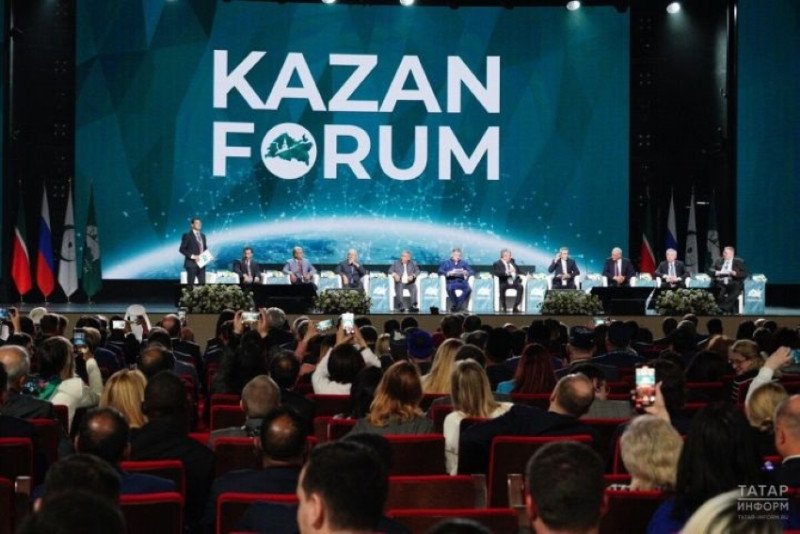
Details of the project were released by the external press service of the “Russia – Islamic World: KazanForum” 2025, which also outlined how Malaysia and other Global South nations could capitalise on the trade transformation driven by the INSTC across Eurasia.
One of the key developments is the long-awaited construction of the Resht-Astara railway section, completing a critical segment of the corridor’s western route around the Caspian Sea.
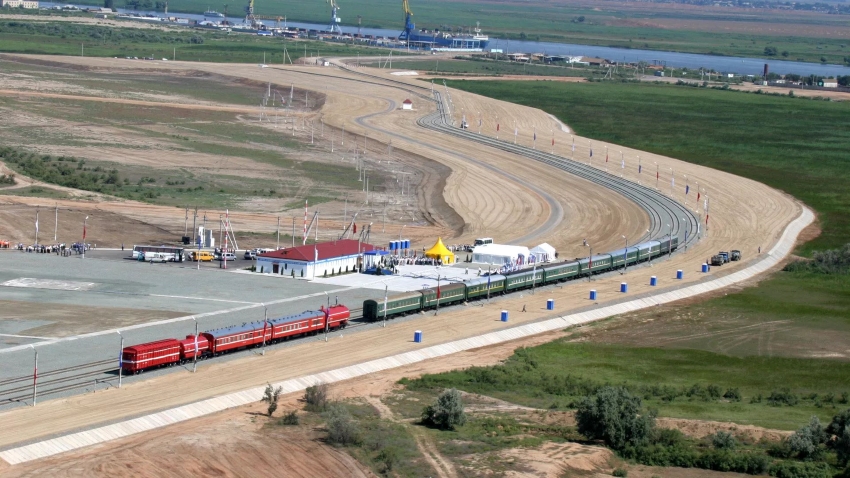
Russian Foreign Minister Sergey Lavrov confirmed that the project will be financed through Russian export credit following negotiations with his Iranian counterpart Abbas Araqchi in February 2025.
The rail link will connect Russia, Azerbaijan, and Iran, facilitating smoother cargo movement from Northern Europe to the Persian Gulf and South Asia. Full operations are expected to commence by 2028.
Azerbaijan has also ratified a new intergovernmental agreement with Russia to enhance freight transit cooperation. Discussions are underway to build an alternative rail link between Imishli in Azerbaijan and Parsabad in Iran, with the potential to handle up to 30 million tonnes of cargo by 2030, including grain, metals, fertilisers, coal, and petrochemical products.
A digital platform is being developed to streamline logistics operations, with active Russian participation.
At the same time, efforts to strengthen the corridor’s eastern route are gathering pace. In January 2025, railway officials from Kazakhstan, Turkmenistan, Russia, and Iran met to discuss a new, more competitive tariff framework. This follows the 2024 adoption of a joint action plan to align infrastructure development across the route.
The eastern branch is expected to grow its capacity from 10 million tonnes to 15 million tonnes by 2027, and to 20 million tonnes by 2030.
Another key priority is integrating the INSTC with the Trans-Afghan Corridor through a new railway extension. This route will allow cargo from Russia and other CIS countries to move through Uzbekistan and Afghanistan to ports in Pakistan, ultimately connecting to Southeast Asia.
This emerging network is seen as complementing China’s trade routes to Europe and South Asia, further strengthening regional logistics integration.
Stretching around 7,200 kilometres, the INSTC connects Russian ports on the Baltic Sea with terminals in the Persian Gulf and India. It comprises three main routes: the trans-Caspian path, the western line through Azerbaijan, and the eastern link via Kazakhstan, Uzbekistan, and Turkmenistan.
Experts at KazanForum 2024 highlighted the corridor’s competitive edge in terms of speed and cost. Cargo shipments from St. Petersburg to Mumbai could be shortened to just 10 to 20 days, compared to 30 to 45 days via traditional maritime routes. Transport costs are expected to fall by 30 to 40 percent.
With the corridor’s expansion now in full swing, participation from South Asia and the Persian Gulf is expected to increase substantially.
For countries like Malaysia, this development presents an opportunity to tap into a faster, more cost-efficient trade network linking Europe, Central Asia, and South Asia.
The 16th edition of the International Economic Forum “Russia – Islamic World: KazanForum” will be held from 13 to 18 May 2025 in Kazan, Russia, serving as a key platform to shape the future of the North-South Transport Corridor.
Granted federal status since 2023, KazanForum has grown into one of Russia’s premier international events, promoting business engagement between Russia and the Islamic world.
The forum aims to deepen trade, scientific, educational, and cultural ties between Russian regions and the 57 member states of the Organisation of Islamic Cooperation (OIC).
Key themes for 2025 include international cooperation, Islamic finance, halal industry, logistics, information technology, construction, healthcare, education, and tourism.
Ministerial-level meetings and new agreements related to the INSTC are expected to be among the forum’s highlights, alongside a dedicated logistics and transport conference involving participating nations.
As the corridor solidifies its role as a backbone of global trade, Malaysia and other emerging economies have the opportunity to explore new channels for strategic trade partnerships by taking a more active role in this fast-evolving transport network. – April 19, 2025