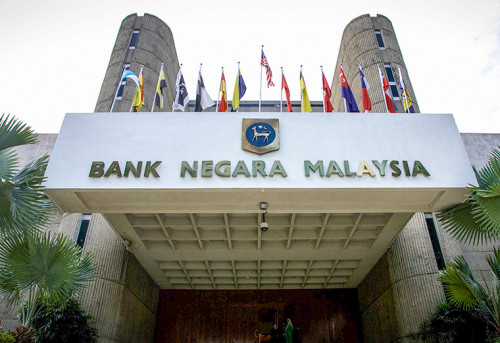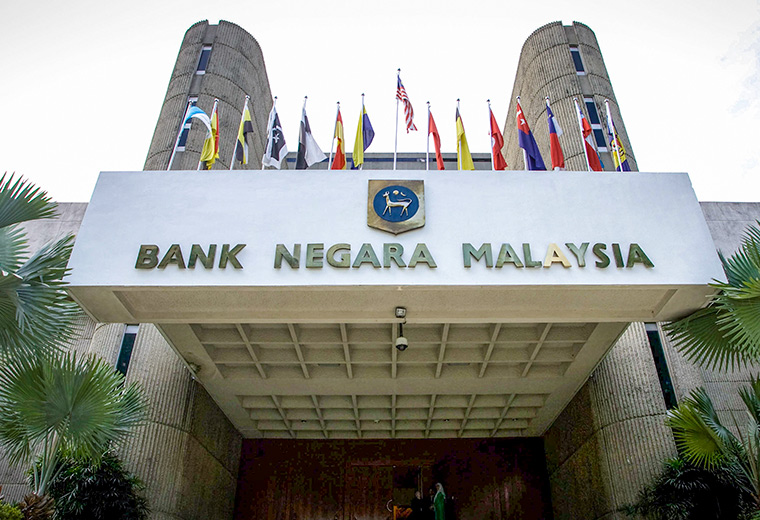
MALAYSIA’S headline inflation remained unchanged at 1.4 per cent in April 2025, while core inflation edged up marginally to 2.0 per cent from 1.9 per cent in March, according to Bank Negara Malaysia (BNM).
In its monthly economic review for April, the central bank said the rise in core inflation was driven by selected core components, including mobile communication services, jewellery and watches, and air passenger transport.
“This increase was offset by lower inflation in non-core items such as fuel and lubricants as well as fresh vegetables, reflecting easing cost pressures,” BNM said.
The central bank also reported robust trade performance, with gross exports expanding by 16.4 per cent compared to 6.8 per cent in the previous month, fuelled by continued strength in electrical and electronics (E\&E) exports, alongside a rebound in non-E\&E and commodity exports.
“Malaysia’s imports rose by 20 per cent (March 2025: -2.9 per cent), driven by a surge in capital goods imports,” the bank said. “Looking ahead, escalating trade tensions are expected to weigh on exports and pose downside risks.”
However, BNM noted that these risks are “partly mitigated by sustained global demand for E\&E and Malaysia’s integral role in the global supply chain.”
On the domestic credit landscape, credit to the non-financial private sector expanded by 5.5 per cent in April, maintaining its March pace, supported by steady growth in outstanding loans (5.5 per cent) and a slight uptick in corporate bond growth (5.5 per cent; March: 5.3 per cent).
“Business loan growth eased slightly to 4.6 per cent (March 2025: 4.8 per cent) due to slower loan growth in the services sector,” BNM stated.
“Nevertheless, financing demand remained encouraging among both SMEs and non-SMEs. Household loan growth remained stable at six per cent, supported by sustained growth across most lending segments.”
The bank highlighted increased volatility in global financial conditions following tariff announcements by the United States administration.
“Global investor sentiment turned more cautious due to rising concerns over a slowing US economy and its potential spillover effects. Amid these developments, the ringgit appreciated by 2.7 per cent against the US dollar,” BNM reported.
Meanwhile, the FBM KLCI gained 1.8 per cent (regional average: 1.1 per cent), and the 10-year Malaysian Government Securities (MGS) yield declined by 11.0 basis points (regional average: -14.7 basis points), in line with global bond market trends.
“These movements were largely driven by net foreign inflows into the bond market amid rising global risk aversion,” it added.
Malaysia’s banking system continued to exhibit strong liquidity buffers, with the aggregate Liquidity Coverage Ratio (LCR) at 155.8 per cent in April, up from 151.6 per cent in March.
“The aggregate loan-to-fund ratio dipped slightly to 83.3 per cent (March 2025: 83.8 per cent) as fund growth outpaced loan expansion,” the central bank noted.
Gross and net impaired loan ratios held steady at 1.4 per cent and 0.9 per cent respectively.
“The loan loss coverage ratio (including regulatory reserves) remained prudently high at 131.0 per cent of gross impaired loans, compared to 131.3 per cent in the previous month,” BNM concluded. - May 30, 2025