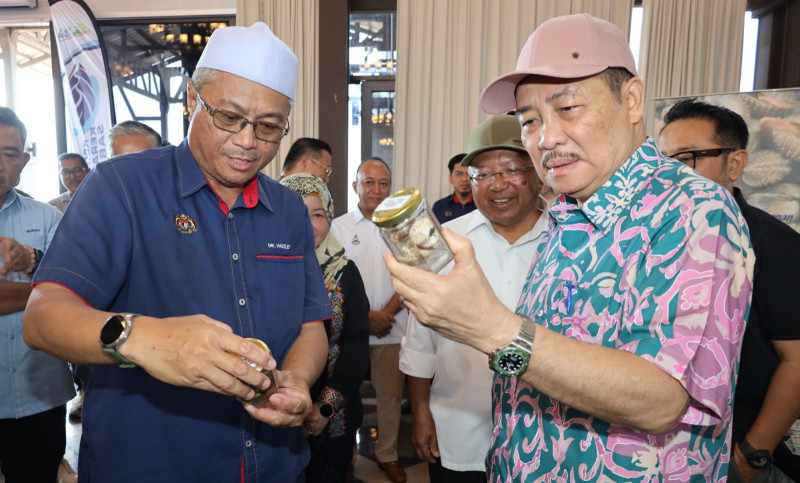
A LARGE-scale cockle farm has been launched in Sabah, with the state government estimating it could generate up to RM34.4 million in annual revenue, alongside numerous economic opportunities to rural communities.
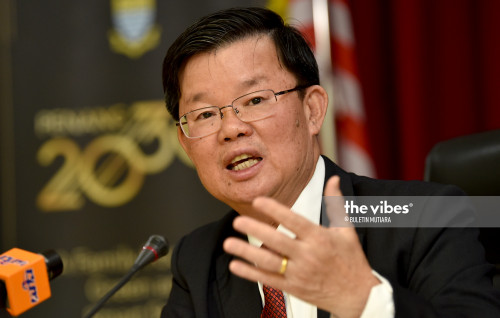
The Sabah Cockle Resource and Industry Development Project is expected to yield 3,240 metric tonnes of blood cockles annually, with a projected return on investment of 7.6 times, Chief Minister Datuk Seri Hajiji Noor said at the launch in Tuaran on Saturday.
Speaking at the Borneo Beach and Mangrove Resort, Hajiji said the initiative would bolster Sabah’s seafood export supply chain and spur growth in value-added industries such as canning, cockle paste production, and other processed seafood products.
“For the private sector, this is the best time to invest in seafood processing, sustainable packaging, and export logistics.
“This is not just a profitable venture — it is a pathway toward a more sustainable future,” he said.
A collaboration between the Sabah Economic Development and Investment Authority (SEDIA), the Malaysia Fisheries Department, and the Sabah Fisheries Department, the project is being implemented in two phases.
The first phase, already completed, involved mapping and exploration of cockle habitats between October 2024 and May 2025.
Authorities identified six promising locations, including Tuaran and Beluran, which will serve as pilot sites ahead of full-scale operations starting in 2026.
Officials say 77 aquaculture lots — 12 in Tuaran and 65 in Beluran — have been designated across 1,617 hectares.
These will be managed by 770 households, targeting small-scale fisheries entrepreneurs, rural communities, and members of the B40 low-income group.
“Even if only 40% of the lots operate at optimum capacity, participating households could earn between RM4,800 and RM6,500 per month,” Hajiji said.
The project also includes training and upskilling programmes for youth, aimed at building a new generation of modern aquaculture entrepreneurs in Sabah.
Hajiji said the broader goal is to position Sabah as the ASEAN Blue Seafood Hub, alongside other major producing states like Perak, Penang, and Selangor.
“This project will not only bring economic transformation for the communities involved, but also promote sustainable practices that benefit the environment and the state as a whole,” he said.
The Blue Economy, which refers to the sustainable use of ocean resources for economic growth and improved livelihoods, is projected to reach a global value of US$3 trillion by 2030, according to figures cited by the Chief Minister. - July 5, 2025