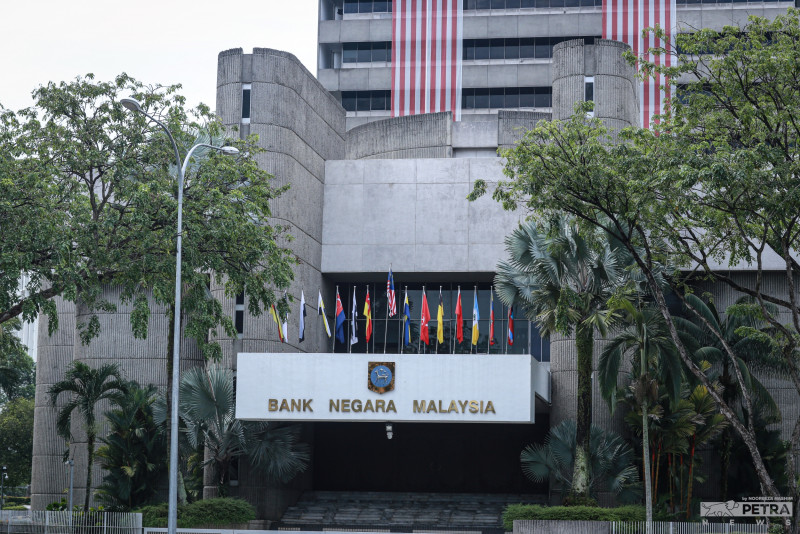
BANK Negara Malaysia has maintained the Overnight Policy Rate (OPR) at 2.75 per cent, following the latest meeting of its Monetary Policy Committee (MPC) today.
“The monetary policy stance is appropriate and supportive of the economy amid price stability,” the committee said in a statement, adding that it would continue to monitor ongoing developments and assess the balance of risks to the domestic growth and inflation outlook.
The central bank’s decision comes amid what it described as “continued expansion in global growth, supported by sustained consumer spending and front-loading activities”. It noted that the conclusion of several trade negotiations had helped ease global uncertainty, though risks remain.
“Trade policy developments would still weigh on global growth”, the MPC warned, particularly as “announced tariff rates take effect and the frontloading activity dissipates”. It added, “Downside risks remain, albeit to a lesser degree”, pointing to “potentially higher tariffs, especially product-specific ones, and escalations in geopolitical tensions”.
At the same time, the committee acknowledged that there is room for optimism, citing “favourable outcomes from remaining US trade negotiations and pro-growth policies in major economies”.
Domestically, the Malaysian economy expanded by 4.4 per cent in the first half of 2025 and is on track to grow between 4 and 4.8 per cent for the year. According to Bank Negara, the growth outlook for 2026 remains supported by “resilient domestic demand”, employment gains, rising wages and income-supportive government policies.
“Investment activity will be driven by the progress of multi-year projects in both the private and public sectors, the continued high realisation of approved investments, as well as the ongoing implementation of catalytic initiatives under the national master plans and the Thirteenth Malaysia Plan (RMK13),” the bank said.
However, the central bank also flagged potential downside risks, including slower global trade, weaker sentiment and lower-than-expected commodity production. Conversely, positive outcomes in global trade negotiations, sustained demand for electrical and electronic goods, and strong tourism activity could lift export performance and support economic growth.
On inflation, headline and core measures averaged 1.4 per cent and 1.9 per cent respectively over the first seven months of the year. Both are expected to remain moderate into 2026, as global commodity prices continue to ease.
“Core inflation is expected to remain stable and close to the long-term average, reflecting continued expansion in economic activity and the absence of excessive demand pressures,” the MPC said. “The overall impact of the announced and upcoming domestic policy reforms on inflation is expected to be contained.”
Bank Negara concluded that its current monetary policy settings remain appropriate to support sustainable economic growth while safeguarding price stability. - Sept 4, 2025