KUALA LUMPUR – There is a sense of hopefulness that comes with ushering in the new year and closing the book on 2020, especially with news of Covid-19 vaccines being distributed across the world.
But are we out of the woods yet?
QI Group of Companies founder and executive chairman Datuk Seri Vijay Eswaran said the year-long pandemic has had a devastating impact on the global economic landscape, from which it will probably take a long time to recover.
“We are heading towards a global economic depression and, based on history, economic depressions can last up to 10 years. Coming out of this will take longer and be more painful. This is what we need to be worried about.
“Big companies like Petronas will find a way to survive but the small and medium enterprises (SMEs) are going to be hit the hardest,” he said.
He said the government has also been accommodative to the business sector and helped many hold out during this hard time.
However, Vijay said SMEs need to evaluate their businesses and make pragmatic decisions that will work for them over the long term, and not delay these decisions because of cash handouts from the government.
He said if their businesses are not making money, they need to pivot to something more profitable while also shifting towards e-commerce.
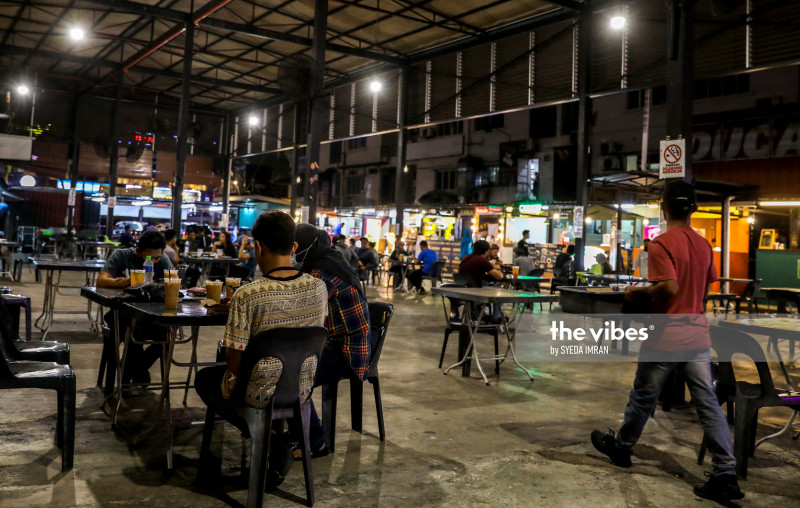
Revive food court scene
The pandemic has affected job security all over the world and across various sectors, with many who have lost their source of income resorting to opening street-food stalls.
Federal Territories Minister Tan Sri Annuar Musa had announced that those in Kuala Lumpur, Putrajaya and Labuan are allowed to conduct businesses at any location within their respective federal territory from November 15 to April 15.
Vijay said this was a commendable effort to help people make ends meet. However, it is receiving mixed response from the public as it also causes road congestion.
In this regard, Vijay said the government should consider refurbishing and reviving old food courts for these food-stall operators.
“Our food courts had been dying long before the pandemic and city councils are not spending money for the upkeep of these facilities,” he said.
He said Singapore’s hawker culture being added to the Unesco's Intangible Cultural Heritage of Humanity list is something Malaysia should emulate.
No pandemic reversal
On the Covid-19 vaccines and its global roll-out, Vijay said this would still not reverse the adverse effects of the pandemic.
He said it would take time for the population to be vaccinated and there is always the risk of a new strain of the virus and the vaccine would need to be adjusted.
It would be more pragmatic to come up with an effective treatment protocol, as well as a fast, cheap and effective Covid-19 testing method, he said.
Both SARS (Severe acute respiratory syndrome) and MERS (Middle East respiratory syndrome) currently do not have vaccines but these diseases were able to be contained through effective treatment protocols. If Covid-19 also has an effective treatment protocol, he said, normalcy would resume as fears of the virus would be curtailed.
The current swabbing method to detect the virus is becoming ineffective as the sample-collection process is a hassle and the results take too long, he added.
“It needs to be cheap, fast and effective. I am sure businessmen in Malaysia will be lining up to fund these devices if they are brought into the local market,” he said. – Bernama, December 28, 2020