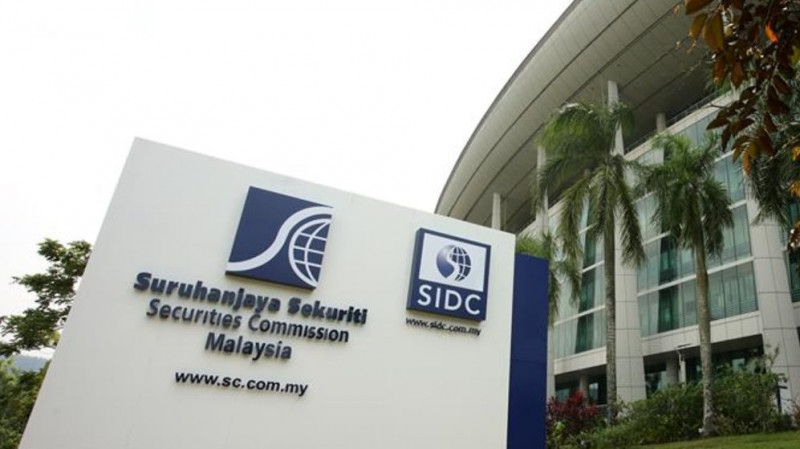
FINANCIAL crime is growing increasingly complex and sophisticated, demanding closer inter-agency coordination and multi-faceted enforcement strategies, the Securities Commission (SC) chairman, Datuk Mohammad Faiz Azmi, has said.
Speaking at the signing ceremony for a memorandum of understanding (MoU) between the SC and the Inland Revenue Board (LHDN), Mohammad Faiz emphasised that effective enforcement outcomes require a unified approach across all law enforcement agencies to address the evolving nature of financial crime.
“The need for closer collaboration is underscored by the scale of financial losses reported in Malaysia, which amounted to RM54 billion, or about three per cent of gross domestic product (GDP), last year,” he said.
Although the statutory roles of the SC and LHDN differ, Mohammad Faiz noted multiple areas where both agencies can work together to tackle financial crime more effectively.
Fraudulent investment schemes, for instance, may constitute offences under securities laws, while undeclared income linked to such schemes could also fall within the scope of tax legislation.
He added listed companies, which are required to maintain accurate financial reporting. False or misleading disclosures could potentially breach securities laws and also constitute tax evasion.
From January 2024 to August 2025, LHDN collected RM16.95 billion in additional taxes and penalties from corporate and individual taxpayers through audits, risk assessments, and enforcement actions.
“The signing of this MoU marks an important milestone in strengthening inter-agency cooperation and safeguarding the integrity of Malaysia’s financial ecosystem,” Mohammad Faiz said.
“It is my hope that this MoU will enable both agencies to work more closely within a secure and structured framework for the exchange of relevant information.
“Such cooperation will enhance our collective ability to detect, deter, and effectively enforce cases involving tax evasion, market misconduct, and the abuse of the financial system.
“Ultimately, our collaboration will not only strengthen the fight against financial crime but also enhance public confidence in our financial system, promote higher standards of governance, and support the nation’s growth story.”
Beyond sharing data, the collaboration will facilitate knowledge exchange, allowing both agencies to leverage each other’s expertise in securities regulation and tax enforcement.
Mohammad Faiz observed that financial crimes related to securities are rising in both frequency and sophistication, with emerging tactics including the use of mule accounts, cash trust arrangements, and unlisted public companies.
He also noted that funds raised by listed companies through corporate exercises have, in some cases, been misappropriated, and that market abuse has shifted from dealer-assisted trading to online platforms.
Digital channels such as WhatsApp, Telegram, and Facebook now frequently serve as the primary conduits for scams and unlicensed activities, often without any physical interaction, highlighting the need for coordinated digital responses.
The collaboration may also extend to secondment programmes, allowing officers from both agencies to gain practical experience and strengthen case-handling capabilities.
Enhanced data and intelligence sharing will support earlier detection of irregularities and misconduct, while joint enforcement efforts will improve the authorities’ ability to resolve complex financial crime cases.
Ultimately, Mohammad Faiz said, the partnership is expected to reinforce public confidence in Malaysia’s financial system, uphold higher standards of governance, and contribute to the country’s long-term economic growth. - December 19, 2025