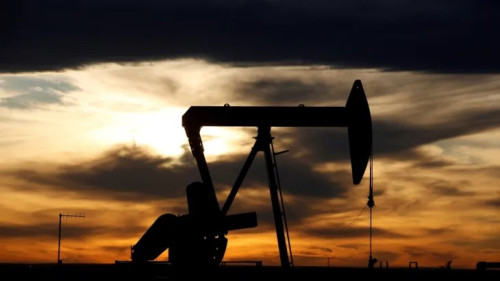
LONDON – Members of the Organisation of the Petroleum Exporting Countries (Opec) and their partners will meet via videoconference on Monday to decide on production levels for next month, hoping to turn the corner on a difficult year.
The Opec+ ministerial meeting comes after oil consumption tanked last year due to the Covid-19 pandemic, and a price war between Saudi Arabia and Russia.
Despite a pick-up in prices towards the end of 2020, the market levels for black gold remain uncertain.
After their last summit, from November 30 to December 3, the Opec+ members agreed to increase production by half a million barrels per day this month.
Also at that meeting, the 13 members of the Opec cartel, led by Saudi Arabia, and their six allies, led by Russia, agreed to meet at the beginning of each month to decide on any adjustments to production volumes for the following month.
Russia and Saudi Arabia are the second and third biggest oil producers, respectively, in the world after the United States.
The decision illustrates Opec’s desire to maintain a strong influence on the oil market and the gravity of the situation for crude producers last year.
‘Remaining demand uncertainty’
Before the pandemic, Opec members were content with two summits per year at the organisation’s headquarters in Vienna.
“Finally, we saw a strong demonstration of Opec+ will and capability to manage the market, laying the groundwork for Brent’s recovery to over US$50 (RM201) per barrel despite remaining demand uncertainty in the market,” said JBC Energy analysts in a statement.
The two contracts of reference – North Sea Brent Crude and West Texas Intermediate (WTI) crude – both ended the week around the US$50-per-barrel level, far lower than the prices seen at the start of 2020, but well up on the lows last year.
In March, Moscow and Riyadh embarked on a brief but intense oil price war that led prices to plummet.
On April 20, WTI crude collapsed to minus $40.32 per barrel – meaning producers paid buyers to take oil off their hands.
The climate between the two oil giants has eased since then, with the Russian and Saudi energy ministers meeting in mid-December in a display of unity.
It remains difficult, however, to predict the evolution in demand as governments begin rolling out vaccination programmes against the coronavirus.
Last month, Opec predicted a slight rebound in the market while noting continued uncertainties, particularly in the transport sector.
Despite the heft of the Opec+ countries, nations outside the system have a major impact on the oil market; principally the US, which is still producing 11 million barrels of crude per day.
Even within its ranks, Opec will have to pay attention to developments in the three members that have been granted exemptions from quotas, namely Libya, Iran and Venezuela.
Libya’s production had been almost wiped out by civil conflict, but has spiked since October after the signing of a ceasefire deal. – AFP, January 2, 2021