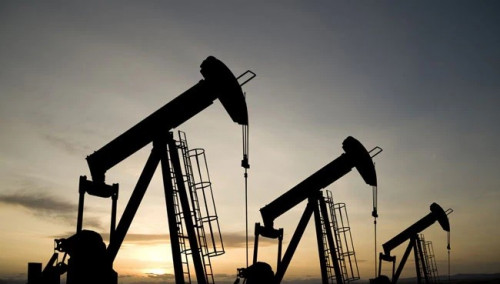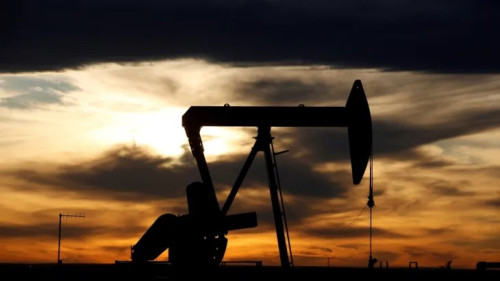
OIL prices continued their sharp climb on Monday, with Brent crude heading for its highest monthly gain on record, following the first attacks on Israel by Yemen’s Houthi forces over the weekend, further broadening the ongoing US-Israel-Iran conflict across West Asia.
Brent crude futures jumped by US$3.09, or 2.74 per cent, to US$115.66 per barrel at 11.53pm GMT, after closing Friday up 4.2 per cent.
Meanwhile, US benchmark West Texas Intermediate (WTI) rose by US$2.92, or 2.93 per cent, to US$102.56 per barrel, after a 5.5 per cent gain in the previous session.
Brent has surged 59 per cent this month, marking the steepest monthly increase on record, surpassing gains during the 1990 Gulf War.
The escalation comes as Iran’s conflict has effectively closed the Strait of Hormuz, a critical chokepoint handling one-fifth of the world’s oil and gas supply.
The war, which began on 28 February with US and Israeli strikes on Iran, has now spread throughout West Asia. On Saturday, Yemen’s Houthi rebels, allied with Iran, launched their first attacks on Israel, raising fresh concerns over shipping routes across the Arabian Peninsula and the Red Sea.
“Conflict is no longer confined to the Persian Gulf and Strait of Hormuz, but has spread to the Red Sea and Bab el-Mandeb — among the world’s most critical chokepoints for crude oil and refined products flows,” noted JP Morgan analyst Natasha Kaneva in a research note.
Data from analytics firm Kpler shows that Saudi crude exports rerouted from the Strait of Hormuz to the Red Sea port of Yanbu reached 4.658 million barrels per day last week.
JP Morgan analysts warned that any disruption at Yanbu would require Saudi oil to be transported via the Suez-Mediterranean (SUMED) pipeline in Egypt to the Mediterranean Sea.
The weekend saw an escalation in attacks, including damage to the Salalah terminal in Oman, despite ongoing attempts to initiate ceasefire negotiations.
Iran has declared it is prepared to respond to a potential US ground assault, accusing Washington of planning a ground offensive while simultaneously expressing willingness to negotiate.
Pakistan’s Foreign Minister Ishaq Dar stated that Islamabad has been exploring potential avenues for an immediate and lasting resolution to the conflict, including the possibility of US-Iran talks in the Pakistani capital.
The intensifying regional hostilities have reignited fears of further disruptions to global energy markets, underscoring the vulnerability of key maritime oil routes to the expanding conflict. - March 30, 2026