BRITISH manufacturers faced intensifying cost pressures in April as disruption in the Strait of Hormuz choked supply routes, pushing delivery delays to their worst level in nearly four years and fuelling fresh inflation concerns.
Reuters reported on Friday that the latest survey from S&P Global showed its UK Manufacturing Purchasing Managers’ Index rising to 53.7 in April from 51.0 in March, slightly above a preliminary estimate of 53.6, signalling continued expansion. Yet the underlying data pointed to mounting strain linked to the ongoing Iran conflict.
International shipping has been heavily disrupted since the United States and Israel launched strikes on Iran in late February, with the crucial maritime corridor effectively closed.
The blockage has curtailed roughly a fifth of global oil and gas flows, sending energy prices sharply higher and rippling through industrial supply chains.
At the same time, attacks by Houthi forces in Yemen have deterred vessels from using the Red Sea route to the Suez Canal, forcing many to take longer voyages around southern Africa, compounding delays and costs.
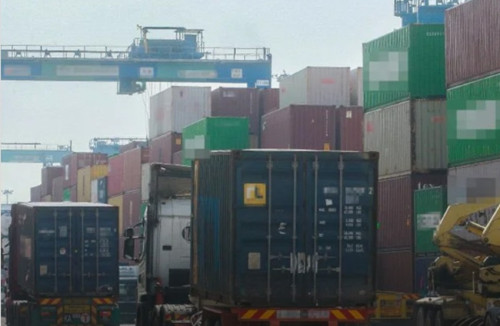
According to S&P Global, restrictions on shipping through Hormuz have extended delivery times to the greatest degree since mid-2022, underscoring the severity of the disruption.
Despite the logistical strain, output and new orders increased in April, driven in part by customers accelerating purchases ahead of expected price rises and shortages.
“The gain in production is partly the result of clients bringing forward purchases to mitigate expected price uplifts and supply disruptions,” said Rob Dobson.
“As this process unwinds later in the year, alongside declining business optimism, growth in the sector could cool while inflationary pressures remain on high heat.”
The survey also found manufacturers were increasingly passing on higher costs, with selling prices rising at the fastest pace since November 2022. Input costs surged at the quickest rate since June 2022, reflecting elevated energy prices and supply bottlenecks.
Business confidence over the coming 12 months fell to its lowest level in a year, with firms citing concerns over the Middle East conflict and domestic policy uncertainty.
However, employment in the sector edged higher for the first time since October 2024, when finance minister Rachel Reeves announced tax increases on employers in her first budget, suggesting some resilience remains despite the mounting headwinds. - May 1, 2026