THE nation’s domestic demand continues to act as a critical buffer for the national economy amid ongoing conflict in West Asia, although economists caution that internal resilience alone may not be sufficient if global conditions deteriorate further.
Affin Group Chief Economist Alan Tan told Bernama that strong domestic activity remains evident across key sectors, helping to cushion the impact of external uncertainties.
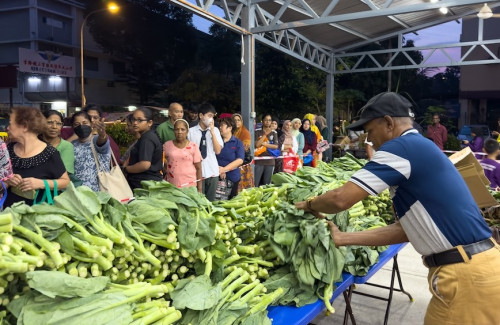
“But there is no doubt that Malaysia’s domestic demand remains strong. This is evident in tourism, private consumption spending, and we are seeing momentum in investment, particularly in data centre developments in Johor,” he said.
He noted that the widespread use of Malaysia’s public transport system, including buses as an essential service, has also helped mitigate some domestic cost pressures, reflecting government efforts to manage rising living expenses.
However, he cautioned that over-reliance on domestic resilience may not fully counterbalance weakening exports should global conditions worsen.
Tan was speaking during a session at the ASEAN Cooperation and Leadership Forum 2026 titled ‘Strategic Resilience: Navigating Global Economic and Energy Crises and the Supply Chain Landscape’, moderated by Munir Majid, Chairman of CARI ASEAN’s research and advocacy arm.
Looking ahead, he said that in a prolonged scenario where the conflict extends beyond six months and Brent crude oil prices remain elevated, fiscal considerations would likely come into sharper focus, including potential adjustments to fuel pricing policies.
Meanwhile, Investment Strategy Director and Chief Economist at IPPFA Sdn Bhd, Mohd Sedek Jantan, observed that global powers appear less directly engaged with ASEAN, contributing to slower regional economic integration.
He added that this dynamic requires ASEAN member states to respond more cautiously to external shocks, as they navigate an increasingly uncertain global environment. - May 6, 2026
.jpg)


_director_Datuk_M._Kumar.jpg)