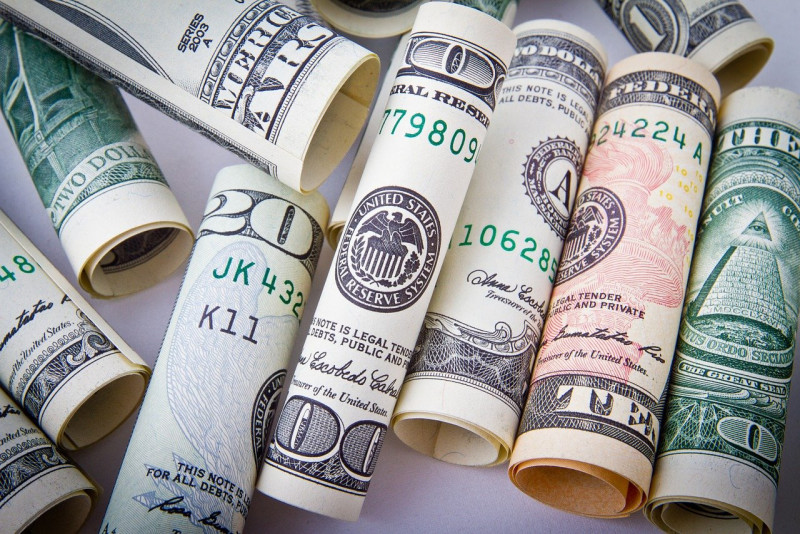
THE US dollar edged lower as financial markets turned their attention to the Federal Reserve's first interest rate decision under new Chair Kevin Warsh, with investors closely watching for clues on the future direction of US monetary policy rather than expecting an immediate change in borrowing costs.
Reuters reported on Wednesday that improving investor confidence following an interim peace agreement between the United States and Iran also reduced demand for the dollar's traditional safe-haven appeal, leaving major currency movements subdued ahead of the Fed's announcement.
The Federal Reserve is widely expected to leave interest rates unchanged at Warsh's inaugural policy meeting.
However, markets are expected to focus on the central bank's policy statement, updated economic projections and the Chair's first post-meeting press conference for indications that policymakers may be moving away from an easing bias as inflation concerns persist.
"The Fed is...likely to signal a neutral bias for monetary policy going forward," said Erik Weisman, chief economist and portfolio manager at MFS Investment Management.
"(Warsh) will face a barrage of questions about how he expects to steer the Fed in the direction he has indicated over the years. It is early days yet. The new Fed Chair may still be gauging the mood of the committee that he has to carry to deliver successful policy. He may not want to make any statements without first forging consensus within the Fed."
The dollar index slipped to 99.53, giving back part of the gains it recorded during heightened geopolitical tensions, as optimism surrounding the interim US-Iran agreement encouraged investors to shift back towards risk-sensitive assets.
The euro held steady at US$1.1611, while sterling traded little changed at US$1.3430. The New Zealand dollar edged higher to US$0.5833, while the Australian dollar was broadly flat at US$0.7066 following the Reserve Bank of Australia's decision to leave its cash rate unchanged at 4.35 per cent, while warning that further tightening remained possible if inflation failed to ease.
Attention also remained fixed on Japan, where the yen hovered at 160.43 against the dollar, keeping traders alert for possible intervention by Japanese authorities to support the currency.
The Bank of Japan on Tuesday raised its benchmark interest rate to its highest level in 31 years, marking another significant step in its policy normalisation cycle as policymakers seek to contain inflationary pressures exacerbated by higher energy costs linked to the Iran conflict.
Despite the historic rate increase, the central bank provided few indications of when further policy tightening might occur, limiting support for the yen.
"While the press conference...contained some optimistic signals regarding the outlook for the Japanese economy, it failed to move the needle much regarding market expectations around the timing of the next BOJ policy move," said Jane Foley, senior foreign exchange strategist at Rabobank.
"Despite the significance of the BOJ's decision to take its policy rate back to 1% today, the meeting was still overshadowed by that of the Fed."
With both the Federal Reserve and the Bank of Japan signalling a cautious approach to future policy moves, investors are expected to remain focused on central bank guidance as they assess the outlook for inflation, interest rates and global economic growth. - June 17, 2026









.jpg)