


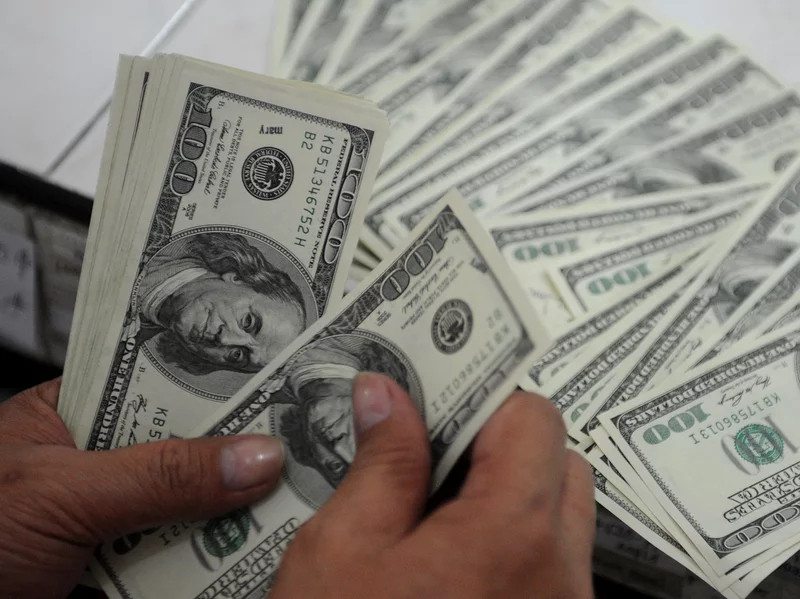
THE US dollar staged its strongest rally in more than three months after the Federal Reserve adopted a more hawkish tone on monetary policy, raising expectations that borrowing costs could increase again before the end of the year despite leaving interest rates unchanged.
The Bloomberg Dollar Spot Index climbed 0.7 per cent on Wednesday, marking its biggest one-day gain since early March, as traders rushed into the greenback following the central bank's latest policy announcement.
The renewed demand for the US currency triggered widespread selling across major global currencies.
Sterling suffered its steepest daily decline since September last year, while the euro posted its biggest loss since March.
The Japanese yen weakened beyond the closely watched 160-per-dollar level, falling to its lowest level since July 2024 and renewing attention on the possibility of intervention by Japanese authorities.
Although policymakers kept the benchmark interest rate unchanged, investors focused on the Federal Reserve's updated economic projections, commonly known as the "Dot Plot", which revealed that at least nine of the 18 members of the Federal Open Market Committee expect at least one further 25-basis-point interest rate increase before the end of the year.
The shift in expectations also fuelled a sharp rise in US Treasury yields.
The yield on the policy-sensitive two-year Treasury note jumped by more than 16 basis points to 4.21 per cent before easing slightly to 4.18 per cent, remaining at its highest level since February 2025.
Market analysts said the Federal Reserve's latest guidance has significantly strengthened the outlook for the US currency.
"The risks to the dollar are now skewed to the upside," said Calvin Tse, head of US strategy and economics at BNP Paribas SA.
"The risks now are that the Fed ends up being even more hawkish than the market expects."
Despite heightened expectations for tighter US monetary policy, broader financial markets have remained relatively calm, with a JPMorgan gauge of global currency volatility hovering near its lowest level in almost six years, suggesting investors continue to anticipate orderly trading conditions despite the prospect of higher interest rates. - June 18, 2026











.jpg)
