MALAYSIA needs to give investors clearer routes to get their money back if it wants to attract more private capital and establish itself as a gateway to ASEAN, the Malaysia Private Capital Association (MPCA) said.
The association said the country’s private capital market could not be judged simply by the number of funds raised or investment deals completed.
It also needed a stronger cycle of investment, company growth, exits and reinvestment to give institutional investors confidence to put more money into Malaysian private markets.
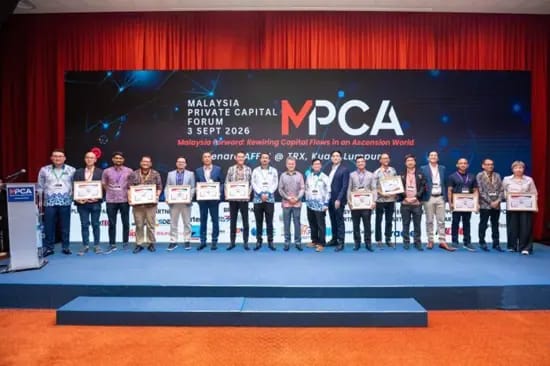
That was among the key issues raised at the Malaysia Private Capital Forum 2026 yesterday, which brought together investors, fund managers, founders, corporations and policymakers.
The forum, themed “Malaysia Forward: Rewiring Capital Flows in an Ascending World”, comes as global capital becomes increasingly concentrated in a smaller number of sectors and markets.
Deputy Finance Minister Liew Chin Tong, who was the chief guest, said Malaysia had its best opportunity since the 1997 Asian financial crisis to strengthen its economic position and create a more attractive environment for businesses and investors.
“Malaysia is now in an excellent economic situation, and we must take this opportunity by developing solutions for businesses to flourish in the country,” he said in his keynote address.
Liew said the global shift from an emphasis on efficiency towards resilience following the Covid-19 pandemic had opened up opportunities for Malaysia.
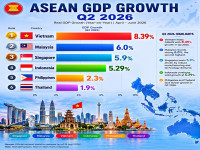
The economy grew 6% in the second quarter of 2026, bringing growth for the first half of the year to 5.7%, despite continued volatility in global markets.
MPCA chairman Ng Sai Kit said investors were still looking for opportunities, but were becoming far more selective about where they deployed their capital.
“Capital has not disappeared. It has become more concentrated, more selective and more demanding,” he said.
The growing weight of artificial intelligence in global venture investment was one example, with AI-related deals accounting for 77% of global venture deal value in the first half of 2026.
Ng said Malaysia therefore needed to think beyond simply attracting more funds and deals.
“Malaysia’s next chapter cannot simply be about creating more funds or generating more deals. It must be about building a stronger capital base, creating credible exits, returning capital to investors, and giving LPs the confidence to invest again,” he said.
The challenge is particularly apparent in Asia’s fundraising market.
APAC venture funds raised US$161.7 billion in 2021. That figure fell sharply to US$15.3 billion in the first half of 2026, according to figures presented at the forum.
Malaysia recorded 22 venture deals worth about US$200 million during the same six-month period.
Ng said Malaysia should not try to compete with larger regional financial centres deal for deal.
Instead, the country should make better use of its position as an operating base and launchpad for companies looking to expand across ASEAN.
“Don’t look at Malaysia only as a domestic market,” he said.
“Use Malaysia as a gateway into ASEAN private markets.”
For investors, however, getting into the market is only half the equation.
MPCA said Malaysia needed stronger exit channels, including a deeper mergers and acquisitions (M&A) market and public market opportunities, to allow private capital-backed companies to scale and eventually return money to their investors.
The scale of global M&A activity shows why this matters.
Global M&A reached US$1.3 trillion in the second quarter of 2026, with 42% of the value concentrated in just 34 deals worth at least US$5 billion.
Corporate buyers accounted for US$893 billion of the activity, compared with US$287 billion from buyouts.
MPCA has proposed targeted M&A incentives to reduce transaction costs and encourage commercially viable consolidation.
Ng said the ability to demonstrate a credible exit was essential if Malaysia wanted institutional investors to commit more capital.
“If we want LPs to allocate more capital to Malaysian private markets, we cannot only show them where their money will be invested.
“We must also be able to show them how that capital can eventually come back,” he said.
The association said its next priority would be its LP Agenda, which will involve deeper engagement with pension funds, insurers, government-linked investment companies, corporations and other institutional investors.
It also plans to strengthen ties with family offices, family capital and international investors.
Forum organising chairman Dr Chris Daniel Wong said the industry had spent the past decade building up Malaysia’s general partner ecosystem.
The next phase, he said, should focus on strengthening the wider capital base needed to support the industry.
“In many ways, the work of the past decade has been about building Malaysia’s GP ecosystem.
“The work ahead must increasingly be about building Malaysia’s capital ecosystem,” he said.
Established in 1995, MPCA, formerly known as the Malaysian Private Equity & Venture Capital Association, represents players in Malaysia’s venture capital and private equity industry. – September 5, 2026