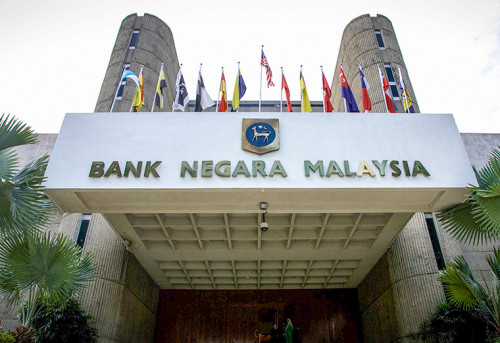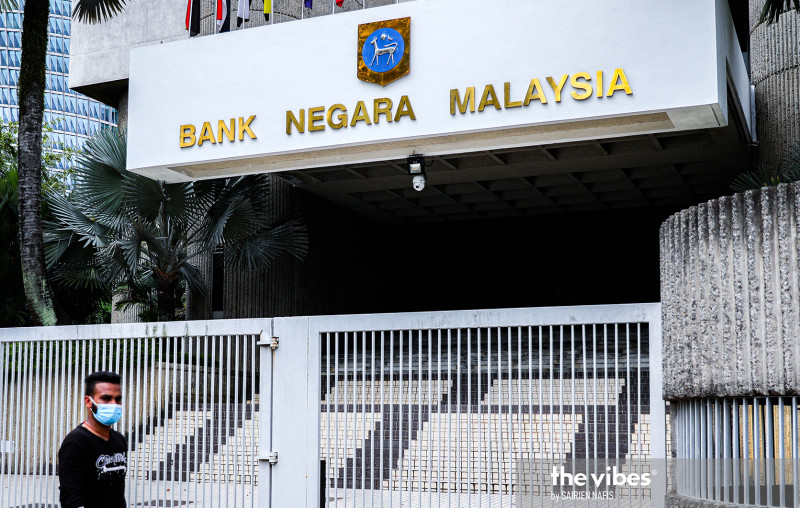
KUALA LUMPUR – Maybank Investment Bank Bhd (Maybank IB) has reiterated its view that Bank Negara Malaysia (BNM) will keep the overnight policy rate (OPR) unchanged at the monetary policy committee’s (MPC) upcoming meeting, which is scheduled for two days starting tomorrow.
In a note, the research house said the OPR would remain at a record low level of 1.75% this year after cutting 125 basis points (bps) in 2020.
However, it opined that this was a “dovish pause”, implying that any change in the OPR this year would be cut(s) rather than hike(s), it said.
“As it is, the interest rate swap curve is now pricing in a 25bps OPR cut within the first half of 2021.
“The key reason why we are sticking to our stable OPR call this year is because there is “passive easing”, as real OPR changed to negative in 2021 versus positive in 2020.
“We forecast the return of inflation this year at +2.0% versus the deflation of -1.0% last year, resulting in -0.25% real OPR in 2021 versus +2.75% real OPR in 2020,” it said, adding that this was tantamount to -300bps fall in real OPR this year compared with just -10bps drop last year.
It noted that the real interest rate was one of the determining factors in BNM’s OPR policy.
Meanwhile, OCBC Bank is expecting BNM to turn more downbeat on the OPR, noting a heightened chance of a rate cut to 1.5% from the current 1.75% in the upcoming meeting this Wednesday due to recent events.
In its 2021 Economic Outlook, chief economist Selena Ling said depending on how things pan out in the pandemic fight in the coming weeks, there might well be another rate cut of down to 1.25% in the next MPC meeting in March.
“With the relatively dim prospect of large-scale fiscal help, the onus is thus for monetary policy to shoulder the burden more considerably. When BNM left its OPR unchanged at 1.75% for the second time running in its last MPC meeting on November 3, Bank Negara still sounded quite sanguine on growth prospects.
“We expect that tone to have turned more downbeat by now in the face of recent events, however,” she said.
On the whole, Ling said the bank remains constructive of Malaysia’s economic prospects and the eventual recovery in the later part of 2021.
“This is especially since its manufacturing sector is well-geared to partake in the global electronics recovery, for example, but the immediate months ahead would present some speed bumps,” she said.
On another note, Maybank IB expects daily economic losses to be smaller under the reimposition of the movement control order (MCO 2.0), at between RM0.7 billion and RM1 billion per day, compared to between RM1 billion and RM1.5 billion per day during MCO 1.0.
In an effort to mitigate MCO 2.0’s economic impact, the government has allowed five essential sectors to operate, namely factory and manufacturing; construction; services; trade and distribution; and plantations and commodities.
“We estimate that 78% of the economy is operational under MCO2.0 versus 52% during MCO1.0,” it said.
Maybank IB opined that the government should focus on expediting implementation of existing accommodative monetary policy, expansionary fiscal policy and stimulus measures.
It said the 2021 budget deficit remained large – RM84.8 billion against RM86.5 billion in 2020 – and many economic stimulus measures in 2020 had been rolled and extended on a targeted basis into 2021.
This included the wage subsidies; cash handouts to low and middle-income groups; targeted loan repayment moratorium and flexible loan repayment; grants and funding schemes for micro-enterprises and small and medium enterprises (SMEs); job placements, as well as Employees Provident Fund (EPF) withdrawals and lower workers’ EPF contributions.
At the same time, ‘under-utilised’ measures such as EPF’s employers Covid-19 Assistance Programme (e-CAP) to defer, reschedule and restructure employers’ contributions could be revived, it said.
The research firm said any new extra spending would likely come from Covid-19 fund, where there is RM10 billion available.
“Executing the vaccination programme, which scheduled to start in February 2021, will also be key,” it added. – Bernama, 18 January, 2021