KUALA LUMPUR – The reimposition of the movement control order (MCO 2.0), along with the emergency proclamation, may not impact the economy significantly compared to the previous one, but some initial setback from the restrictive measures is likely to be felt in the first half of 2021 (1H 2021).
AmBank Group chief economist and head of research Dr Anthony Dass said assuming the overall economic capacity during this period operates around 50% and 60% in the first quarter of 2021 (Q1 2021) and improves to 70% and 80% in Q2 2021 with a gradual easing of the restrictive measures, and the economy operates as usual in 2H 2021, the reduction in gross domestic product (GDP) would be between 0.6% and 1.3%.
“This would mean the 2021 GDP projection of 6.5% growth would now be hovering around 5.2% and 5.9%.
“Upside to growth still remains, depending on external and domestic factors,” he said in a note today.
The government announced on January 11 that MCO 2.0 would run from January 13 to January 26, while a nationwide state of emergency was declared by the king on January 12, 2021.
According to Dass, the announcements raised concerns as to whether the economic recovery would be delayed.
“While some dent could be expected in the immediate term, it is unlikely for the economy to report an extremely slower growth in 2021,” he said.
According to him, with the focus on supporting the economy and addressing the pandemic, the MCO 2.0 is seen as a less restrictive measure that allows key sectors to operate.
“Key sectors like manufacturing, industrial, construction, services, distribution and trade, plantation and commodities are allowed to operate.
“These sectors play a key role to support the supply of basic necessities, ensure uninterrupted supply chains and support critical infrastructure and emergency work,” he said.
Furthermore, Dass said potential easing on the list of economic sectors allowed to operate during the MCO 2.0 remains on the table.
“Some micro businesses that have already been adhering to the standard operating procedures could be allowed to operate as well,” he said, adding that based on past experience there would be less disruption to businesses, and the public would be better prepared with heightened awareness.
Combined with the RM325 billion stimulus measures, which are expected to be implemented faster and effectively, Dass said steady export growth from improving global GDP and trade, and firmer commodity prices with an upwards revision of 2021 are anticipated.
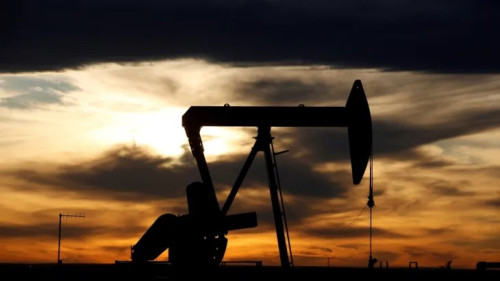
In addition, he said international benchmark Brent crude oil price is seen to average between US$50 and US$53 per barrel (previously US$42 and US$45 per barrel) while crude palm oil (CPO) is expected to average RM3,000-RM3,200 per tonne (previously RM2,500 to 2,600 per tonne).
“With a view that the pandemic dust should settle in 6 to 12 months, the domestic economy should, on the whole, hold up well,” he said. – Bernama, 18 January, 2021