KUALA LUMPUR – UOB Asset Management (M) Bhd expects another overnight policy rate (OPR) cut to take place this year if the movement control order is extended beyond February 4, or stricter measures are enforced by the government.
Chief investment officer Francis Eng said a further interest rate reduction, however, will not make Malaysia’s fixed income market less attractive to foreign investors.
“We are now in an environment where global interest rates are at very low levels, and there are trillions of bonds with negative yields out there.
“With a lot of liquidity out there, we think the yield here (in Malaysia) is still attractive enough,” he told a virtual media briefing today.
The benchmark Malaysian Government Securities yield currently stands at about 2.7%.
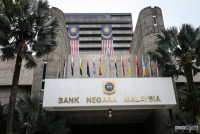
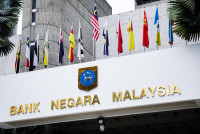
Last week, Bank Negara Malaysia (BNM) decided to maintain the OPR at 1.75%.
In his presentation earlier, Eng said Malaysia’s debt securities have not lost their shine and continue to attract foreign investors, despite the downgrade of the nation’s sovereign rating to BBB+ by Fitch Ratings last year.
“The global low interest rate environment is very supportive of Malaysia’s fixed income market.
“Unlike the equity market, we have seen foreign investors fleeing Malaysia in the fixed income space, (but) foreigners continue to buy Malaysian fixed income securities.”
Citing data from BNM and data provider CEIC, he said total debt securities’ foreign holdings in Malaysia stood at RM223 billion, up from RM219.4 billion in November 2020 and RM217.5 billion the previous month.
Similarly, total debt securities’ monthly inflows remained in positive territory, with RM3.6 billion recorded last month, RM1.9 billion in November 2020 and RM8 billion the month prior.
In terms of economic performance, Eng predicted Malaysia’s gross domestic product to rebound to pre-pandemic levels only next year, due to the current movement control order (MCO).
“This really depends on what happens during MCO 2.0, as it is still very fluid, making it difficult to predict what will happen next.
“But our base case is that, it will be more likely to happen (returning to pre-pandemic levels) in 2022.”
He forecast that China will lead the Asian economy’s rebound, while for Asean, he expects sectors including financial, consumer and property to benefit from the reopening of economies.
He said the global economy will be influenced by government fiscal and monetary policies, which remain supportive, as well as Covid-19 vaccine roll-outs.
“The confluence of positive factors for Asia includes the weakening US dollar, and the de-escalation of the trade war between the US and China.” – Bernama, January 26, 2021