KUALA LUMPUR – The World Bank Group projects the Malaysian economy to return to positive growth this year, with the sustained progress of Covid-19 vaccine roll-outs expected to boost consumption worldwide.
Its macroeconomics, trade and investment global practice lead economist, Richard Record said the group expects vaccine deployments to be mostly complete in most economies worldwide this year, leading to strong recovery and demand, as well as boosting trade and commodity prices.
“We are projecting a global growth of 4.0% this year. As for Malaysia, we project economic growth this year to range between 5.6% and 6.7%,” he said during the virtual 2021 Malaysia’s Economic and Strategic Outlook Forum (MESOF) titled: “The Post-Covid-19 New Normal – Where Do We Go From Here” today.
Record noted that China is among the reasons Asian economies, including Malaysia, will see a rebound.
However, he cautioned the downside risks to growth is the slow progress of the vaccine deployment and new containment that could lead to another movement control order, adding that consumption is the largest part of the Malaysian economy.
“Risks to growth outlook include the unexpected delay in vaccine roll-outs, ineffective containment, elevated number of vulnerable households and domestic political uncertainty.
“In the near-term, policies should focus on containing the outbreak, protecting the most vulnerable and rebuilding fiscal buffers as economic conditions improve,” he added.
Another panellist, Shan Saeed, chief economist of Juwai IQI Global, said the Malaysian government continues to maintain macroeconomic stability, which is moving faster than market participants expected.
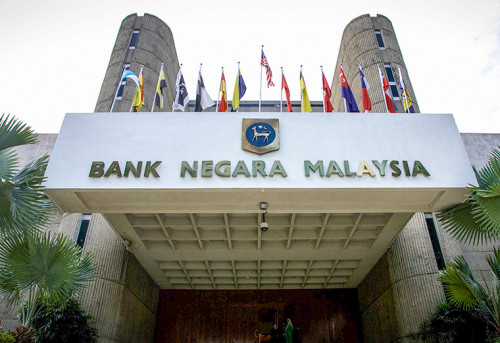
“The government is in total control of the economy and will continue to support it when required. Amalgamation of fiscal and monetary policy levers hold the key for economic growth and Bank Negara Malaysia has a lot of room to manoeuvre in the monetary landscape,” he opined.
Shan noted that the central bank would use tactical and strategic moves to maintain structural stability in the local currency.
Echoing Record, Shan expects the Malaysian economy to follow China’s dual-circulation strategy to support local businesses and to encourage aggregate demand at the macro level.
Sharing some of his key statistics, he said the Brent crude oil is expected to trade between US$50 to US$70 per barrel, which could help support the ringgit trading at RM3.67 to RM4.10 per US dollar.
On gross domestic product, he is a bit modest, seeing the number to hover between 3.0% to 4.0%, while the central bank is expected to keep the overnight policy rate at one to 1.75% in 2021.
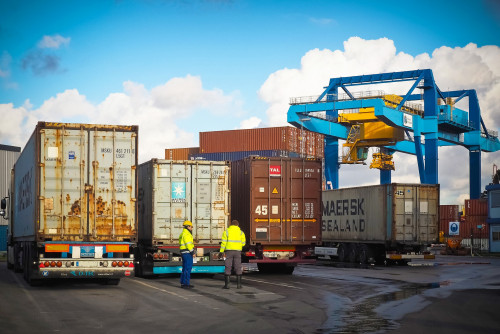
Meanwhile, Malaysian Statistics Department chief statistician Datuk Seri Dr Mohd Uzir Mahidin said the Malaysian Economic Outlook 2021 forecasts the country’s external trade to grow by 3.9%.
He said exports of goods are expected to increase by 2.7% as a result of the recovery in global trade and supply chains, while imports are expected to rise by 5.3%, contributed by improvement in all types of imports.
“Inflation is likely to make a comeback in 2021 after a deflationary trend this year as the Covid-19 pandemic suppressed demand for goods and services.
“This is thanks to the early roll-out of a safe and effective Covid-19 vaccine and unleashing of pent-up demand in conjunction with supply shortages, which could result in an inflation comeback,” he said.
Quoting the Finance Ministry, Uzir said inflation is projected at 2.5% versus the -1.13% in 2020, signalling a stronger surge in consumer spending.
On the total labour force, he said it is projected to remain at 1.1% while unemployment rate is projected to decrease to 3.5% in 2021 compared with an estimation 4.5% in 2020, as the country’s economy is expected to rebound firmly in 2021 after a dismal performance in 2020 due to the pandemic. – Bernama, February 22, 2021