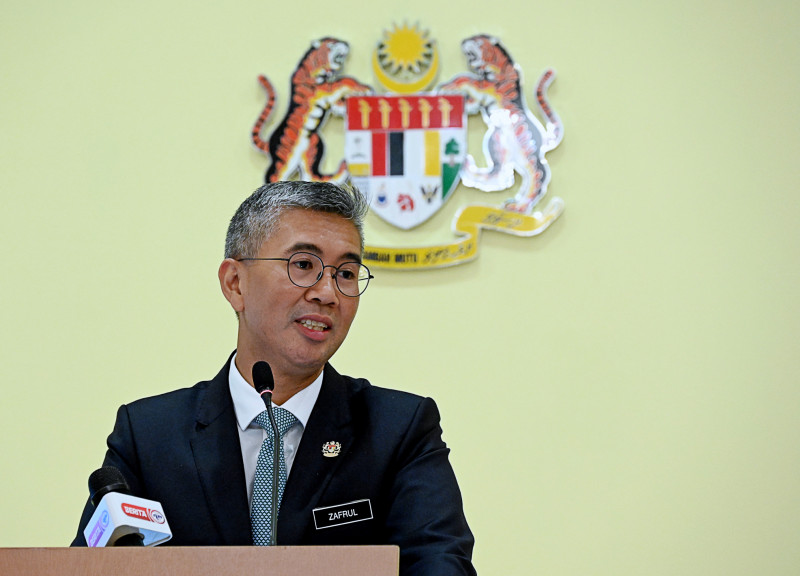
KUALA LUMPUR – The systematic roll-out of the National Covid-19 Immunisation Programme and the country’s economic recovery plan will be key to driving Malaysia back on track, making it stronger by end-2021, said Datuk Seri Tengku Zafrul Tengku Abdul Aziz.
The finance minister told Bernama that according to the latest data, the nation’s gross domestic product has shown signs of recovery since the movement control order (MCO) was first imposed in March last year.
“We have many reasons to believe that the worst is behind us. I am certain that Malaysia will emerge stronger by the end of the year.”
He said the sectors allowed to operate with strict standard operating procedures in place during the second MCO this year made up 93% of the economy, resulting in an output loss of only RM300 million daily compared with the RM2.4 billion registered per day during the first lockdown.
He said four economic stimulus packages totalling RM305 billion, or more than 20% of GDP, coupled with the gradual reopening of the economy since early May, supported the 2020 GDP by approximately four percentage points.
This contributed to a 24% increase in GDP from RM289.4 billion in the second quarter (Q2) to RM357.4 billion in Q4.
In addition, Budget 2021 and the Permai assistance package helped complement the national economy’s recovery and cushion the impact of virus containment measures.
“Moreover, the National Covid-19 Immunisation Programme, which commenced in late February, will support the reopening of our economy and spur business activities. This will be supported by a robust recovery in global trade and higher crude oil prices,” said Tengku Zafrul.
He said the ministry is targeting Malaysia’s 2021 deficit to be less than 6.2% of GDP, depending on how fast the economy heals and the government’s focus on supporting certain sectors.
The country’s deficit rose to 6.2% of GDP last year from 3.4% in 2019.
Tengku Zafrul encouraged all Malaysians to register for vaccination through the MySejahtera app, or the official website advertised by the Special Committee on Covid-19 Vaccine Supply Access Guarantee.
“It is crucial for the nation to achieve herd immunity as soon as possible, to ensure a full recovery of the economy, including the hardest-hit sectors like tourism, retail and aviation.”
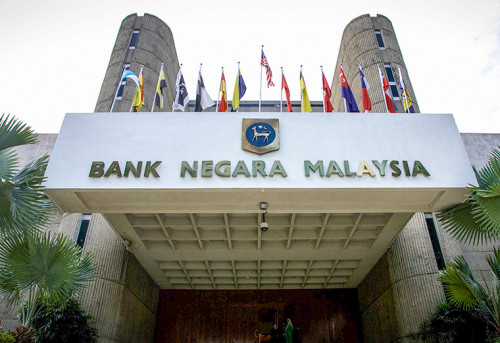
The former banker added that Bank Negara Malaysia’s decision to maintain the overnight policy rate at 1.75% will help ease the cash flow of individuals and businesses, encourage consumer spending, and spur lending by financial institutions.
“This will provide an impetus for our economic growth, complementing the government’s fiscal measures to ensure a sustainable economic recovery.”
The ministry has released a report of its accomplishments over a year, in conjunction with the Perikatan Nasional government’s first anniversary.
In the report, Tengku Zafrul said the pandemic resulted in an unprecedented socio-economic impact with huge risks to public health, and a loss of about RM2.4 billion a day during MCO 1.0.
To address the crisis, Putrajaya formulated the “6R” strategy, namely “Resolve, Resilient, Restart, Recovery, Revitalise and Reform”.
“The implementation of various initiatives, including the Prihatin stimulus package, is supported by the use of current data, which enables immediate intervention and coordination to ensure effective delivery.”
MCO 1.0 led to a GDP contraction of 17.1% in Q2. However, the government’s swift action yielded positive results, with the economy recording a lower-than-expected contraction rate of 5.6% for 2020.
The measures taken also aided the lowering of the unemployment rate, from 5.3% in May to 4.8% in December.
“However, there is still a lot to be done. Budget 2021 and the Permai package will help. I am also confident that 80% of Malaysians are expected to be vaccinated by early 2022, which will drive the country’s economic recovery,” said Tengku Zafrul.
“Meanwhile, the Finance Ministry and Laksana will continue to ensure that all initiatives are implemented and monitored properly, so that our people and country can recover and emerge more resilient than before.”
Laksana, or the inter-agency economic stimulus implementation and coordination unit, was formed on March 16 last year to monitor the implementation of the government’s stimulus packages. – Bernama, March 8, 2021