Business

IMF approves aid for world’s 28 poorest countries

It is to help them alleviate debt and better cope with the impact of the pandemic

Updated 5 years ago · Published on 06 Oct 2020 1:30PM

IMF approves aid for world’s 28 poorest countries
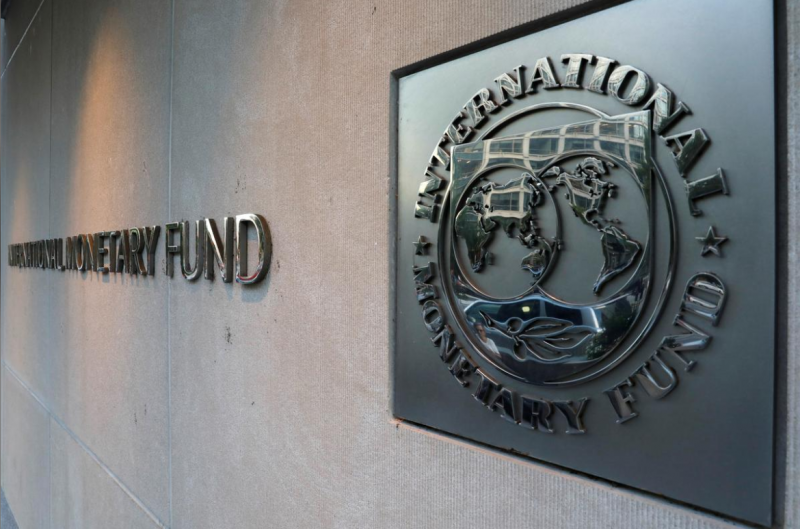
The International Monetary Fund has allocated aid for 28 of the world’s poorest countries to help them cope with the economic fallout caused by the pandemic. – AFP pic, October 6, 2020

NEW YORK – The International Monetary Fund has approved new emergency aid for 28 of the world’s poorest countries to help them alleviate their debt and better cope with the impact of the coronavirus pandemic.

The announcement, which follows a similar measure passed in mid-April for 25 countries, is intended to help the countries cover their debt repayments to the IMF for the next six months and “free up scarce financial resources for vital emergency medical and other relief efforts” during the pandemic.

The 28 countries receiving the second tranche of aid are Afghanistan, Benin, Burkina Faso, Burundi, Central African Republic, Chad, Comoros, Democratic Republic of Congo, Djibouti, Ethiopia, Gambia, Guinea, Guinea-Bissau, Haiti, Liberia, Madagascar, Malawi, Mozambique, Nepal, Niger, Rwanda, Sao Tome and Principe, Sierra Leone, the Solomon Islands, Tajikistan, Tanzania, Togo and Yemen.

Mali is also eligible for aid but has not yet been added to the list because “there is a lack of clarity as to whether the international community recognizes/deals with the current military regime as the government of Mali,” the IMF said.

The debt relief is channelled through the Catastrophe Containment and Relief Trust (CCRT), which enables the IMF to provide grants to the poorest and most vulnerable countries hit by a natural disaster or public health crisis.

Subject to sufficient resources in the CCRT, grants could be provided for a two-year period through mid-April 2022 for an estimated total amount of US$959 million (RM3.98 billion).

The IMF’s goal is to endow the CCRT with US$1.4 billion so that it can also meet future needs.

To date, US$506.5 million has been contributed by several countries, including the United Kingdom, Japan, Germany, the Netherlands, Switzerland, Norway, China, Mexico, Sweden, Bulgaria, Luxembourg and Malta. – AFP, October 6, 2020


Related News

World / 3y

AFP journalist killed in rocket attack in Eastern Ukraine

Business / 3y

More weaknesses, vulnerabilities in US banking possible: IMF chief

Business / 3y

IMF warns of ‘more salient’ risks to further trade fragmentation in Asia Pacific

Business / 3y

IMF urges European central banks ‘not to stop’ raising interest rates

Business / 3y

‘Weigh pros, cons of Asian Monetary Fund carefully amid rising geopolitics’

Business / 3y

World economy yet to overcome weak growth, high inflation: IMF chief

Spotlight

Malaysia

Bersatu-PH tie-up a possibility as coalition seeks Malay support, analyst says

By Alfian Z.M. Tahir

Malaysia

Woman molested on her way home from work (video)

Malaysia

Court allows Daim's daughter to permanently keep passport

Malaysia

Santiago pokes holes in data centre hype, asks: Who really benefits?

By Alfian Z.M. Tahir

Malaysia

Jeweller vows to pursue Rosmah until ‘every penny’ is recovered as RM67.5m battle enters enforcement phase

Malaysia

Ambulance carrying two injured men crashes en route to hospital after MPV collision in Besut

Malaysia

Man blames 'lack of love' for sexual assault on teens

Business

BNM's OPR to stay at 2.75 pcent in 2026 amid strong domestic demand - Kenanga IB

Malaysia

Missing jewellery: Rosmah ordered to pay RM67.5 million

You may be interested

Business

Open fibre sues Bank Pembangunan, six others in RM2b claim over Aries telecoms liquidation

Business

BNM's OPR to stay at 2.75 pcent in 2026 amid strong domestic demand - Kenanga IB

Business

Ringgit holds firm despite US inflation shock as markets brace for Federal Reserve decision

Business

Unemployment rate rises to 3.0 per cent in April 2026 - DOSM

Business

Ringgit holds firm against major currencies as markets await key US inflation data

Business

AI should support human thinking, not replace it - MDEC CEO