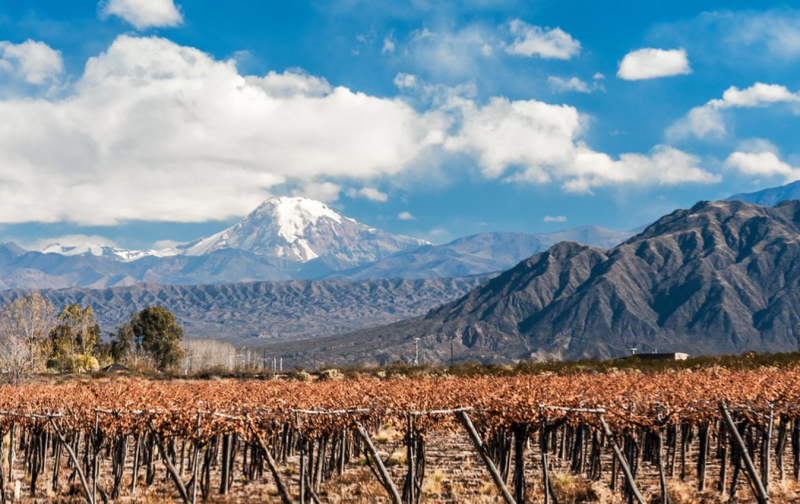
MENDOZA – It’s the grape harvest in Argentina and traditionally the province of Mendoza, which produces 70% of the country’s wines, would be bustling with tourists, mostly from Brazil.
But in this southern hemisphere autumn, the borders with Brazil are closed due to the coronavirus pandemic and only Argentines are visiting vineyards.
Denied the possibility of heading away for their holidays in neighboring Brazil or Uruguay, Argentines have been filling the void at vineyards.
“We’re happy because the pandemic has increased local tourism,” said Eduardo Pulenta, the owner of Pulenta Estate, a 135ha area of vineyards framed by the Andes mountains.
“It’s an international effect because it’s also manifested in exports,” said Pulenta, a fourth generation wine producer.
Both domestic consumption and exports increased during the pandemic thanks in large part to Argentina’s competitive prices.
But Argentina’s prolonged economic crisis, sky high inflation and currency devaluation have threatened the industry’s profitability.
The sector had already been declining for the last six years in a row and many wineries worry that they will not survive.
‘Balancing act’
“Living in an economy like Argentina’s is living under macroeconomic variables that disperse in every direction. We’re living with a currency, the peso, that is devaluing… when we import goods from abroad (in dollars) it costs us a lot of pesos,” said Herve Birnie-Scott, the director of wineries, vineyards and oenology for Chandon Argentina.
“It means that almost all wineries in Argentina have financial problems.”
According to the Center for Economic Studies of Argentine Wineries, internal consumption rose 7.5% in 2020.
Despite the financial hardships brought on by the pandemic, even premium wine sales increased.
When it came to exports, bulk order wine, which comes without branding, the vineyard’s name or appellation of origin, has experienced the greatest growth.
Despite this growth, the dollar receipts are “substantially lower than in 2014 when the decline began.”
While high-end wines costing US$30-US$40 (RM124-RM166) can be tempting for the European or US markets, they are too expensive for many Argentines suffering the effects of three years of recession in a country where 40% live in poverty.
Inflation in 2020 was 36% – the second highest in Latin America after Venezuela’s.
“You have to perform a balancing act so people understand that we cannot maintain the same prices every year,” said Pulenta.
“The profitability of the same industry in other countries is truly superior to ours and that means that they can make technological advancements that cost a lot for us,” he added.
Wineries are encountering other problems during the pandemic, such as the combination of increased demand and a scarcity of materials, such as bottles.
“There have been delays and last-minute deliveries,” said Birnie-Scott.
The spring and summer were very dry in Mendoza leading to a 2020 harvest that was “warmer, which allowed us more concentration, more color, more polyphenols, more tannins,” said Javier Lo Forte, the oenologist from Pulenta Estate. – AFP, March 30, 2021