Business

Be inclusive in digitalisation talks, NUBE urges govt

Learn from German model, where workers and businesses work together to shape policy, says its sec-gen

Updated 5 years ago · Published on 11 Oct 2020 12:24PM

Be inclusive in digitalisation talks, NUBE urges govt
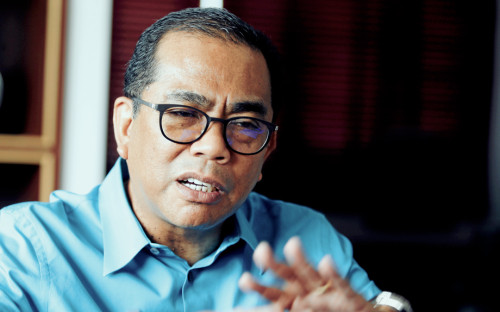
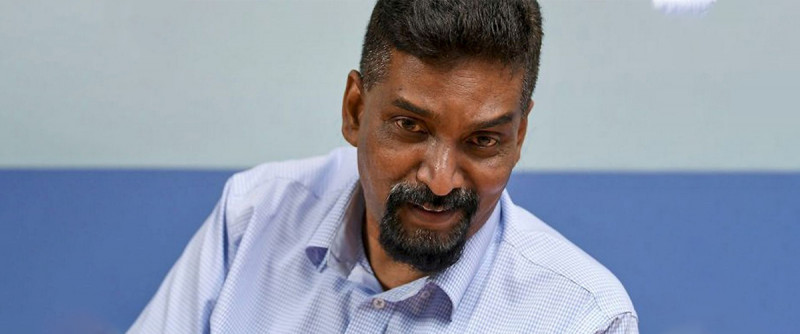
NUBE secretary-general J. Solomon says politicians, trade unions and business leaders must act now to ensure technological change leads to plentiful, good-quality jobs for all. – NUBE pic, October 11, 2020

KUALA LUMPUR – The National Union of Bank Employees (NUBE) has urged the government to be inclusive in consultations on digitalisation in the financial sector.

Its secretary-general J. Solomon says only by this process, the government can implement the master plan in a holistic manner which safeguards the interest of workers. 

“While NUBE, whose members are in the frontline of digital disruption, is not opposing digitalisation, automation, artificial intelligence and outsourcing for valid reasons, it strongly objects to irresponsible use of technology and outsourcing when it affects the livelihood of Malaysian B40 workers.

“Putrajaya must not turn a blind eye to sweeping changes that have been taking place in the financial sector in switching to digitalisation and automation at a rapid pace in recent years,” he said in a statement today.

He stressed politicians, trade unions and business leaders must act now to ensure technological change leads to plentiful, good-quality jobs for all. 

This, he said can be learned from the partnership approach taken in Germany, where workers and businesses have had the chance to shape the direction of policy in response to a government white paper on reimagining work.

Solomon also called for the government to carry out meaningful and effective consultations to ensure the views of workers were heard and deliberated in which they (government) can implement the master plan in a holistic manner which safeguards the interest of workers as well.  

At the same time, NUBE has also urged the government and Bank Negara Malaysia (BNM) to exhort employers to offer workers appropriate training to ensure continuous skills adaptation, instead of offering a voluntary separation scheme (VSS) or retrenchments. – Bernama, October 11, 2020


Related News

Business / 1d

BNM's OPR to stay at 2.75 pcent in 2026 amid strong domestic demand - Kenanga IB

Business / 4w

BMI sees BNM holding OPR at 2.75% in July, amid contained inflation

Business / 1mth

BNM's international reserves at US$129.7b as of April 30, 2026

Business / 1mth

Bank Negara holds OPR steady at 2.75 per cent

Malaysia / 1mth

Low inflation helps Malaysia weather energy supply shock, says BNM governor

Malaysia / 2mth

New hire purchase rules to benefit borrowers, minimal impact on banks

Spotlight

Malaysia

Bersatu-PH tie-up a possibility as coalition seeks Malay support, analyst says

By Alfian Z.M. Tahir

Malaysia

Woman molested on her way home from work (video)

Malaysia

Court allows Daim's daughter to permanently keep passport

Malaysia

Santiago pokes holes in data centre hype, asks: Who really benefits?

By Alfian Z.M. Tahir

Malaysia

Jeweller vows to pursue Rosmah until ‘every penny’ is recovered as RM67.5m battle enters enforcement phase

Malaysia

Ambulance carrying two injured men crashes en route to hospital after MPV collision in Besut

Malaysia

Man blames 'lack of love' for sexual assault on teens

Business

BNM's OPR to stay at 2.75 pcent in 2026 amid strong domestic demand - Kenanga IB

Malaysia

Missing jewellery: Rosmah ordered to pay RM67.5 million

You may be interested

Business

Ringgit holds firm against major currencies as markets await key US inflation data

Business

Ringgit holds firm despite US inflation shock as markets brace for Federal Reserve decision

Business

Open fibre sues Bank Pembangunan, six others in RM2b claim over Aries telecoms liquidation

Business

AI should support human thinking, not replace it - MDEC CEO

Business

BNM's OPR to stay at 2.75 pcent in 2026 amid strong domestic demand - Kenanga IB

Business

Unemployment rate rises to 3.0 per cent in April 2026 - DOSM