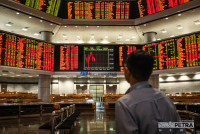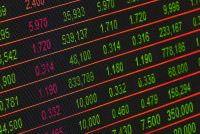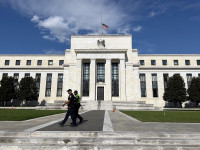
HONG KONG – A forecast-busting surge in United States inflation sent Asian markets tumbling today, tracking a rout on Wall Street as investors fret that the Federal Reserve will be forced to hike interest rates earlier than expected to avoid prices running out of control.
Trading floors were already awash with red this week owing to growing fears that the blockbuster global economic recovery and vast stimulus measures will see a splurge in spending by pent-up, cashed-up shoppers that will strain supplies and push up costs.
And those concerns were given oxygen yesterday by figures showing US consumer inflation spiking at 4.2% in April, far higher than estimates and the highest since 2008 just before the global financial crisis kicked in.
The advance was driven by a rally in commodities’ prices such as widely used copper, iron, and lumber, which are sitting at record or multi-year highs.
All three main indexes in New York plunged at least 2% on worries the Federal Reserve will be forced to taper the ultra-loose monetary policies – including record-low interest rates – that have been a key driver of a more than year-long equities rally.
Tech firms, which blossomed during lockdowns as people were forced to stay home, have led the losses as they are more susceptible to higher interest rates.
The Fed has repeatedly insisted it expects such sharp spikes but they will be transitory owing to last year’s low base, and policymakers will not make any adjustments until they are happy unemployment is under control and inflation is running hot for some time.
However, investors are not convinced and there is growing unease that the central bank could lose control of the situation if it does not act in time, with analysts warning it could risk people’s confidence in the institution.
Former Treasury secretary Lawrence Summers said: “I am very concerned that the Fed’s analytical assessment that inflation is transitory, combined with its policy move toward not being pre-emptive with respect to inflation, will be to repeat the mistakes of the 1960s and 1970s,” referring to when inflation surged.
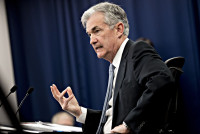
For its part, the Fed remained steadfast in its outlook. Fed vice-chair Richard Clarida said he was “surprised” by the latest data but that officials were prepared to act when needed.
“If we saw evidence that there was a risk of a persistent upward drift in inflation expectations we would not hesitate to use our tools to offset that,” he said, adding that the economy was still far from out of the woods and recovery would likely take time.
Fed’s credibility
Still, Victoria Fernandez, at Crossmark Global Investment, added on Bloomberg TV: “The concern is that the markets have lost a little bit of confidence that the Fed has control of inflation; I don’t think it’s necessarily the level, I think it’s the concern over ‘is the Fed going to wait too long to address the inflation question’.
“I am not sure the market is extremely comfortable with that at this point.”
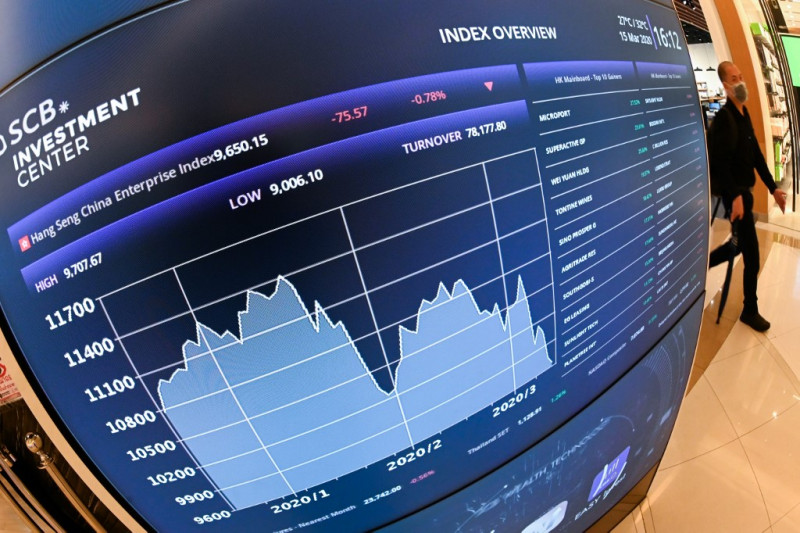
All Asian markets were deep in the red, with Tokyo losing more than 2% and Hong Kong – where monetary policy is linked to the US via a currency peg – was off 1.8%.
Seoul, Wellington, and tech-rich Taipei – which has also been rocked by the imposition of new virus measures – were all down more than 1%, while Sydney, Shanghai, and Bangkok also suffered big losses.
London, Paris, and Frankfurt all tumbled in early trade.
And the dollar held yesterday’s healthy gains that came on the back of bets that US borrowing costs could rise sooner than anticipated.
But Tai Hui, at JP Morgan Asset Management, remained broadly upbeat about the outlook for equities, saying that while the sell-off on Wall Street was heavy, the gain in Treasury yields – a gauge of future interest rates – was less severe.
“The market’s reaction in terms of inflation expectations was also mild, reflecting the belief that this jump in inflation will eventually calm and revert closer to the Fed’s long-term target,” he said in a note.
“Hence, the Fed’s insistence that inflation is only transitory does have an audience. But if inflation data does not calm in the next few months, the challenge to its credibility could be disruptive.”
Bitcoin clawed back some of the big losses it suffered late yesterday in reaction to news that Tesla had stopped allowing people to pay for its cars with the cryptocurrency, citing the environmental impact caused by the computing-intense mining process of creating new units.
It fell about 16% to around US$46,045 (RM189,959) after Tesla boss Elon Musk’s comments before it later bounced to sit at US$51,250 in Asia trade. – AFP, May 13, 2021
Key figures around 0810 GMT
Tokyo – Nikkei 225: DOWN 2.5% at 27,448.01 (close)
Hong Kong – Hang Seng Index: DOWN 1.8% at 27,718.67 (close)
Shanghai – Composite: DOWN 1.0% at 3,429.54 (close)
London – FTSE 100: DOWN 1.9% at 6,871.67
Dollar/yen: DOWN at 109.57 yen from 109.63 yen at 2030 GMT
Euro/dollar: UP at $1.2099 from $1.2072
Pound/dollar: UP at $1.4057 from $1.4053
Euro/pound: UP at 86.07 pence from 85.89 pence
West Texas Intermediate: DOWN 1.2% at $65.26 per barrel
Brent North Sea crude: DOWN 1.2% at $68.49 per barrel
New York – Dow: DOWN 2.0% at 33,587.66 (close)