Business

Release Port Klang containers in three days if no issues: Wee

New SOP effective May 1, covers detention, inspection by agencies and port authorities

Updated 4 years ago · Published on 21 Apr 2022 8:41PM

Release Port Klang containers in three days if no issues: Wee
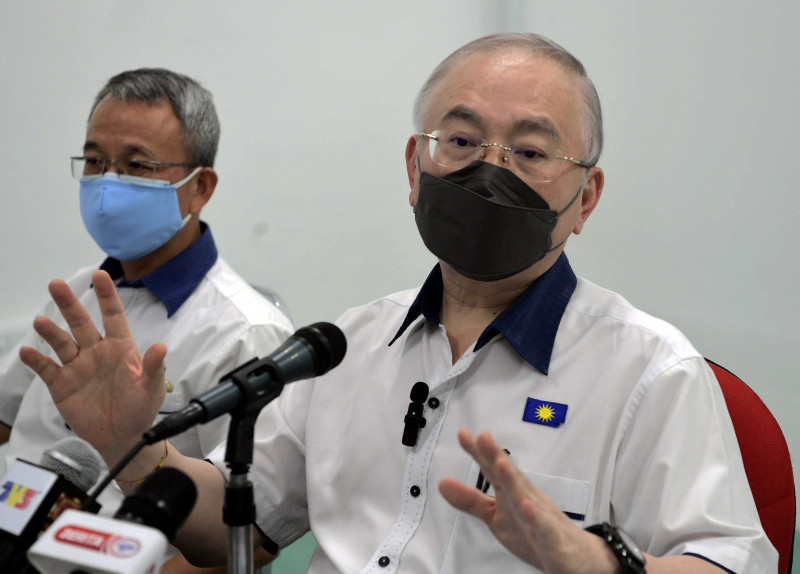
Datuk Seri Wee Ka Siong says the new standard operating procedure is designed to enhance coordination between agencies such as the Royal Malaysian Customs Department and the Malaysian Quarantine and Inspection Services Department for container management. – Bernama pic, April 21, 2022

PUTRAJAYA – Containers held at Port Klang must be inspected and released within three days if there are no issues or need for further inspection.

The new standard operating procedure (SOP) will be implemented effective May 1, 2022, and encompasses the detention, inspection, and release of containers by enforcement agencies and other government agencies or port authorities at Port Klang.

Transport Minister Datuk Seri Wee Ka Siong said no specific time period or limit had previously been set for the release of containers, including those detained for further inspection, causing congestion at Port Klang. 

“We had to wait previously because we set no time limit for the container management process.

“There were also cases of containers being placed at the port and the owner of the container, including his company, becoming untraceable when we took action after five years,” he said in a press conference after chairing the National Logistics Task Force meeting here today.

Wee said the SOP was designed to enhance coordination between agencies such as the Royal Malaysian Customs Department and the Malaysian Quarantine and Inspection Services Department for container management.

“If we can’t integrate well, a delay of a day or two will result in a loss in terms of production,” he said.

The minister said that if the SOP is successfully implemented in Port Klang, his ministry would implement the same in other ports in Malaysia.

Meanwhile, Wee said the implementation of the second phase of the prime mover shared use policy has been extended for semi-trailers to carry luton/box and general cargo, effective May 5, 2022.

In the first phase, which started last September, the Transport Ministry only allowed the shared use of prime movers for semi-trailers carrying container cargo in the same group of companies.

Wee said the implementation of the second phase will first be implemented in Peninsular Malaysia. – Bernama, April 21, 2022


Related News

Opinion / 3w

Rocky’s death a reminder that compassion cannot be selective

Malaysia / 1mth

#JusticeForRocky – Owners call for justice after dog tortured and killed by youths

Malaysia / 8mth

MCA: Leadership transition must carefully be managed to avoid any internal turmoil, says former party veep

Malaysia / 8mth

Ka Siong missed crucial chance to address MCA’s ‘existential crisis’ - says ex veep

Malaysia / 1y

MIC & MCA: The emergence of a third force in Malaysian politics?

Malaysia / 1y

MCA committed to contesting future elections, aims to regains seats - Wee

Spotlight

Malaysia

Singapore could bar under-18s from social media platforms that fail safety test

Malaysia

College student dies after falling from 22nd-floor condominium in Setapak

Malaysia

PM praised for ‘Medeka Day’ reforms; More needed to cope with rising costs – Guan Eng

By Ian McIntyre

World

Tupac Shakur murder case ends after 30 years as ex-gang leader found guilty

Malaysia

Unidentified man found dead in Sungai Buloh drain as police probe suspected murder

Malaysia

Four killed, four injured in 11-vehicle Pahang highway crash

Malaysia

Sarawak haze crisis deepens as five areas hit hazardous air quality

Opinion

Would the United States use nuclear weapons against Iran?

Malaysia

Tajikistan eyes bigger role for Malaysia in Central Asian market

By Alfian Z.M. Tahir

You may be interested

Business

MT4 or MT5? For traders, the choice often comes down to how they trade

By Alfian Z.M. Tahir

Business

Oil prices top US$91 as renewed US-Iran fighting raises global energy shock fears