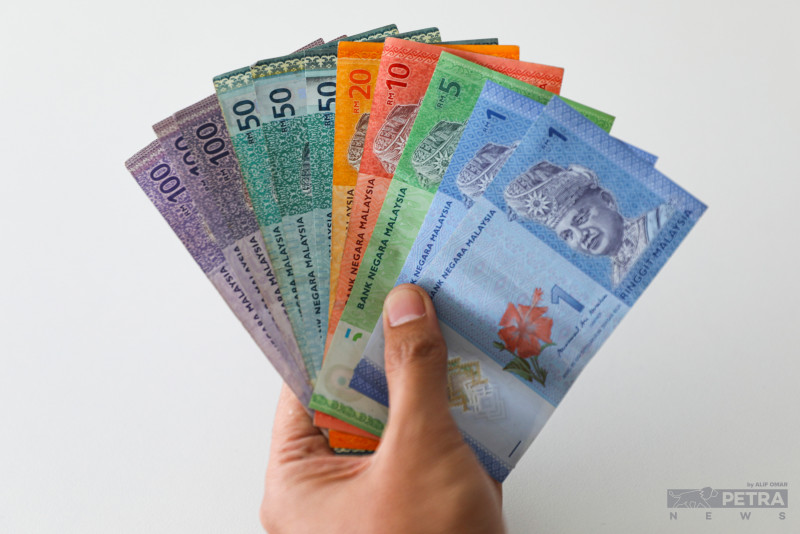
KUALA LUMPUR – Malaysia needs to continue to focus on its strong fundamentals and pursue fiscal reforms to keep the economy competitive and support the ringgit against the surging US dollar, the World Bank said.
Apurva Sanghi, the bank’s lead economist for Malaysia, said although the depreciation of the ringgit versus the greenback is a cause for concern, it is not a domestic issue but rather an international one.
He said the US currency’s appreciation was largely due to the steep interest rate hikes by the US Federal Reserve (Fed) and that it's not only affecting Malaysia but other countries as well.
“Basically the ringgit’s strength will depend on how well the Malaysian economy performs, as long as Malaysia can keep the focus on fundamentals (and implement) a few structural reforms to make it more productive and competitive...from education to improving the investment climate, to subsidy rationalisation, fiscal consolidation and so on, that would help.
“There is no quick and easy fix to the weakness of the ringgit, the depreciation against the US dollar is a concern because of food inflation, and the bulk of its trade is dominated in US dollars,” he told a virtual media briefing titled World Bank East Asia and Pacific Economic Update today.
Sanghi noted that over 80% of Malaysia’s exports and 80% of imports are invoiced in the US dollar.
Finance Minister Tengku Zafrul Abdul Aziz had recently said Malaysia’s fiscal position was still strong and the federal government’s debt was under control. He noted that although the ringgit has weakened against the US dollar since the beginning of 2022, other currencies have fallen more sharply, including the Japanese yen, the British pound, the euro, and the Taiwan dollar.
Sanghi said the hike in Malaysia’s overnight policy rate (OPR), now at 2.5%, is still below the pre-Covid level of 3.0%, and described the tightening rate as “normalising” given that the economy is recovering and inflation increasing.
However, he pointed out that Malaysia does need to maintain a certain spread between the Fed funds rate and the OPR, where too wide a spread could trigger capital outflows from the country. – Bernama, September 27, 2022