Business

Tourism booming but hotels drowning: hoteliers share Budget 2023 wishes

Malaysian Association of Hotels calls for lower utility bills, tax breaks to aid recovery

Updated 4 years ago · Published on 06 Oct 2022 8:00AM

Tourism booming but hotels drowning: hoteliers share Budget 2023 wishes
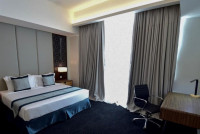
The Malaysian Association of Hotels has outlined its wish list for Budget 2023, stressing that the Finance Ministry needs to pay special attention to aid local hotels in recovery and to ensure their sustainability. – The Vibes file pic, October 6, 2022.

by Ian McIntyre

GEORGE TOWN – The Malaysian Association of Hotels (MAH) has urged the Finance Ministry to pay special attention to sustaining the recovery of the hospitality business, which continues to struggle despite a gradual recovery in tourism.

Outlining its wish list for Budget 2023, MAH’s honorary secretary-general Datuk Megat Shahrul Azman Abas said hotel operators hoped that the utility charges for electricity and water be lowered or made similar to the industrial rates enjoyed by the factories.

“Consumption is difficult to control because the hotels cannot impose on their guests to save water or electricity, especially on what happens inside hotel rooms,” he said.

Tenaga Nasional Bhd charges 43.5 sen/kWh for the first 200 kWh (1 -200 kWh) per month for the commercial (hotels) sector while the charge is 38 sen for the industries.

He also wanted water authorities and the local governments to reduce their charges to allow hotels more “breathing room” to recover from the pandemic.

“Other perks hoteliers hope to cash upon is the reduction of the income tax imposed on the average earners, so they will have more money to withstand the rising cost of living and invest towards tourism.

The hospitality sector in Malaysia, as well as the rest of the world, has been hit badly by the Covid-19 as travel restrictions were imposed strictly globally. – The Vibes file pic, October 6, 2022.

“The hotels also would like tax breaks on the operating profits they have earned so the additional savings earned can be ploughed back towards upgrading their respective properties and improving guest amenities,” he said.

The former Langkawi Development Authority chief executive also urged the ministry to provide training grants to hotels that continue to hire local staffers despite the current shift towards employing foreigners due to an acute labour shortage.

Megat also wants the federal government to step in and regulate hotel tariffs by allowing four to five-star properties to quote their room tariffs in US dollars in view of how the greenback has significantly appreciated against the ringgit.

From 4.20 against US$1 early this year, it is now around 4.60.

“We need to offset our currency deficit losses.”

“Hotel rates in Malaysia are the lowest in the region, so there is room to hike up prices while also maintaining a tariff for local tourists.”

“While tourism is on the mend, the rising inflation, decline of the ringgit, the prolonged war in Europe and a possible global recession continues to impede the ability of the hotels to register notable profits,” he said.

As the pandemic restrictions are lifted and tourism starts booming again, hoteliers still have to endure high costs and competition. The Malaysian Association of Hotels hopes to cash upon income tax reduction, so they will have more money to withstand the rising cost of living and invest towards tourism for its sustainability. – The Vibes file pic, October 6, 2022.

On top of it, is the regional competition for tourist dollars, as more Malaysians now prefer to travel regionally to countries that offer cheaper food and accommodation.

Although the ringgit has declined against various currencies with the exception of the British pound sterling, Megat said that there are Malaysians holidaying overseas.

“It is expected as people are cooped up for so long, so they need to break free.”

He also hopes that the travel trade industry, particularly in Langkawi, can adopt innovative measures to keep costs low and to offer competitive prices in contrast to the prices offered by their regional competitors. – The Vibes, October 6, 2022.

Related News

Community / 2w

Budget 2027: Hoteliers want minimum wage revision to be localised

Off beat / 1mth

Tourism Malaysia seeks lower local airfares to boost domestic tourism

Health / 1mth

Tourism players in Penang call for urgent action to overcome haze situation

Malaysia / 1mth

Tajikistan eyes bigger role for Malaysia in Central Asian market

Off beat / 1mth

Time to look beyond manufacturing and tourism sectors, says Penang CM

Places / 2mth

Overwhelming response for Penang’s reopened museum

Spotlight

Malaysia

Mahathir’s RM150m defamation suit against Anwar faces uncertainty

Malaysia

Son shocked by father’s fatal hacking in FELDA settlement

Malaysia

Election Commission to meet on Nov 6 to set key dates for Sarawak polls

Malaysia

PH says final 72 hours could decide Melaka election outcome despite 70-80% target

Malaysia

RM3.28m Govt aid reaches 164 Indian community places of worship

Malaysia

Ismail Lasim holds off on new Negeri Sembilan exco appointments pending court decision

By Alfian Z.M. Tahir

Malaysia

Battersea project’s high upfront cost led to losses for Malaysian investors, says Anwar

Malaysia

Ras Adiba condemns unauthorised entry into missing TV host Zalina Azman’s home

You may be interested

Business

Oil prices retreat as Middle East diplomacy lifts hopes

Business

Oil prices slide, ringgit weakens as Middle East diplomacy offsets supply risks

Business

China’s AI stock rout wipes out US$480b as valuations collapse