KUALA LUMPUR – The federal government’s revenue collection is envisaged to decrease by 4.4% in 2023 to RM272.6 billion or 15% of gross domestic product (GDP) due to anticipated lower non-tax revenue collection.
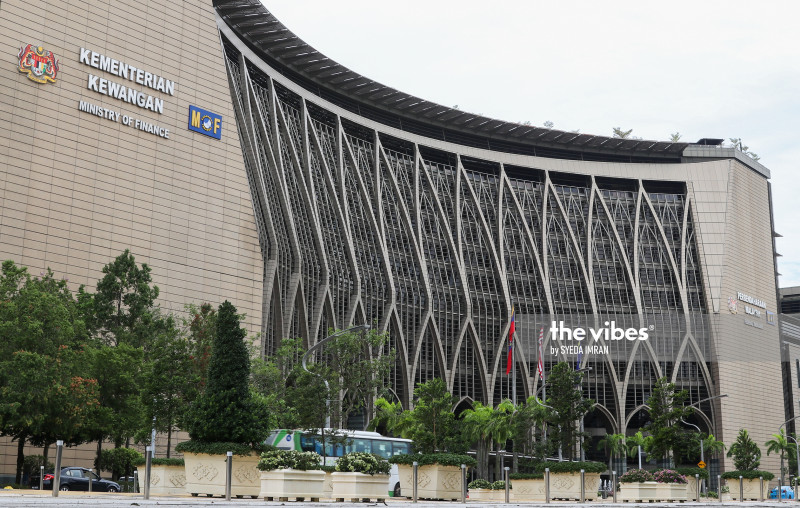
The non-tax revenue in 2023 is expected to decline by 23% year-on-year to RM67 billion due to lower dividends from government entities, the Finance Ministry said in its Fiscal Outlook and Federal Government Revenue Estimates 2023 report released today.
“Tax revenue remains the major contributor (75.4% of the total share) and is anticipated to grow moderately by 3.7% to RM205.6 billion, in line with the projected slower economic recovery,” the ministry said.
It said direct tax is estimated to increase by 3.5% to RM152.4 billion, representing 74.1% of total tax revenue with the bulk of the increase attributed to better collection expected from companies’ income tax (Cita) and individual income tax.
“The higher Cita, estimated at RM88.9 billion, is in line with stable corporate earnings prospects as well as the prosperity tax due to be collected in 2023.
“Similarly, individual income tax is expected to grow by 9.8% to RM33.6 billion on account of steady wage growth and anticipated further strengthening of the job market," it said.
Besides that, it said revenue from other direct tax comprising stamp duty, real property gains tax, and other taxes is expected to register RM9.9 billion, consistent with the continuous growth of the residential building subsector, increased supply of affordable houses, and the government’s initiatives to address property overhang.
The ministry said revenue from indirect tax is estimated to increase by 4.3% to RM53.2 billion in tandem with steady consumption and trade growth.
It said sales and service tax (SST) is forecast to record RM32 billion or about 1.8% of GDP. Sales tax and service tax are projected to increase to RM16.3 billion and RM15.7 billion, respectively, while excise duties are expected to improve to RM12 billion or 0.7% of GDP.
MoF said the expected increase in service tax would be mainly from the tourism sector in anticipation of higher tourists arrival in 2023 supported by the implementation of the Tourism Recovery Framework.
It said the lower collection for non-tax revenue in 2023 is due to lower proceeds from investment income, particularly dividend from Petronas, which is projected to be lower at RM35 billion.
However, it said licences and permits are expected to increase steadily by 3.4% to RM13.8 billion, despite lower contributions from petroleum royalties, and the increase is mainly driven by motor vehicle licences and levies on foreign workers.
Meanwhile, it said the annual dividends from Bank Negara Malaysia and the Retirement Fund Incorporated are projected at RM5 billion and RM3 billion, respectively.
In 2023, it said petroleum-related revenue is expected to register RM58.9 billion or 21.6% of total revenue in line with the assumption of lower global crude oil prices averaging at US$90 (RM418.68) per barrel.
It said non-petroleum revenue is also projected to increase by 3% to RM213.7 billion supported largely by Cita, individual income tax and SST, in tandem with sustained trade and economic activities.
The ministry said as a percentage of GDP, non-petroleum revenue is expected to remain resilient at 11.8%.
“The government is committed to accelerate efforts to execute the Medium-Term Revenue Strategy, rationalise tax incentives, diversify revenue resources, and enhance tax compliance,” it said.
It said the planned fiscal reforms, including the enactment of the Fiscal Responsibility Act, would ensure the country’s fiscal and debt sustainability in the medium and long term.
“These reforms will improve revenue generation, which will facilitate the government’s pursuit of the national aspiration of becoming a high-income nation,” the ministry added. – Bernama, October 7, 2022