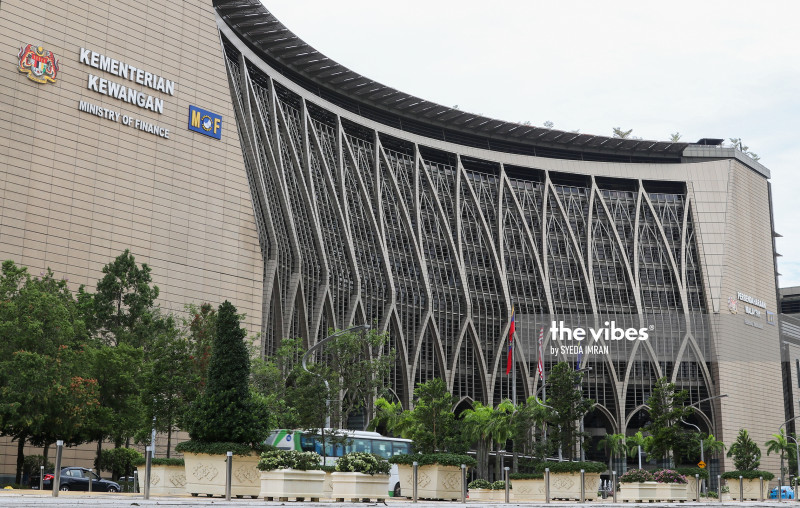
KUALA LUMPUR – The top priorities for Prime Minister Datuk Seri Anwar Ibrahim’s new unity government will be tackling the high cost of living, weakening ringgit and looming global recession worries and the question of how it will impact an open economy like Malaysia.
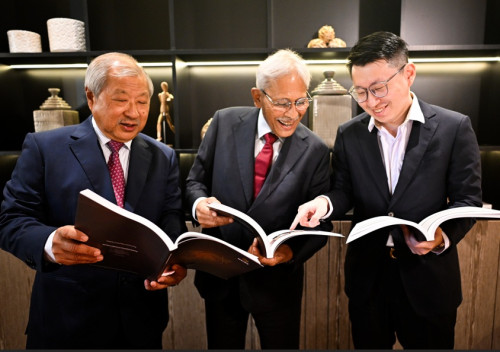
Symphony Digest Sdn Bhd managing director Saw Ann Ping said suggested strategies included dismantling monopolies, producing goods and services the world demands, plugging financial leakages, and stamping out corruption.
She said prices could reduce automatically by “removing monopolies and let market forces do their work”.
“There is no need for committees,” she said today.
Saw, a financial services trainer and former banker, said monopolies and oligopolies enjoyed protected profits, which also allowed incompetence to breed, resulting in high prices which were then passed on to the consumers who have no choice.
“Introduce competition now to drive down prices and trim the fat,” she said.
She said multinational companies were also looking past Malaysia as the country was not producing goods and services that the world wants.
Saw said to reverse the trend, confidence in the economy from foreigners and Malaysians must be rebuilt whereby leakages and corruption are stopped.
She said the economy undoubtedly needed a boost now but lamented the difficulty amid a RM1.4 trillion debt.
Issuing more debt would worsen Malaysia’s credit rating and increase borrowing costs and, in effect, postpone a bigger problem to the future, she said.
“Almost all of Malaysia’s revenue was spent on operating expenses which does not bring much, if any, economic benefit.
“Move that expenditure towards development as there are many suggestions on how the bloated operating expenditure can be reduced,” she said.
She said the implementation should also be accompanied by an eye toward improving productivity, producing more output for the same input.
Saw said there was also a measure the government could take to achieve substantial savings, which was by exercising the integrity clause contained in most concession agreements for contracts awarded by the government.
“If corruption is proven to have been a factor in the award, the government has the right to terminate the concession (and) at the very least, there would be room to renegotiate some of the lopsided terms,” she said, adding that the savings should be invested in public transport and education.
She said there were pockets of unemployment but at the same time, companies were cutting business hours or closing down because of staffing issues.
Saw said one reason was the inability of workers to get to the workplaces due to the absence or poor connectivity of public transport, hence, hours were spent in traffic, which decreased productivity and raised worker unhappiness.
She said the education system should also be less politicised to prevent unemployment and underemployment of young people and that the practice of treating tertiary education as a business must stop.
Saw said young Malaysians were graduating with hefty study loans but holding degrees that industries do not want – all for the sake of increasing student enrolment.
“Is it any wonder then that many young Malaysians do not want to further their education?
“Once the National Higher Education Fund Corporation or PTPTN becomes more selective in giving out loans, this practice will stop and vocational training, where some students are more suited, will get a boost as people pay for skills,” she said.
She said when the labour market is efficiently allocated, salaries would increase, companies would pay for value and minimum wages would not be needed.
“Perhaps then, the brain drain will slow down and Malaysia can become a high-value investment destination which can grow the economy and in the process, strengthen the ringgit plus skyrocketing Malaysia’s happiness index,” she added. – Bernama, December 4, 2022