THERE is an ongoing debate over the significance of Langkawi in the national tourism industry cycle as a leading leisure landmark.
The island with the Brahminy Kite eagle as its mascot, found itself in the limelight for the wrong reasons when many politicians traded barbs over whether it was succeeding or failing as a destination of choice.
It is the only district in the country where the gross domestic product (GDP) revolves around tourism, so naturally the island should be synonymously etched as the symbol of the nation's pride in tourism.
But if one consciously takes a stroll around Kuah - the commercial township, the rows of abandoned shop lots are a stark reminder that while Langkawi is Malaysia's answer to Phuket or Bali, the tourism sector is simply not generating adequate spillover to cater to every aspiring travel trade player.
Those who are around are probably just surviving - there is no clear profit margin or improvements.
It is also a reality now that the expectations of what tourism entails are simply not in touch with the realities out there.
Could it be that there are simply too many suppliers than demand in the actual market, or is there also a monopoly or a cartel out there operating to dominate the sector, leaving small and medium enterprises reeling behind?

While the retail sector struggles, there is a mushrooming of new hospitality properties, but do such hotels have to rely on hiring foreigners, who are only here to earn rather than spend money or is the local population enticed to work in tourism?
Hoteliers often whisper about an acute shortage of staff among the locals.
Based on reports compiled about tourism between Malaysia and Thailand, it was reported that in 2025, Malaysia overtook Thailand to become the most-visited country in the region.
The figure may double or even triple in light of the Visit Malaysia 2026 campaign, but alas, the Middle East conflict, which has entered into tis fifth month, may put a damper on the tourism outlook.
But nonetheless, the team under the Minister of Tourism, Arts and Culture, Datuk Seri Tiong King Sing, should beam with pride that the sector has surged to become a significant contributor to the GDP.
Malaysia recorded a record-breaking 42.2 million international visitor arrivals, while Thailand welcomed 32.97 million foreign tourists.
A closer look at the 2025 tourism performance reveals distinct differences between the two countries:
Total arrivals: Malaysia recorded 42.2 million arrivals, representing a 20.4% increase from 2019 levels.
Thailand received 32.97 million visitors, a 7.2% year-on-year decline, driven by setbacks such as natural disasters, regional political tension (Thailand-Cambodia border skirmishes), and safety concerns of tourists.
But on the reported economic impact, while Malaysia captured bigger tourists' volume, Thailand generated higher tourism revenue, bringing in around USD$42 billion, whereas Malaysia, heavily driven by short-haul and cross-border travel from places like Singapore and Thailand, generated only around USD$32 billion.
That is a difference of USD$10 billion.

Langkawi Development Authority (LADA) former chief executive officer (CEO), Dr Hezri Adnan, said Langkawi should be marketed to the high-end travellers, who can stay for several days or even weeks while spending more than the average tourist.
But despite LADA being regarded as a lynchpin of the island's development pace, the CEOs are mostly appointed to short - term contracts, and when there is a change at the top, there are adaptations to strategies and policies.
The CEOs need to be given a mid-to-long term mandate to carry out the tasks of developing the island resort.
The first LADA top brass officer - the late Tan Sri Abdul Halil Mutalib, a former officer with the Penang Development Corporation was at the helm of the authority from 1990 to 2000, and he arguably led the rapid development of the island during that period - hundreds of hotel rooms and events were produced.
Langkawi should also be used as a benchmark in how the country can steer away from just the number of tourists to those who can spend more.
Unlike social media accounts, numbers do not count much in tourism if the tourists do not spend well throughout their visits here.
To ensure the cake is well sliced, it needs to be bigger, and it also needs to be sustainable.
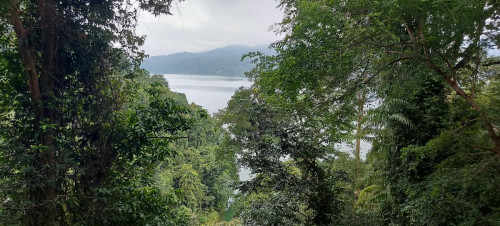
More effort needs to be made if Langkawi wants to leverage its status as one of the UNESCO Global Geopark networks, where sustainability is a way of life.
There is also a need to diversify Langkawi's economy from tourism - centric to one that has sectors which support it.
With a diverse economic base, it can also help lower the living and operating costs of the island resort.
The island's farming and fisheries have strong potential to grow, and its bordering location with southern Thailand is another area worth tapping.
The authorities also need to discard the monopoly of the ferry services by opening up the sector to all forms of maritime travel - allow yachting charter services to bring in passengers and offer more incentives to the leisure boating until regional yachties from as far as Australia can consider plying the calm waters here.
There are enough debates and politicking about Langkawi - it is time to act and to ensure that the island can achieve its true potential. - May 29, 2026.