A CAMBODIAN casino and property conglomerate controlled by a politically connected tycoon leased buildings later used as a vast cyber scam and human trafficking compound, according to a Reuters investigation based on lease agreements, interviews, satellite imagery and documents recovered from the abandoned site.
The investigation centres on the Royal Hill Resort and Casino complex in O'Smach, a Cambodian border town opposite Thailand that transformed from a quiet frontier settlement into a sprawling cyber scam hub following a rapid construction boom beginning in 2018.
Reuters cited that a lease agreement dated March 2024 shows that Lim Heng Group rented three buildings within the Royal Hill complex to a Chinese national for US$200,000 per month under a two-year agreement. The structures were later found to contain sophisticated facilities designed to facilitate international fraud operations.
According to Reuters, the buildings housed elaborate sets resembling police stations and bank branches from several countries, enabling scammers to impersonate law enforcement officers and financial institutions while targeting victims around the world.
The news agency said it found no evidence that Lim Heng Group was directly involved in the trafficking or fraudulent activities conducted inside the premises. However, the investigation establishes commercial links between the casino operator and the buildings where the criminal operations were based.
Royal Hill Resort and Casino did not respond to Reuters' telephone calls or emails seeking comment. Questions sent to Lim Heng Group by registered post also went unanswered.
Thai investigators have identified Lim Heng Group as the owner of the property, according to two Thai security agency reports reviewed by Reuters.
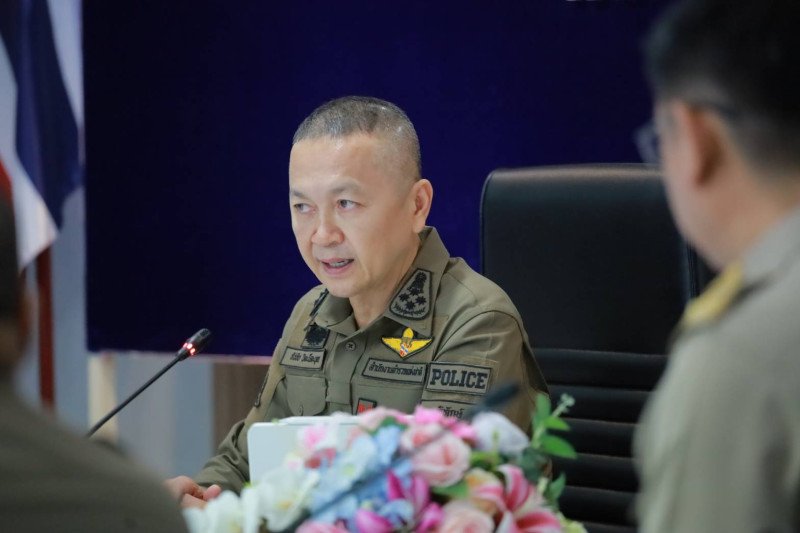
General Thatchai Pitaneelaboot of the Royal Thai Police, who is leading investigations into cyber fraud at the compound, told visiting reporters that Chinese criminal syndicates had carried out scam operations from the Royal Hill site, although he did not identify the groups involved.
The compound came under international scrutiny after Thailand's military seized the site following border clashes with Cambodia in December. Reuters visited the abandoned complex twice this year at the invitation of the Thai military, documenting evidence left behind by fleeing operators.
Among the discoveries were scam scripts targeting Australian victims, handwritten records detailing fraudulent telephone calls, fake police stations bearing Singaporean insignia, replica bank branches modelled on Vietnamese financial institutions, and soundproof booths lined with acoustic foam used to deceive victims during telephone conversations.
The investigation also revealed that dormitories housing scam workers sat alongside offices equipped with computers and staged environments used to convince victims they were dealing with legitimate authorities.
Satellite imagery analysed by Reuters shows construction around the Royal Hill complex accelerated dramatically after 2018, with numerous new buildings clustered around casino developments. By late 2025, the area had become one of Southeast Asia's largest cyber scam centres, accommodating an estimated 3,000 people within a fortified 200-acre compound, according to Thai security officials.
Reuters also found evidence suggesting Lim Heng Group had been alerted to allegations of trafficking activities months before the compound was exposed.
Court documents reviewed by the news agency show that in September 2024, a representative of Lim Heng Group filed legal complaints against two Cambodian media publishers after they reported that foreign nationals were allegedly being confined within the Royal Hill complex.
One publisher confirmed the complaint related to reporting on foreigners being held at the casino but maintained the story was accurate. The article was later removed following legal advice in an effort to settle the dispute.
Legal experts told Reuters that Cambodian prosecutors could pursue action against landlords if investigations establish they knowingly allowed their properties to be used for criminal activities.
The findings also reinforce broader concerns about the close relationship between casinos and organised cybercrime across Southeast Asia.
Jason Tower of the Global Initiative Against Transnational Organized Crime said many Chinese-linked scam syndicates maintain connections with casino businesses, which provide opportunities to conceal illicit proceeds.
An Amnesty International investigation previously found that casino operators in Cambodia exercised direct control over numerous scam centres, although Reuters said it had not independently verified those findings.
Professor Sophal Ear of Arizona State University said Cambodia's casino industry is frequently dominated by influential business figures with strong political connections, providing criminal enterprises with the infrastructure and protection required to operate on a large scale.
The United States Department of State similarly warned in its 2024 Trafficking in Persons Report that cyber scam operations remained widespread in Cambodia because politically connected elites owned properties used by fraud syndicates and benefited financially from their activities.
One survivor interviewed by Reuters, Thai national Pornpen Aimhun, said she was lured to Royal Hill in 2022 after responding to a Facebook advertisement for a web administrator position. Instead, she alleged she was forced to participate in police impersonation scams under constant surveillance by armed guards, with workers punished if they failed to meet fraud targets.
Her account was corroborated by another trafficking victim and by Thai police, who confirmed she is a witness in an ongoing criminal case linked to fraud operations at the complex.
Cambodia has pledged to dismantle cyber scam networks and has introduced legislation targeting online fraud while extraditing alleged scam kingpin Chen Zhi to China as part of a wider crackdown.
Senior Cambodian minister Chhay Sinarith said the government remains committed to working with international partners to combat cybercrime and confirmed authorities are investigating alleged scam operations around Royal Hill. He added that Thailand should return control of the seized sites to facilitate Cambodian investigations.
Meanwhile, Cambodian Information Minister Neth Pheaktra rejected Thailand's justification for military strikes on the compound, dismissing claims that casino buildings had been used for military purposes and accusing Bangkok of attacking civilian infrastructure. - July 15, 2026