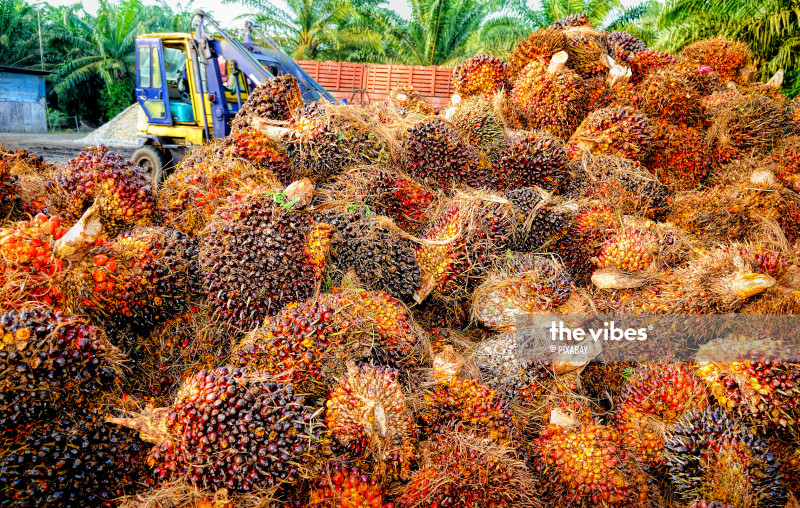
KUALA LUMPUR – The Malaysian Palm Oil Board (MPOB) is concerned about the European Union’s (EU) agreement to ban the import of several products which include palm oil, beef, soy, coffee, cocoa, and timber.
According to a statement shared on the European Commission (EC) website, the EU reached an agreement on December 6, 2022 to ban the import of the mentioned products, which have been identified as a “driver of deforestation” if they come from deforested land after December 31, 2020.
In a statement today, MPOB said that based on the EC statement, the new law will, once adopted and applied, ensure that a set of key goods placed on the EU market will no longer contribute to deforestation and forest degradation in the EU and elsewhere in the world.
The EC also mentioned that when the new rules enter into force, all relevant companies will have to conduct strict due diligence if they place their products on the EU market.
It also stated that importing companies will have to show that their products are deforestation-free, and subject to proving “precise geographical information on farmland” where the commodities were sourced.
The EU will now have to formally adopt the regulation before it can enter into force, and traders will have 18 months to implement the rules, the statement said.
Commenting on the issue, MPOB director-general Datuk Ahmad Parveez Ghulam Kadir said the EU’s regulation only targeted the cultivation of commodities from developing economies as the major challenge in protecting the global environment.
“The implication for the oil palm industry is expected to be from the due diligence statement which will add to administrative burden and higher cost of production vis-à-vis domestically produced rapeseed oil and sunflower oil.
“There is discrimination here as other crops such as rapeseed and sunflower are not targeted. In addition, smallholders may struggle to comply and be excluded from the EU market,” he said.
He stressed that Malaysia is strongly committed to producing palm oil according to sustainable principles and criteria under the Malaysian Sustainable Palm Oil (MSPO) Certification Scheme which has been implemented mandatorily from January 1, 2020.
Recently in 2022, he noted Malaysia has revised the MSPO standards to be in line with international norms, increase credibility and expand broader scopes for recognition from the global market.
Improvements in matters involving social and labour issues, good practices, High Conservation Values (HCV), Social Impact Assessment (SIA), and quantification of greenhouse gas (GHG) emissions were considered in the revision of the MSPO standards.
He said the development of the Malaysian oil palm industry is also governed by more than 60 regulations and laws, making it the most regulated industry in Malaysia.
Additionally, Malaysia is committed to forest conservation and tropical rainforest biodiversity and still maintains at least 50% of its land area under forest protection as pledged at the Rio Earth Summit in 1992, he shared.
Parveez also highlighted that the involvement of the Malaysian palm oil industry in deforestation is very low due to implementation of regulations and laws in Malaysia.
“This needs to be recognised by the EU. Based on the interpretation, palm oil and its products produced from existing palm plantations before January 1, 2021 are considered deforestation-free.
“Malaysia does not allow deforestation for oil palm cultivation. The EU must recognise products based on country of origin and not globally as is done for palm biofuel,” he said.
According to him, the State of the World’s Forests 2020 reported that the amount of forest loss has decreased globally and this shows a positive sign where a balance between biodiversity conservation and sustainable forest use or development does exist.
Based on the perspective of Malaysia’s commitments including the MSPO certification, the decline in primary forest loss in Malaysia for four consecutive years (from 2017 to 2020) may have contributed towards this downward trend as reported by the Global Forest Watch 2021, Parveez said.
“Malaysia is also fully committed to conducting constructive bilateral cooperation and negotiations to ensure that there is no discrimination in the conduct of international trade for market access for Malaysian products in the EU market,” he said.
MPOB said Malaysia has a policy and legal framework to ensure sustainable development balances environmental protection and socioeconomic development.
This is evident through the implementation of various programmes and initiatives for the conservation and protection of forests and biodiversity including, among others, the national forestry initiative namely, the Central Forest Spine and Heart of Borneo, reforestation through the replanting of forest tree species, the establishment of wildlife corridors and the reduction of greenhouse gas emissions green (GHG), it said.
It shared that Malaysia has already enacted an important policy towards sustainable oil palm cultivation in March 2019 which among others, limits the total area of oil palm cultivation to 6.5 million hectares, halts the cultivation of oil palm in peatland areas, strengthens the regulations regarding the existing cultivation of oil palm on peatlands and prohibits the conversion of reserved forest areas for oil palm cultivation.
Besides that, it said the government has also established the Malaysian Palm Oil Green Conservation Foundation to support conservation efforts as well as improve the image of palm oil as a sustainable product in the eyes of the world.
“This effort shows that the government is committed and serious about the preservation, conservation and protection of the environment,” it added. – Bernama, December 13, 2022