KUALA LUMPUR – Hong Leong Investment Bank Bhd (HLIB) opines that the worst could be over for the ringgit and expects an appreciation bias for the local currency averaging at RM4.34 against the US dollar in 2023 compared to about RM4.40 currently.
The local currency is expected to end the year at around RM4.30.
The research house said that in 2022, the ringgit was on a weakening trend against a strong greenback, driven by the Federal Reserve’s (Fed) hawkish tilt amid strong US data and persistent inflation expectations.
“Going into 2023, the Fed has signalled a more balanced approach as headline inflation has moderated from the peak following lower crude oil and food prices, following less Covid-19 pandemic disruption while the probability of recession has increased.
“However, there may still be some volatility in the exchange rate movements as demand-pull inflation remains strong as evidenced by strong labour market performance. Nevertheless, as the Fed continues to increase the interest rate, this is also expected to weaken US domestic demand over time,” it said in a note today.
In addition, HLIB said China’s loosening of Covid-19 restrictions may also lead to higher demand for commodities, which may spur interest in commodity currencies, and trade partners as well, including Malaysia.
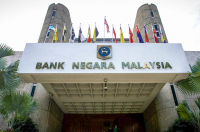
It noted that as a result of the Fed’s aggressive tightening in 2022 at 425 basis points (bps) compared to a much milder pace by Bank Negara Malaysia (BNM) of 100bps, the Fed Funds Rate (FFR) spread has widened versus BNM’s Overnight Policy Rate (OPR) from -163 bps at the start of the year to +163 bps currently.
Correspondingly, it said the ringgit depreciated against the US dollar to its worst-ever level by early-November hitting RM4.75, and this was also aggravated by heightened political risk premium running up to the 15th general election at that time.
“Nevertheless, with the Fed decelerating, the pace of FFR-OPR spread widening is expected to slow down and should bode well for the ringgit,” it noted.
HLIB shared that the last episode of FFR-OPR spread widening happened from December 2015 to December 2018 totalling +225 bps.
“Despite the spread widening duration lasting three years, the peak of the ringgit’s weakness happened in December 2016, that is one year into that three-year cycle, and appreciated thereafter.
“Therefore, we are inclined to believe the situation is somewhat similar this time around, and that we are now past the peak of the ringgit’s weakness,” it said.
On the sectorial impact of the ringgit recovery, HLIB said on a broader market perspective, it believed a recovery in ringgit augurs well for corporate Malaysia given the domestic-centric nature of most businesses.
“From a sectorial standpoint, we see beneficiaries from a stronger ringgit being auto due to lower import cost, aviation for lower operational cost, media on lower content cost and utilities mainly Tenaga Nasional Bhd for the lower US dollar coal price and foreign debt.
“On the flip side, a strengthening ringgit is negative for exporters like gloves, furniture and technology, not to mention that these sectors are also seeing their respective demand slowdown,” it shared.
Further on OPR, HLIB said the domestic economy is anticipated to continue its recovery in 2023, albeit at a slower pace, mainly driven by domestic demand.
“Malaysia’s growth outlook however remains subject to downside risks, stemming from slower-than-expected global growth, higher risk aversion in financial markets and further escalation of geopolitical conflicts.
“Nevertheless, in view of the rising core inflation trend and continued economic expansion, coupled with the Fed’s focus on inflationary risks, we maintain our expectation for BNM to raise OPR by another 25bps each in January and March next year, bringing OPR to 3.25%,” HLIB said.
The BNM’s Monetary Policy Committee (MPC) viewed that despite the challenging global environment, domestic demand will remain the key driver of growth, with household spending underpinned by better labour market conditions.
The reopening of international borders is also expected to lift tourism-related sectors further, while investment activities will be driven by the realisation of multi-year projects, it said.
“Nevertheless, the MPC sees downside risks remaining, stemming from slower-than-expected global growth, higher risk aversion in financial markets, further escalation of geopolitical conflicts, and worsening supply disruptions,” it noted.
As for the headline inflation, HLIB expected it to start moderating in the fourth quarter this year, as the low base effect dissipates but to continue trending at relatively high levels moving into 2023.
“Core inflation has also continued on an uptrend, signalling a build-up of underlying inflationary pressure, due mainly to the recovery in domestic demand and labour market. Possible changes to domestic policies may also give upside risk to Malaysia’s inflation trajectory,” it shared.
Meanwhile, on Bursa Malaysia’s equity market, the research house said as existing headwinds are subsiding, it was reckoned that 2023 could be a less turbulent one for the market, but certainly not a smooth journey.
With the benchmark FTSE Bursa Malaysia KLCI (FBM KLCI) having a -58% inverse correlation to the FFR-OPR spread, a deceleration in Fed hikes, which is likely peaking in the first half of 2023 should arrest weakness on the local bourse, it viewed.
“While market choppiness is not likely to dissipate anytime soon in the wake of recessionary fears, we feel that Malaysia’s bottomed-out foreign shareholding and under-owned position would help contain an exodus. For the near term, we remain upbeat on a highly probable positive December return.
“Most of the headwinds hampering the market this year such as supply chain disruption, labour shortage, aggressive Fed tightening and domestic political uncertainty are subsiding and Malaysia is now on a much stronger footing from its sustained reopening than it was during the 2020-2021 Covid-19 pandemic. Our 2023 FBM KLCI target of 1,580,” it added. – Bernama, December 16, 2022