Business

Total trade rises 8.6% y-o-y to RM236 bil in Dec 2022: DOSM

Exports, imports increase 6.0%, 12.0% during same period

Updated 3 years ago · Published on 27 Jan 2023 1:17PM

Total trade rises 8.6% y-o-y to RM236 bil in Dec 2022: DOSM
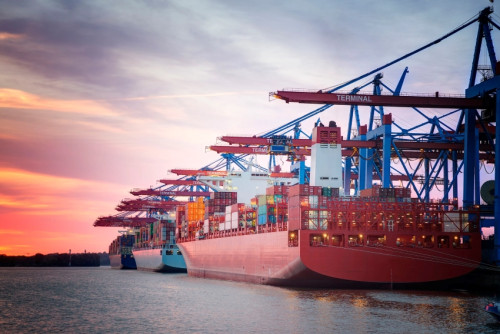
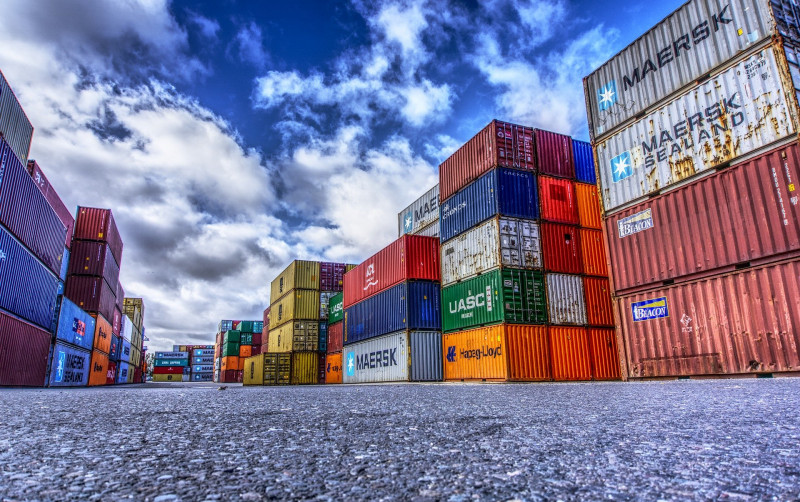
The Statistics Department announces today that Malaysia’s total trade for December 2022 amounted to RM236.0 billion, an increase of 8.6% year-on-year. – Pixabay pic, January 27, 2023

KUALA LUMPUR – Malaysia’s total trade for December 2022 amounted to RM236.0 billion, an increase of 8.6% year-on-year (y-o-y), with exports rising 6.0% y-o-y to RM131.9 billion while imports rose 12.0% y-o-y to RM104.1 billion, said the Statistics Department (DOSM) today.

Chief Statistician Datuk Seri Mohd Uzir Mahidin said Malaysia’s total trade in 2022 recorded a new milestone to reach RM2.8 trillion.

Meanwhile, the export performance by states showed that exports in December 2022 increased RM7.5 billion or 6.0% compared to the same month of the previous year.

“Higher exports were recorded in most states such as Johor (+RM4.3 billion), Sarawak (+RM2.2 billion), Selangor (+RM1.4 billion), Labuan (+RM1.4 billion), Negri Sembilan (+RM264.1 million), Perak (+RM230.1 million), and Kedah (+RM184.0 million),” he said in a statement today.

Meanwhile, Melaka recorded RM97.9 million higher exports, Kelantan (+RM92.9 million), Kuala Lumpur (+RM64.8 million), and Perlis (+RM14.3 million). 

However, Uzir noted that exports decreased for Sabah (-RM1.7 billion), Pahang (-RM563.3 million), Terengganu (-RM531.0 million) and Penang (-RM93.3 million).

Looking at the performance of imports by state, he noted that imports also increased RM11.2 billion or 12.0% in December 2022 compared to the same month of the previous year due to the higher imports in most states such as Johor (+RM5.1 billion), Selangor (+RM2.7 billion) and Melaka (+RM1.8 billion).

Among the top five major exporting states, the chief statistician said Penang remained as the top exporter with a share of 30.85, followed by Johor (19.2%), Selangor (17.8%), Sarawak (9.1%), and Kuala Lumpur (4.7%). 

As for imports, Selangor was the largest contributor with a share of 27.2%, followed by Penang (21.9%), Johor (20.8%), Kuala Lumpur (6.6%), and Kedah (5.8%). – Bernama, January 27, 2023


Related News

Off beat / 1d

Malaysia’s ‘Happy Potato’ enters 4 new markets in 6 months

Opinion / 4d

Modernity beyond the West? What Saudi Arabia is really testing

Malaysia / 6d

Malaysia records 17.5 million international tourist arrivals from January - May

Malaysia / 1w

Malaysia must aim to return to budget surpluses again

Malaysia / 1w

New Malaysia-Thailand border crossing: Businesses will not be affected, says tourism authority

Malaysia / 1w

DOSM: May unemployment rate remains at 3 per cent

Spotlight

Malaysia

After Johor, the uncomfortable question for Anwar’s critics: Were we too impatient?

By The Vibes Says

Malaysia

Network School's business licences revoked, to cease operations tomorrow

Opinion

Orang Asli in Pahang: Token gestures or genuine recognition?

Malaysia

Tuition teacher sentenced to 105 years in prison and 70 lashes for raping daughter

Malaysia

Azam Baki denies involvement in RM178.29 million contract linked to brother’s company

Malaysia

Aminuddin urges NS voters to weigh manifesto promising benefits for M40 and B40 groups

Malaysia

No need to resign, PM has absolute power if there is doubt – Ahmad Zahid

World

Gaza’s water crisis deepens as families face thirst, disease and collapsing sanitation systems

You may be interested

Business

Govt boosts SME digitalisation support with new smart manufacturing co-investment scheme

Business

Oil prices rally above US$84 per barrel as US-Iran conflict deepens

Business

Plastics industry faces tough year as raw material volatility add to cost pressures

Business

Central bank policies remain crucial in shaping currency market movements

By Alfian Z.M. Tahir

Business

Malaysia posts record RM340.9 billion trade in June as exports jump 45.4%

Business

Oil prices near five-week high as US-Iran conflict fuels supply concerns