KUALA LUMPUR – The Malaysia-Singapore Framework on Cooperation in Digital Economy can be a role model for other Asean countries in preparing their talent, small and medium enterprises (SMEs), and start-ups for the digital decade.
“Through this collaboration, Malaysia hopes to learn and share best practices that will facilitate talent-building, infrastructure upgrading, and others, whether in the public or private sector,” International Trade and Industry Minister Datuk Seri Tengku Zafrul Tengku Abdul Aziz said today.
As for the framework on cooperation in the green economy, he said Malaysia welcomes the collaboration with Singapore on the technical know-how for the regulatory requirements for electric vehicles, autonomous vehicles, and green economy initiatives such as carbon credits, quantifying well-to-wheels and others.
“These would include standardisation or industry guidelines, technical requirements, a code of conduct, laws and regulations, as well as capacity-building programmes,” he told the media in Singapore after the signing ceremony for the framework.
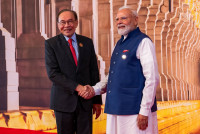
The signing ceremony was witnessed by Malaysian Prime Minister Datuk Seri Anwar Ibrahim and Singapore Prime Minister Lee Hsien Loong.
“This cooperation framework is a joint initiative between the (Malaysian) International Trade and Industry Ministry and (Singapore’s) Trade and Industry Ministry to increase bilateral cooperation in the fields of the digital economy and green economy.
“God willing, this bilateral cooperation in the digital economy and green economy has the potential to drive industrial development in both countries and create more job and business opportunities for Malaysia and Singapore.
“I agree with many of the principles mentioned by Prime Minister Anwar Ibrahim in terms of meaningful economic growth. In fact, from the past, I have always shared with the media that economic growth needs to benefit the people as well, in terms of job opportunities and empowering the people to build a good life, not benefiting big companies only,” he said.
This principle also needs to be applied in any bilateral or multilateral agreement, including in terms of the newly signed framework, he added.
“Asean needs strong leadership for the future sustainability of its people. In my opinion, joint cooperation with Singapore in the digital economy and green economy is able to provide such leadership to contribute to the prosperity of Asean in the future,” noted Tengku Zafrul.
Asked about the investment outlook for Malaysia, Tengku Zafrul acknowledged that there was strong competition and there were areas for improvement, especially in industries it wants to focus on.
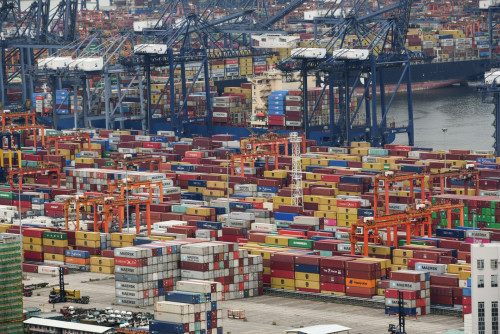
According to government data released recently, Singapore accounted for the largest value of exports among Asean nations at RM232.57 billion in 2022, followed by Thailand, Indonesia, Vietnam, and the Philippines.
Singapore, Thailand, and Indonesia were the top three export destinations in 2022, accounting for 78.3% of Malaysia’s total exports to Asean.
Exports to almost all Asean countries registered a new record high. – Bernama, January 30, 2023