NEW DELHI – One of India’s biggest and oldest conglomerates is returning to its roots with a multi-billion-dollar bet on the country’s growing middle class and its demand for air travel.
Air India was for many years under state ownership, a byword for underinvestment, crippling losses, and inefficiency.
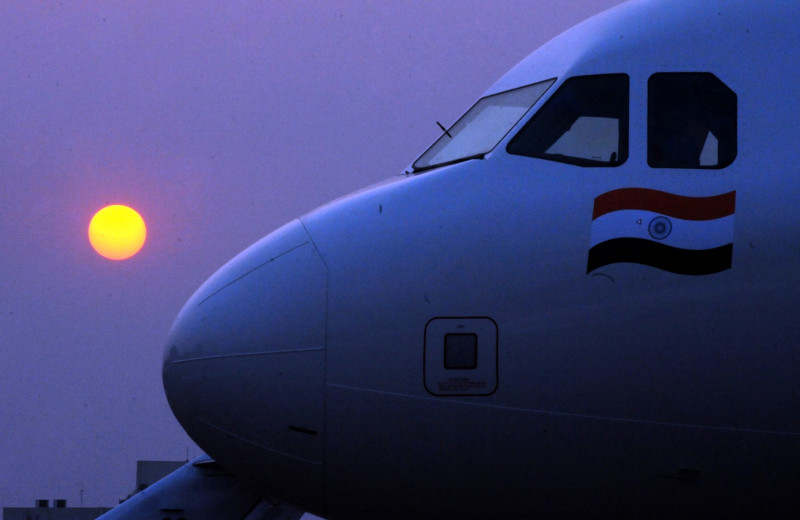
Now back in the hands of its original private owners, it announced combined purchases of 470 aircraft from Airbus (250 planes) and Boeing (220 planes) today, which together form one of the largest orders in aviation history.
The announcement comes a year after tea-to-software conglomerate Tata Group re-acquired the loss-making airline, founded by globetrotting Franco-Indian industrialist J.R.D. Tata, who piloted its maiden flight in 1932.
Reports say he described its post-independence nationalisation as the saddest day of his life, frequently lamenting the loss.
And it has haemorrhaged money in recent years, with successive Indian governments spending nearly US$15 billion (RM65 billion) to prop it up from 2009 until Tata bought it back in a US$2.4 billion deal a year ago.
“Welcome back, Air India,” Tata’s patriarch chairman emeritus Ratan Tata celebrated after completing the purchase.
It last bought new aircraft in 2006, but now its new old owners are looking to restore its image as the “Maharaja of the Skies”, while at the same time taking on the emergent carriers of recent decades – Emirates, Qatar Airways, and Turkish Airlines, whose hub and spoke models have given them an outsize share of intercontinental travel.
Shakti Lumba, former head of operations at IndiGo, which long ago replaced Air India as the country’s largest domestic airline, said that the Tata group “can build a world-class global brand”.
It needed to add capacity over several years to achieve its goal of 30% market share, said Lumba. “With India’s captive market, there is enough domestic traffic for everyone,” he added.
India is the world’s fastest-growing major economy and its fifth-largest, and while inequality is rife with vast numbers of people remaining grindingly poor, it also has a growing middle class with an increasing appetite for air travel.
Airbus forecasts its air traffic will grow at 6.6% a year over the next two decades, twice the global average, and aviation experts say it needs at least 2,000 aircraft in the next decade.
The “deal and its scale reflect the state of Indian economy, its growth trajectory, and the fact that more and more Indians will travel both domestically and globally in the next decade,” said Anas Rahman Junaid, Mumbai-based founder of wealth analysts Hurun India.
“Tata, with its experience of running large organisations, has what it takes to take a local brand global,” he added.
‘Image and reputation’
Founded in 1868 by Jamsetji Tata, the eponymous group owns Jaguar Land Rover, software giant TCS, and Tata steel. Its subsidiaries include 29 listed entities with diverse interests in chemicals, hospitality, steel, automobiles, and consumer goods.
Even with the new planes, Air India is only a small territory in the Tata empire, which already controlled listed businesses with around US$250 billion in combined market capitalisation before buying the airline.
But it has more recent aviation experience than the carrier’s previous incarnation: Tata is to combine Air India with Vistara, its existing joint venture with Singapore Airlines.
Nonetheless, there could be turbulence ahead, warned Mark Martin, chief executive of Martin Consulting.
“They will have to recruit talent and return to the warm Indian hospitality that made it one of the world’s top-rated airlines in the 1960s and 1970s,” he said.
About half the new aircraft will be replacements for its ageing fleet, he noted.
That “doesn’t have to be celebrated as a great achievement”, he added, “it is something that they have to do”. – AFP, February 14, 2023