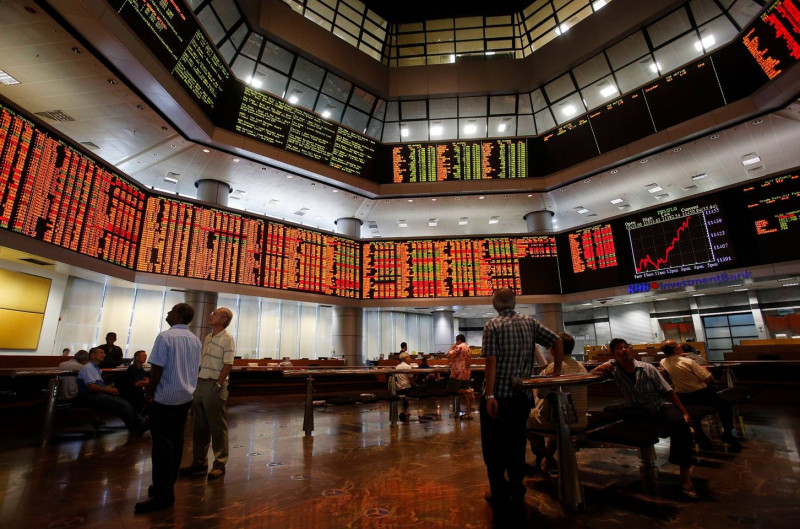
KUALA LUMPUR – The benchmark FTSE Bursa Malaysia KLCI (FBM KLCI) would have fallen by 11% in the year to November had it not been for the support of three healthcare counters, said Bursa Malaysia Bhd chairman Tan Sri Abdul Wahid Omar.
The said counters are Hartalega Holdings Bhd, IHH Healthcare Bhd and Top Glove Corporation Bhd.
Wahid, speaking at a PowerTalk webinar themed “Moving Forward: Banking and Capital Market Trends”, organised by the World Islamic Economic Forum and Securities Industry Development Corporation here today, said thanks to the healthcare stocks, the FBM KLCI declined only 1.6% in the year to November, and Bursa became one of the best-performing emerging markets in Asean, besides the Hanoi stock exchange.
“The healthcare index surged 220.9% in the year to November 2020... So if we were to remove the performance from healthcare, especially the glove counters, the number would be quite different, meaning the FBM KLCI would have fallen 11% in the year to November 2020.”
Moving into November-December, he said, glove counters have seen normalisation in their share prices after the sector's price-to-earnings ratio dropped to below 15 times from its peak of 45 times in August.
Moving forward, however, he expects demand for the healthcare counters to continue to grow, with or without Covid-19, due to greater awareness on good hygiene.
Other than the healthcare counters, the Technology Index, which soared 72%, as well as the Industrial Products and Services Index, up 4.7%, were the only two out of the 13 Bursa sectoral indices that posted positive growth from January to last month.
To recap, the FBM KLCI rebounded from a low of 1,219.72 on March 19 to a year-to-date high of 1,628.26 on December 3.
Wahid said Bursa and brokers have benefited from the doubling of business volume during the pandemic.
In the first 11 months of the year, the average daily value on the local bourse surged 114% to RM4.1 billion from about RM1.9 billion last year.
“We also saw significant retail participation, particularly by younger investors aged 26 to 45, who accounted for about two-thirds of market participants,” said Wahid.
On the online trading perspective, he said 78% of retail trading is conducted online, making up 46% of overall trade.
“This is something that is very encouraging, and something that we have not seen before.” – Bernama, December 8, 2020