
WHEN a generation is deprived of its mother language, the latter’s significance towards the cultural world becomes eliminated almost instantly.
“I believe that when our language dies, so do our whole culture's songs, legends, customs and tradition. Therefore, it is very important for us to keep Orang Asli languages alive, to help retain knowledge gained over the years and encourage ownership as well as pride being linked with our heritage”.
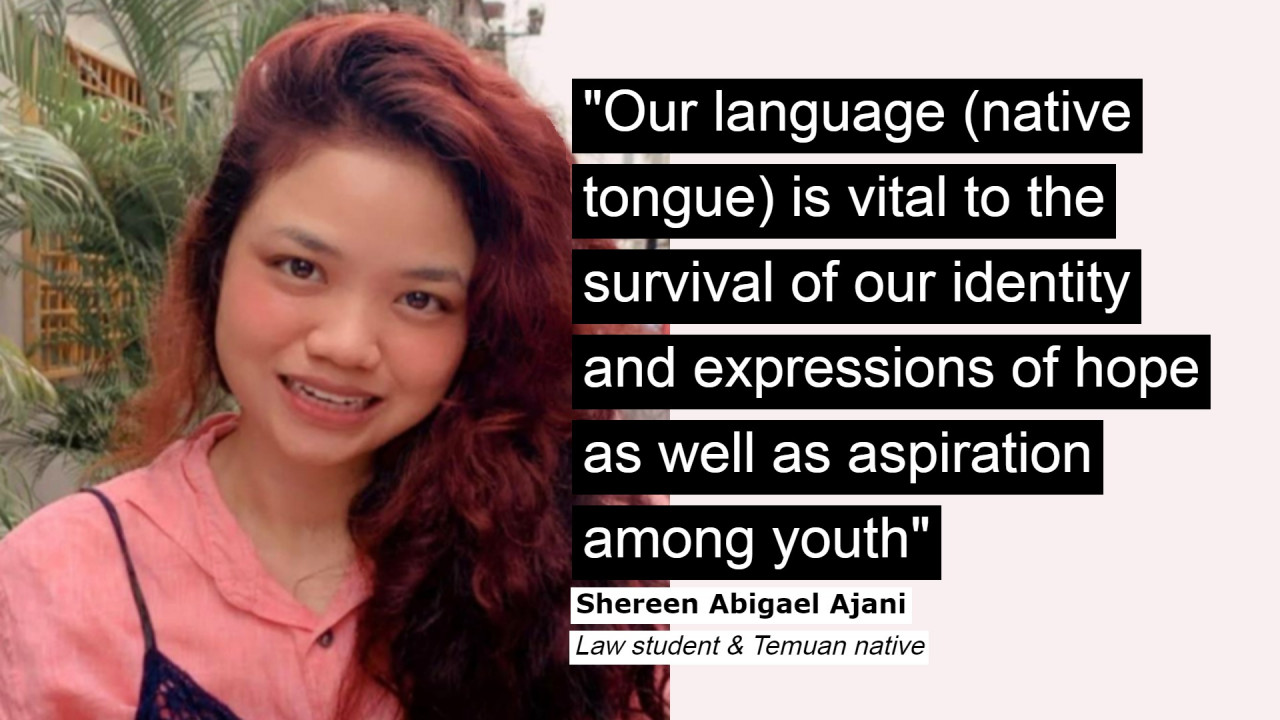
Shereen Abigael Ajani, 28, is an Orang Asli of the Temuan tribe here in Selangor. Currently a third year Bachelor of Laws (LLB) student at Universiti Malaya (UM), she notes that all indigenous people would share the same belief she just addressed.
“Language known as our mother/native tongue does not only define the unique membership of our society, but it also holds our ancestral ethics and values in which the information structures connect us with the land and our roots,” she said, adding, “our language (native tongue) is vital to the survival of our identity and expressions of hope as well as aspiration among youth”.
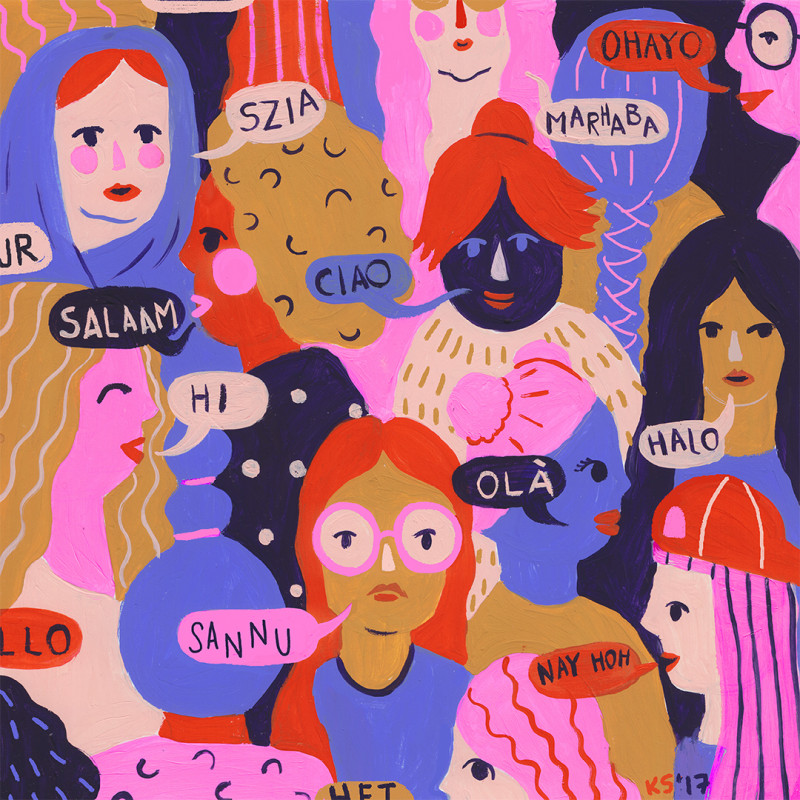
When languages fade, so does the world's rich tapestry of cultural diversity
The importance placed towards native tongue is highly significant among the ethnic groups because, “the capability of speaking the indigenous language is in fact one of the criteria in the definition of Orang Asli as per Section 3 of the Aboriginal People Act 1954 (Act 67)”.
In Peninsular Malaysia, there are 18 ethnic groups, which is divided into 3 main categories with 6 ethnic groups, each explicitly defined to be Semang (or Negrito), generally located in the northern portion of the peninsula, Senoi (or Sakai), residing in the central region, and the Proto-Malay (or Aboriginal Malay), in the southern region.
Explaining the significance of safeguarding her mother language further, Shereen shares, “the classification of indigenous tribe(s) is based on the four elements –physical characteristics, cultural practices, geographical settlement and of course linguistic kinship”.
According to the law student, the rich heritage of every ethnic group needs greater preservation because doing so prevents the loss of such kinship and allows Orang Asli cultures to continue thriving.
The challenge faced in protecting and revitalising indigenous languages for an Orang Asli when exposed (studying, working and living) in mainstream society, is having to manage conversational language widely spoken by the urban society.
“Most of the Orang Asli languages (except for the Semai perhaps) are also not taught in schools, mostly due to being not written but passed down verbally from one generation to another. It is what may make the Orang Asli community slowly lose their mother languages over the years,” noted Shereen.
Holding strong to the belief of ‘where there is a will, there is a way’, she shares, “When I do return home to my village, I will only speak Temuan with family members.
“I also teach my nieces and nephews simple phrases and words in my mother tongue to be used in day-to-day conversations. For example, the word ‘chicken’ will sound as ‘ayam’ in Bahasa, but ‘hayam’ in Temuan. The words ‘no’ as ‘nyap’, instead of ‘tidak’ etc. It is much easier to teach kids when they are young as their brains absorb information like sponges and can easily grasp everything that is taught.
“I also introduce my language to my circle of friends. Being in varsity, I have friends that speak different languages and dialects – from Mandarin and Tamil to Kelantanese, Kedahan, and even Javanese. Our multilingual group might sound like chicken and ducks when we converse, but I think that is what makes the exchange beautiful. We are able to understand and accept each other's way of talking more harmoniously that way,” she added.
Noting the society at large can also participate in safeguarding indigenous languages, “Nelson Mandela said: ‘If you talk to a man in a language he understands, that goes to his head. If you talk to him in his own language, that goes to his heart’. It shows that understanding how an ethnic group speaks enables a person to build the everlasting bond within the community, although he is not of the same background,” expressed Shereen.
“Let’s take the example of the Cikgu Sam, a successful Indian teacher who taught Orang Asli children of Sekolah Kebangsaan Runchang in Pahang to score outstanding English results in their UPSR. In the beginning of his journey, he worked hard to understand and study the indigenous language before being able to introduce foreign language to his students. What better way to be accepted in the community, if not for his dedication in studying the native language?” she said.
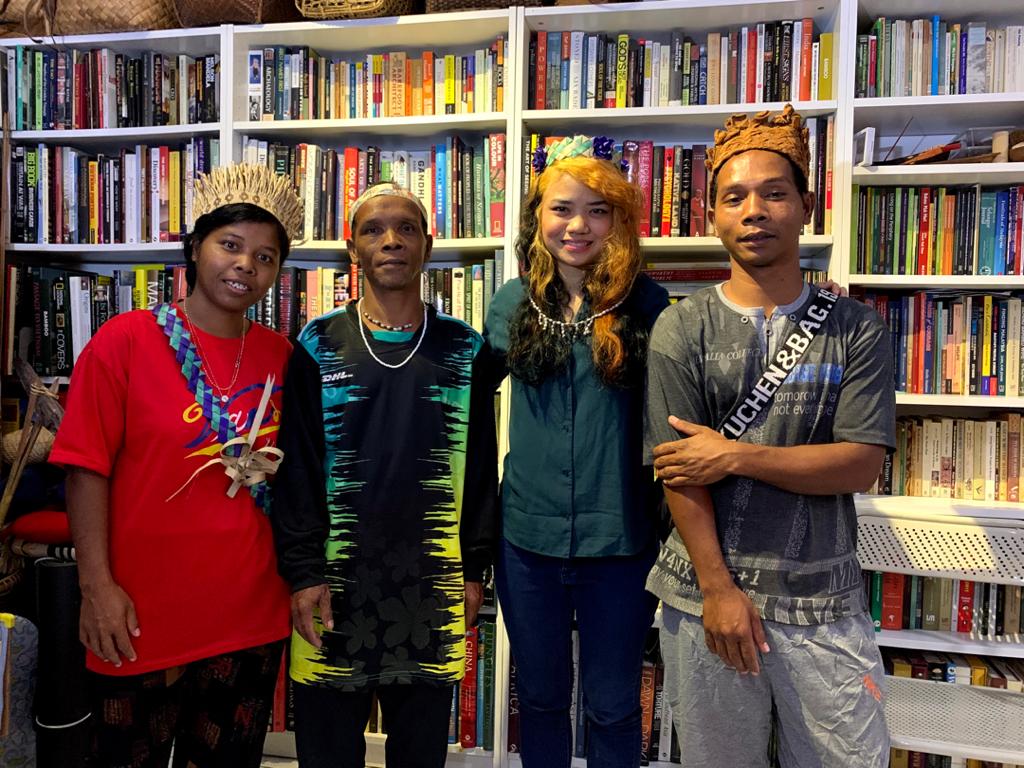
The youngest of seven siblings, Shereen believes that by mastering law, she will be able to provide legal aid to her people, especially in protecting the rights to their native customary land.
She is actively involved in her community by raising awareness about the plight of indigenous people in Peninsular Malaysia. Her pivotal focus is to assist Orang Asli children and youth to get better access to education opportunities and facilities, through a pilot project that kick started earlier this year, known as ‘Projek Mahasiswa Orang Asli’.
For the Temuan law student, education is the ultimate power that will help Orang Asli to get a chance of a better life while preserving their traditions and customs.
“Hence, I am working hard to make sure it happens”.
Multilingual and multicultural societies exist through languages
Cultural diversity creates a rich and varied world, which increases the range of choices and nurtures human capacities and values. If society places enough importance in such understanding, sustainable development (tolerance, social justice and mutual respect between people) for the communities that make up a nation can be achieved.
Proposing ideas on how to enhance the inclusion of fading indigenous language within a multilingual society sustainably, the law student shares, “having it as part of the school syllabus, perhaps in Sejarah and Pendidikan Sivik will do. The former on what Orang Asli is all about and the latter is about the communities’ languages, customs and traditions.
“It would be a bonus if books and dictionaries of Orang Asli language(s) get the support it needs, especially from the Education Ministry, to be published and circulated throughout the schools nationwide.
"Of course, it will also be helpful if there are broadcasted programmes in Orang Asli languages produced more – be it a sketch, play or even a comedy show to gain audience attention. I think creating a platform that allows all sorts of awareness programs can be carried out by any interested parties, but more importantly having an inclusive space for the learning process is a greater need,” added Shereen.
Groups that actively take part in the Orang Asli documentation such as the Centre for Orang Asli Concerns (COAC), Jaringan Orang Asli SeMalaysia (JOAS), Jaringan Kampung Orang Asli Semenanjung Malaysia, along with individuals such as Adif Bah Yit and renowned visual artist Shaq Koyok (who champions Orang Asli customs, traditions, arts and language through his works) are among the named few that the law student commended.

“They have provided a massive amount of support in creating awareness not just of languages, but also issues pertaining to preserving the culture, history and traditions. Our own radio channel, Asyik FM operated by Radio Televisyen Malaysia (RTM), also provides a great platform for Orang Asli talents to be known among the general audience,” said Shereen.
"I think it is necessary to ensure the continuity of indigenous cultural identity as it will serve as a platform for youth (and the coming generations) to understand the history of their tribe or communities present around them.
“As an Orang Asli, understanding the origin soul (the peaceful comfort of being in your own community) and struggles (facing marginalisation of own rights) will help in navigating the passage towards globalisation,” she added.
She further highlighted the preservation of indigenous cultural identity, especially here in Malaysia is what acts as a tool for true Malaysian unity, diversity being in our blood since the founding days of our nation.
On whether she sees any realistic hope in having an inclusive policy and practice in teaching and learning indigenous traditions in the current multilingual context(s): “More needs to be done especially with the active involvement of Orang Asli themselves.
“A proper strategy and implementation through every level must be conducted to ensure the policy itself takes care of every single aspect in preserving the uniqueness of each ethnic race,” said Shereen.
“Without these essentials, a policy will only be a piece of worthless paper”. – The Vibes, February 21, 2021