A SOFT but erratic buzzing sound woke me up. I instantly knew the source and thought I’ve mistakenly set the alarm in my phone way too early in the morning as the faintly green glowing hands of the loudly ticking table clock on the nightstand shows it’s close to 4am. The buzzing sound stopped for a while. Thinking the alarm shuts itself I tried sleeping again, but no, just a few seconds after it buzzes again.
The phone flashes the name of someone I’m quite familiar with.
Now, I was thinking there was a call of some urgency. An emergency of sorts. Someone close to me ended up in the hospital or worse… especially seeing that we are in pandemic times.
I swiped to answer the call and a quite energetic voice greeted me from the other side. The type of energetic, slightly high-pitched-due-to-excitement voice. Mine was so dry and trying not to be loud that it could rival the best ASMR YouTube channels.
“Hey! Have you heard the breaking news?”
“What news?”
“The news, that MCO ended and cinemas are reopening!”
“They announced that like two days ago… Did you just found that out?”
“Oh, did I miss the shinkansen?”
A slight giggle could be heard on the other end as the sentence ended. Shinkansen is a slang we share that is used almost the same way as missing the bus or train, but more for news alerts – seeing how fast news moves today.
Although I’m not a purist and can watch a whole film through the small five-point-something inches screen of my smartphone comfortably, even I can appreciate what this means. After all, a cinema is not just a dark hall to watch movies while being frozen to death because you forgot to bring a jacket, it is a socialising space.
What makes X, X?
“So, what film do you want to watch?” They paused with a hurm before continuing: “The list is still limited, but this Chinese martial art film seems cool.”
“Is it a China Chinese film or Hong Kong Chinese film?”
It was just a random question, but I guess it baffled them as they can only reply with a, “What?”
“There’s a difference you know, the same way Taiwanese Chinese films, Malaysian Chinese films, or even Singaporean Chinese films.”
“Well, I guess there’s a difference, is it a language thing? Mandarin versus Cantonese?”
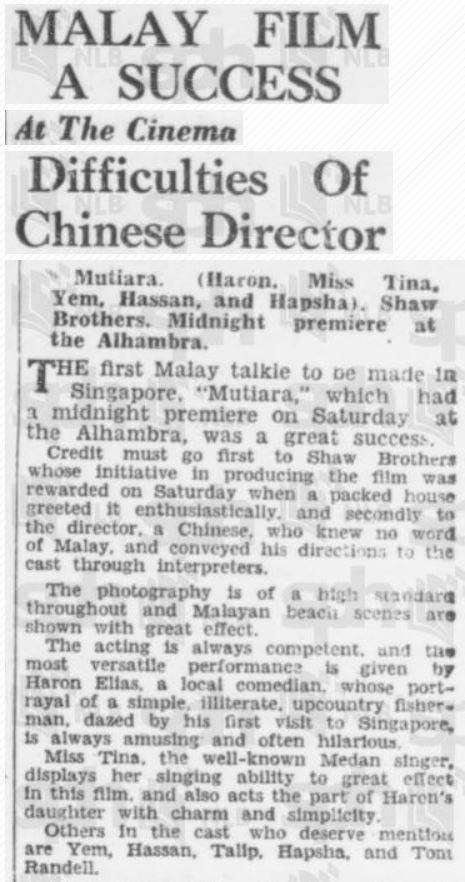
I guess there is a slight language, or at least dialect, difference between all these Chinese films. Although a Chinese director can very well create a full Malay-speaking film based on Chinese stories, is such a film a Malay film, or a Chinese film, or a British Malaya film? This situation is not hypothetical as it was what happened in the early days of the Shaw Brothers in Singapore when the Hong Kong directors Hou Yao and Wan Hoi Ling directed the ‘Malay-talkie’ titled ‘Mutiara’ in 1940.
The attempt of categorising the origins of a film based on the state (political power and borders), nation (the people) and/or the language always felt like something is missing. Like it’s a slightly offset image or floating shelves that are not properly aligned that bothers you to the core even when it shouldn’t. Obviously, all that influence the making of a film, but there’s something more.
“So, what is more?”, they asked in a curious tone.
“It’s like how K-pop is Korean while sharing similarities with the more established Japanese pop and American pop in the early days, it is still unmistakably Korean.”
“Oh, like that local song I rant about before for being 'so K-pop’?”
“Yeah, there’s a distinctive aesthetic and thematic element to K-pop and in extension the Korean New Wave films that is beyond the Korean language, but without dismissing the influence of the language itself in creating that style.”
Despite not being a massive Korean media fan, I noticed there’s a tendency for Korean speakers to pull and bend their end syllable of a word. The more exaggerated the situation, the more it will be bent and pulled. It is not trying to dramatise slurred drunken speech as it is also present in regular dialogue, and including in the cutesy aeygo singing tone of girl groups. It creates a unique rhythm, prosody if I may, between short and long-bendy syllable that becomes an important feature in their style. Either intentionally or not. But this is just one minor example.
Inspiration and zeitgeist
“I’m guessing you’re trying to point out that the borders or geolocation, political/economic situation, social situation, the people, the culture, the language, altogether are responsible in creating that unique style?”
“No, I was saying there’s something beyond that which I’m still missing. The special sauce, the je ne sais quoi.”
“The inspiration? Maybe?”
As soon as I heard “inspiration” something sparked in me.
The French New Wave that inspired current American auteurs such as Martin Scorsese, Quentin Tarantino, and basically the whole world; were inspired themselves by older American auteurs such as Orson Wells and Alfred Hitchcock.
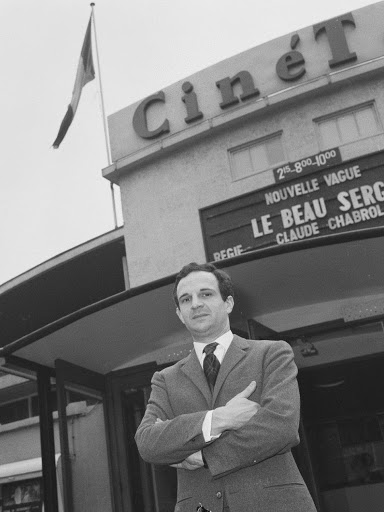
The French New Wave was responding to something, to the stagnant French film industry that was too studio-controlled and just copying the latest Hollywood styles.
Responding to the zeitgeist of needing something fresh, something more daring and pushing the art of filmmaking, thus popularising telling personal stories, creative jump cuts, freeze frames, montages, breaking the fourth wall, being more risqué on-screen – which have trickled down to the current Hollywood mainstream cinema.
What about Malaysia?
“So, by your logic, how do we do the same for Malaysian films? Do Chinese Malaysian films, Chinese Tamil films, Malay Malaysian films, or in any other local languages; is there a unifying ‘Malaysian’ thread shared by all outside of the setting or the occasional usage of 'bahasa rojak'?
“What do you think?”
“I don’t know… I’ve watched 'Jagat' (2015), 'The Journey' (2016), 'Bunohan' (2011), all of them at surface level tend to be seen as mono-cultural and isolated from the other races in Malaysia but there’s something more Malaysian looming above those examples while telling personal, cultural-slanted stories?”
“Now you understand my struggle in trying to intellectualise this.”
“It is not about being '1Malaysia', or everyone is happy-go-lucky in this melting pot of multi-cultural, multi-religious country…”
It is more akin to being grounded and being close to your roots, but somehow in actuality making them universal and speaks to broader communities? Maybe we humans are just wired weird like that? People respond to personal stories because we can empathise with them? This train of thought is something I have to bring forward to the future.
Like how the film ‘Anna and the King’ (1999) was filmed in Malaysia with major Malaysian talents on screen, but not really with the heart of Malaysia, nor Thailand for that matter. Or how we can never claim James Wan films as Malaysian although he was born here.
There’s surely a loose thread somewhere that I could pull and unravel this mystery. The thing somewhere in-between inspiration and zeitgeist, the heart that is still vague and blurry from where I stand. It not an attempt to scientifically categorise what Malaysian films are, but to discover and take note of the traits, the trends, the zeitgeist, like an anthropologist or archaeologist dusting off the ruins of an ancient civilisation.
“So, I guess your journey now is to find the heart of what makes Malaysian films, Malaysian.”
“In all honesty, I don’t think I’ll ever find a satisfactory answer throughout the coming weeks, but the journey is more important than the destination.” – The Vibes, March 6, 2021
A.R. Shah is a multi-media storyteller trying to explore the various modes of storytelling. Currently he's part of the artist collective Projek Rabak to explore deeper into the arts and humanity.


.png)