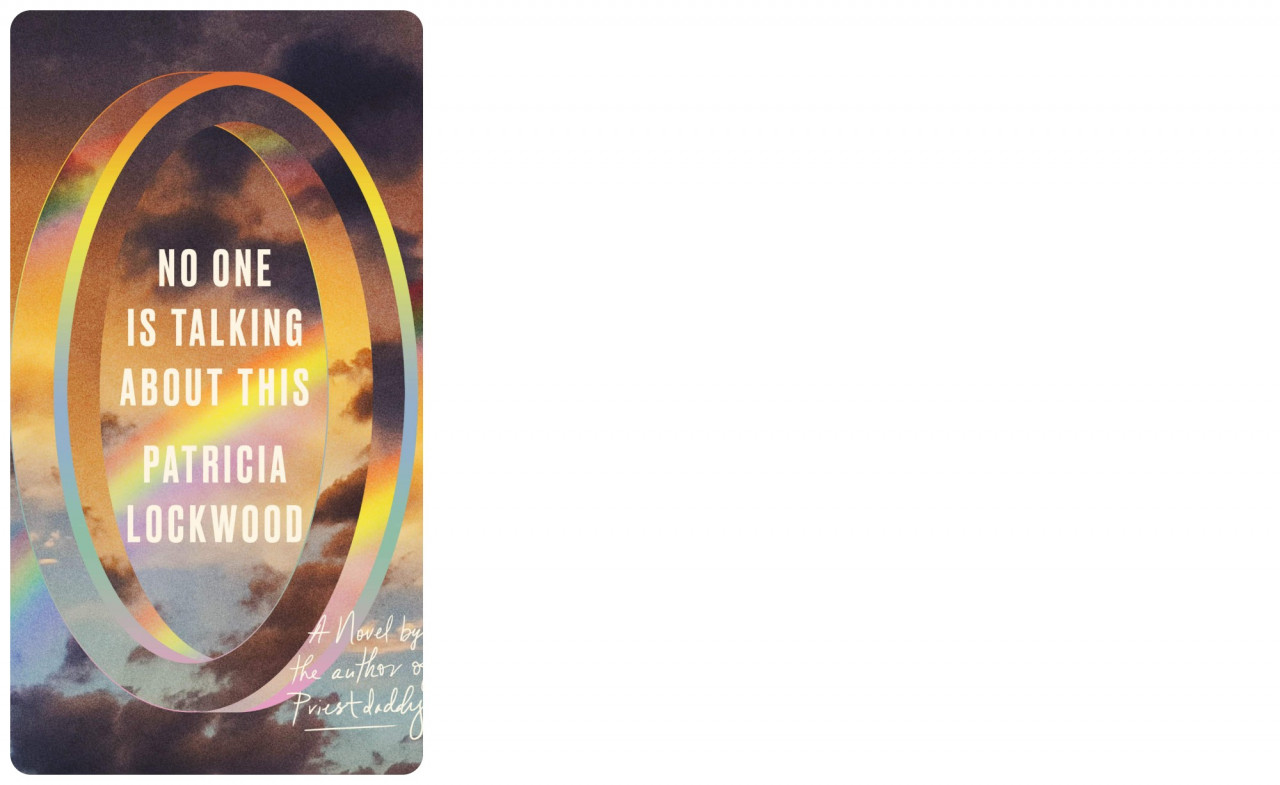

“CAN a dog be twins?” asks the narrator of Patricia Lockwood’s debut novel.
This absurd question catches the imagination of web-users and catapults the unnamed narrator to minor fame, the line becoming an in-joke and meme among the devout of what Lockwood calls ‘the portal’, a term which may refer to Twitter, or perhaps the entire Internet.
This is a novel in two parts, each quite different in form and function. The first is chaotic, disjointed, fragmented, leaving the punch-drunk reader to draw inferences between its sentences and paragraphs. It is more in the realm of poetry or fever dream, fractured and disconnected in a way that often mimics or evokes, without quite imitating, the flow of unrelated factoids and quips that make up a social media timeline or feed.
Our narrator is fixated with her device and addicted to the vertiginous depths of the bottomless scroll, her life in meatspace confined to the margins, the larger part of her waking hours spent absorbed in and by the words and images online, while contributing more words of her own, feeding the beast, maintaining its inertia, lines offered up and taken into the maw and spat out for other users to absorb in return, each giving and taking and sharing in a unholy communion of cultural clichés and catchphrases.
She confines and defines and refines and reinforces her sense of self through the portal, to the point that she and her online persona are indistinguishable. Some of it is quite funny. A lot of it is exhausting. Anyone who spends an unreasonable amount of time on social media will remember or recognize some of the touchpoints. BlinkingCaucasian.Gif anyone?
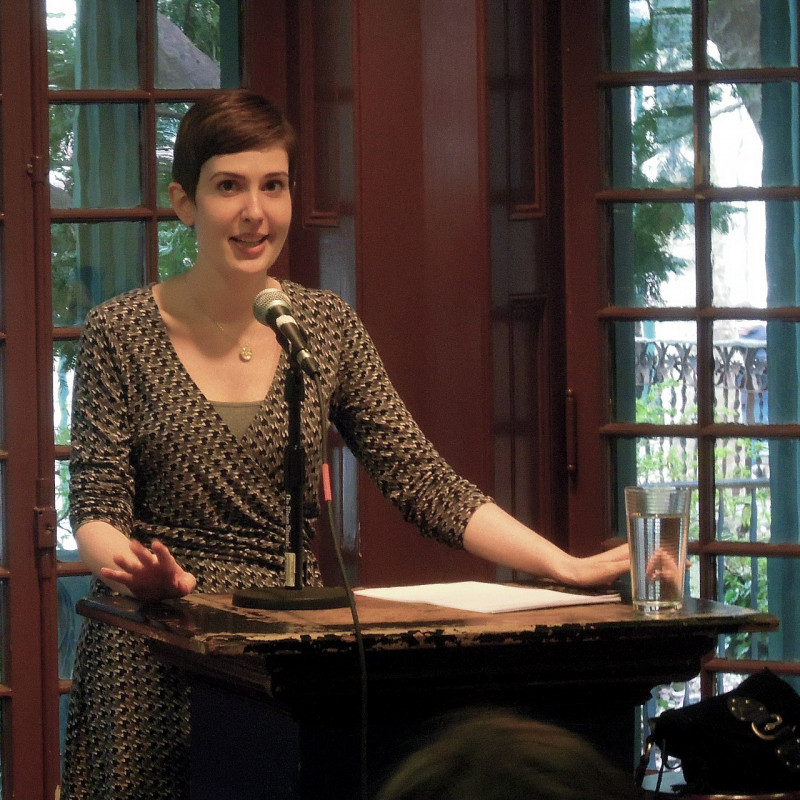
Lockwood is a poet and essayist, and now a novelist, but she is primarily a poet. She treats prose like poetry and readers like poetry readers. One of her recurring themes is that it is no longer helpful or useful or even accurate to think of the internet as something separate from us. We are it, it is us; the lines between the two are so blurred and ambiguous that it is impossible to know where one begins and the other ends.
This is certainly the case for the narrator, who seems to be not-so-loosely based on the writer herself. She is grafted to the portal, feeling what it feels, her mind moving in time to the waves and currents and tides of trending topics and tropes.
But the fictional husband has no trouble distinguishing between the online world accessed through devices and the other old-fashioned world that our bodies still belong to (even if the portal may have stolen our minds). He can turn a device on and off at will, engage for a moment then emerge unscathed. Some readers may recognize themselves more in him, while others may find the narrator uncannily close for comfort.
***
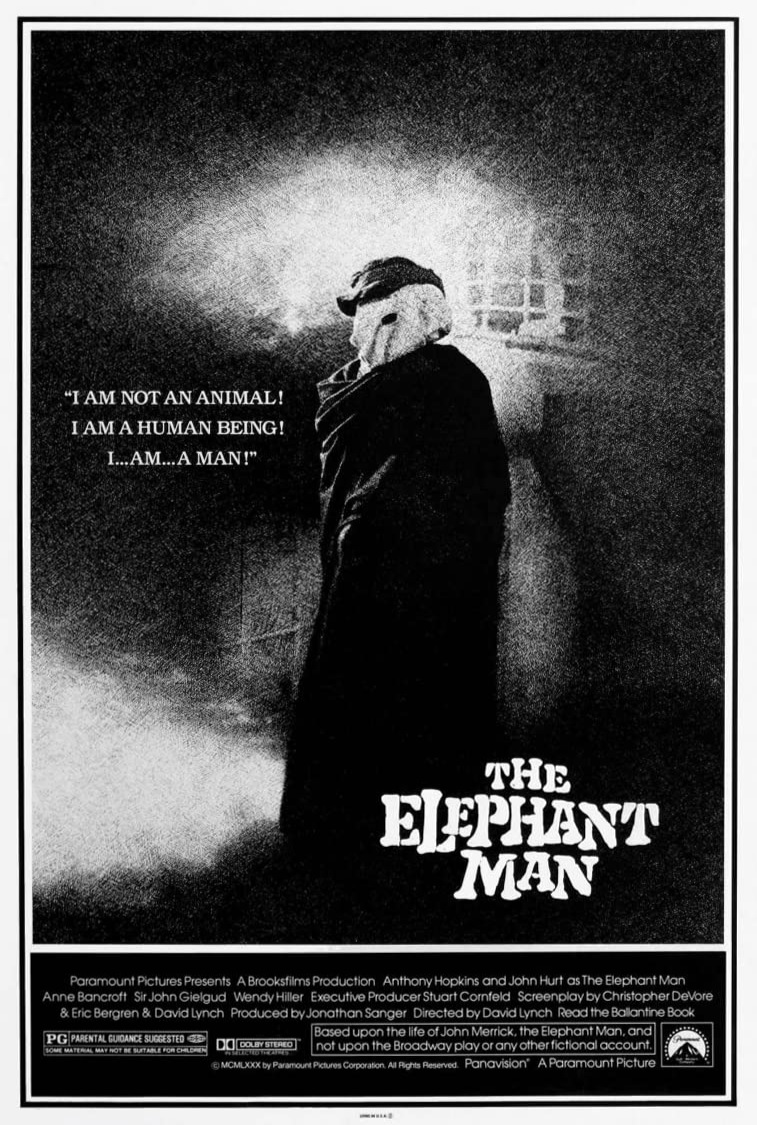
In 1980, David Lynch made a movie called ‘The Elephant Man’. It was based on the life of a man named Joseph Merrick (though in the movie he is called John) who lived mostly in England in the late 1800s. Merrick suffered from a rare genetic disorder called Proteus Syndrome and died at the age of twenty-seven due to complications related to his condition.
In Lynch’s movie – perhaps his most conventional and accessible work – Merrick is played by John Hurt, and is portrayed as a kind, intelligent and generous man. But Merrick’s deformities were such that when he went out in public he often covered his misshapen head with a cloth sack lest he terrify people. Lockwood invites the reader to remember Joseph Merrick and Lynch’s movie as a shorthand for Proteus Syndrome.
US states are unequal in their laws governing women’s health and reproductive choices. Some differ in the number of weeks beyond which a pregnancy cannot be terminated. In the novel’s second half we learn that the narrator’s sister is pregnant. Then we understand that the foetus is deformed, but alive. Abortion is contemplated, then dismissed, the sister deciding to see the pregnancy to term, despite knowing that the child’s chances for survival are limited and that its life will be difficult.
Our narrator, who previously feared she was being subsumed by the portal and losing herself to this parallel screen-mediated world, finds that the imminent and subsequent arrival of her sister’s baby – a girl – makes more visceral and immediate the incarnate world from which she was finding herself increasingly absent.
Real life is real, she realises, almost skeptical of how she could have allowed herself to drift so far off the shores of the physically bound realm that kept on stubbornly existing, regardless of whether she chose to participate in it or not.
The rest of the novel concerns the baby and the narrator’s relationship to her niece. The baby is even more cut off from the world than the narrator previously was, yet in her limited way the baby interacts with it fully, and engages and holds the narrator’s attention in a way that the portal never could.
Through the tragedy of the baby’s deformity she reconciles herself with life – the offline version – engaging with it in a way she had forgotten, or had perhaps never known. By focusing outside herself and the world of the portal she is redeemed, in her own eyes at least, which is ultimately where it counts most.
‘No One Is Talking About This’ is not an easy read. The first part may be particularly challenging, and while a reader already immersed in the portal might find it easier there are likely to be references and in-jokes that are too specific to mean much.
Like a trapeze artist Lockwood pulls off something of a high-flying balancing act (though there are moments where it looks like she might not) and the reader may issue gasps of admiration or surprise at the technical dexterity and artistic daring of her prose.
The second part is a much more conventional read and helps make more sense of the first. A stimulating debut novel. - The Vibes, April 11, 2021