MALAYSIAN comedian Harith Iskander has weighed in on the growing backlash against a group of Malaysian tourists accused of mocking locals overseas, saying the incident reflects a deeper shift in how people perceive shame and validation in the age of social media.
In a strongly worded response, Harith said he came across a video showing several Malaysians abroad making jokes—loudly in Malay—about people around them, seemingly assuming they would not be understood, before uploading the footage online.
He noted that the act of recording and sharing such content suggested a conscious decision.
“It means they watched the video back and still thought, ‘yes, this is the best version of myself,’” he said, pointing to what he described as a worrying lack of self-awareness.
Drawing from his own upbringing, Harith said moments of immaturity and poor judgment were not uncommon in the past—but were typically accompanied by embarrassment.
“We all had our foolish moments growing up. The biggest fear back then was that no one would find out,” he said.
“Now, people are doing the opposite—recording it, uploading it, and waiting for likes.”
Harith questioned whether social media has fundamentally altered society’s relationship with shame.
Where people once hoped their mistakes would go unnoticed, he said, there now appears to be a desire for even the worst moments to gain attention and go viral.
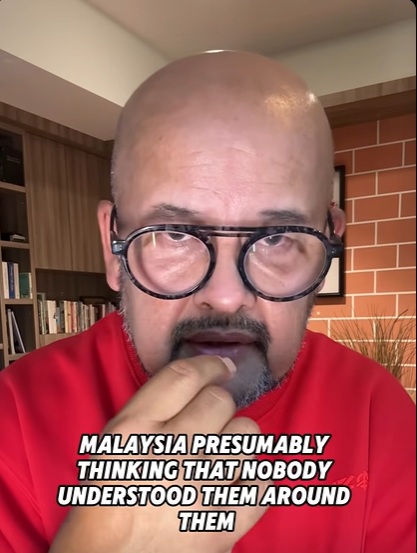
He also raised concerns about what individuals expect to gain from such behaviour.
“Do they think people will agree? Applaud them? That others will say, ‘wow, how brave to insult strangers in a foreign country?’” he asked.
The comedian suggested that some may be trapped in echo chambers, mistaking the laughter of close friends as broader societal approval.
“Perhaps they’ve lived too long within their own circles, where laughter from friends is mistaken for endorsement,” he added.
However, Harith stressed that the issue goes beyond isolated acts of bad behaviour. Instead, he pointed to what he sees as an increasing obsession with visibility and validation online.
“We’ve become so obsessed with being seen that we forget to ask whether what we’re showing is even worth showing,” he said.
He ended with a stark reflection on the cost of that obsession: “And perhaps the more frightening question is—how many likes does it take before the worst moment of our lives becomes our identity?” – June 17, 2026
See the video here https://www.facebook.com/reel/1065116406053901