
WHAT is pivotal to any humanitarian aid mission?
Most would agree that it is about mapping out strategies to reduce the impact of crises on communities, helping recovery and improving preparedness of those severely affected by conflicts, disasters and poverty.
These are considered the functional aspects that tackle issues head on, but the action of chronicling an interpretation of events is indeed equally important as it helps to inform and shape history.
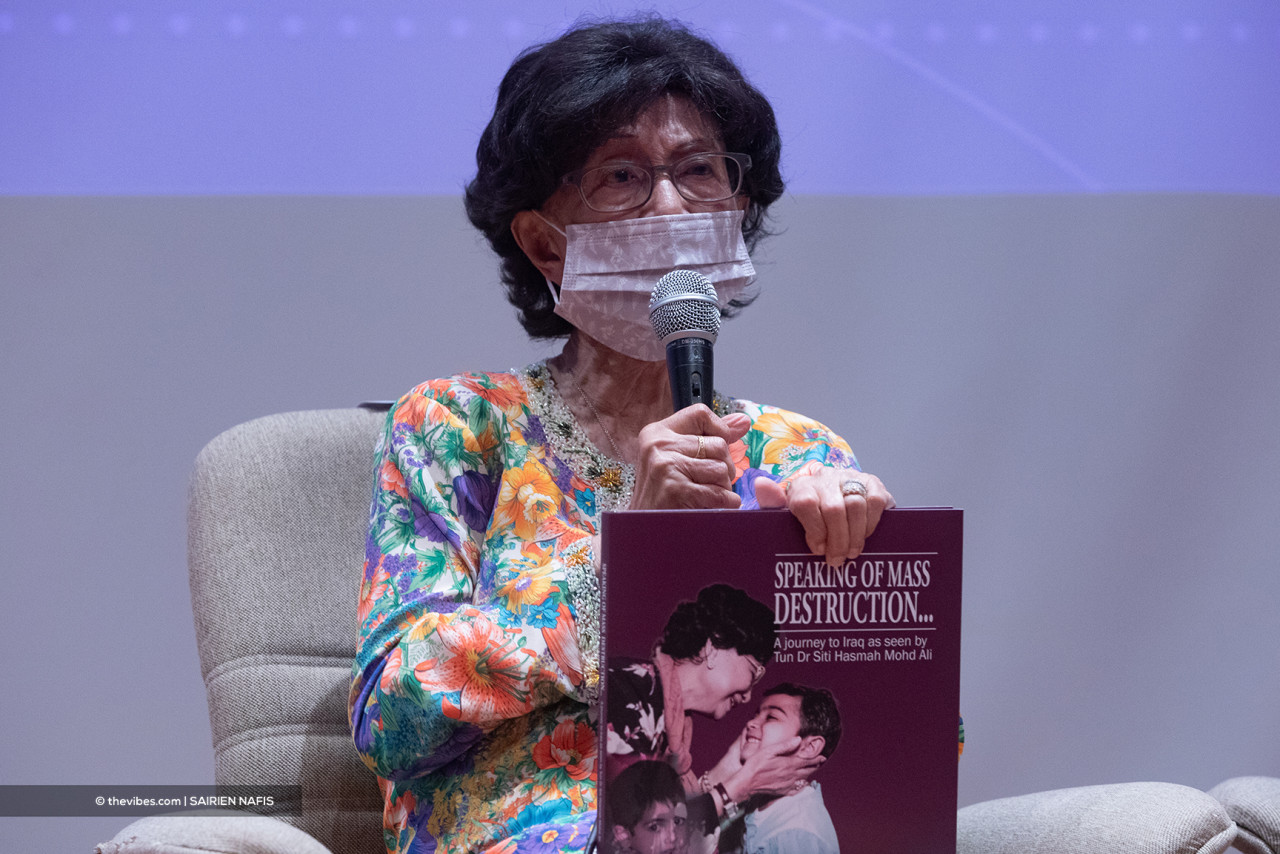
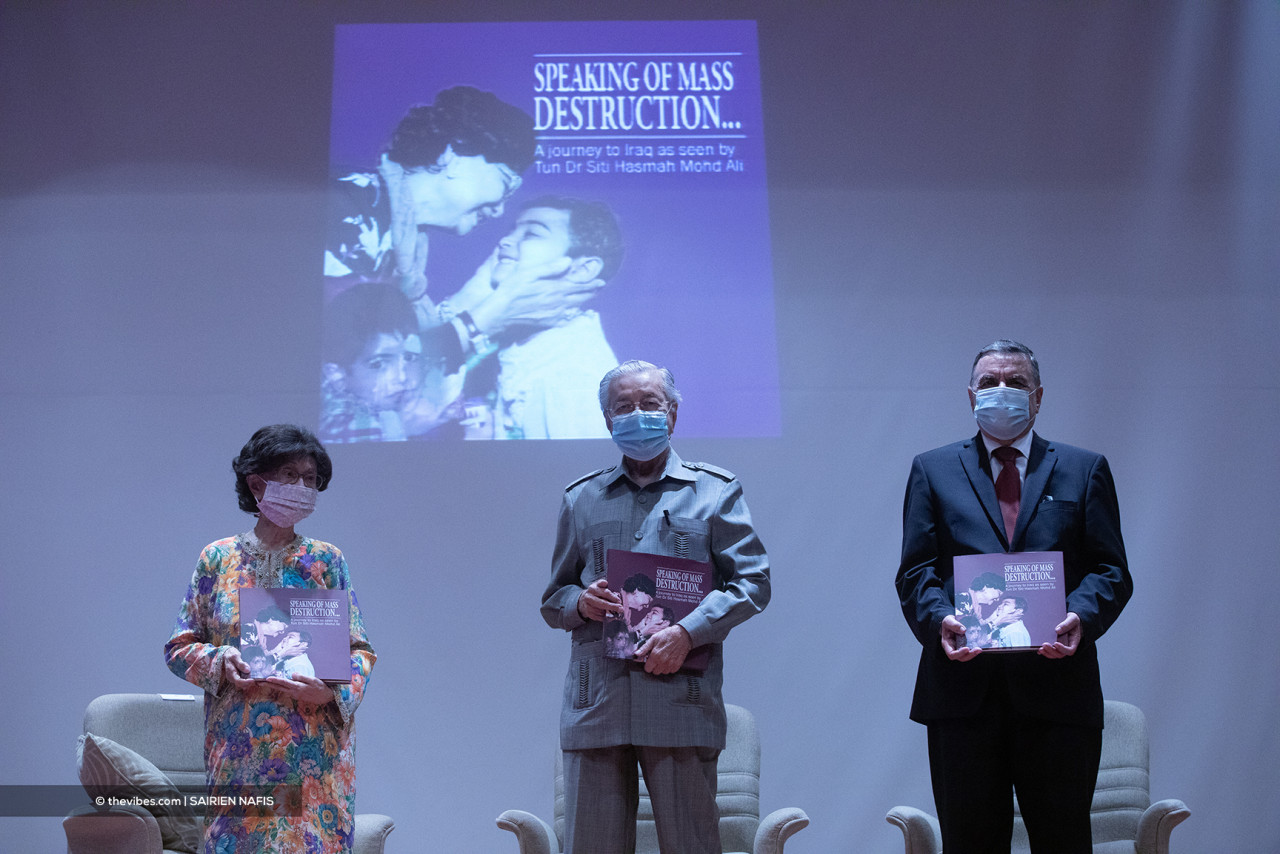
The recently released ‘Speaking of Mass Destruction... A Journey to Iraq as seen by Tun Dr Siti Hasmah Mohd Ali’ represents the extent of how crucial humanitarian assistance is and the need to recapitulate the narrative of those suffering.
“It is also to remind and send a clear message to the big powers (of the world) that they can't bully small nations for selfish gains,” said Dr Siti Hasmah in a private conference just after the launch event of her 170-page coffee table book at Perdana Leadership Foundation, Putrajaya.
She was joined by book editor and former journalist Aishah Ali, who was part of the group of a delegation that went with her to Iraq in 2000.
Iraq suffered the devastating toll of comprehensive economic sanctions, which began 10 years earlier on August 6, 1990, after its invasion by a United Nations approved coalition that was led by the United States. The visit was meant to report the horrific effects of war in Iraq back to the cabinet, which was then led by Dr Siti Hasmah’s husband, former Prime Minister Tun Dr Mahathir Mohamad.
Finally, President Saddam
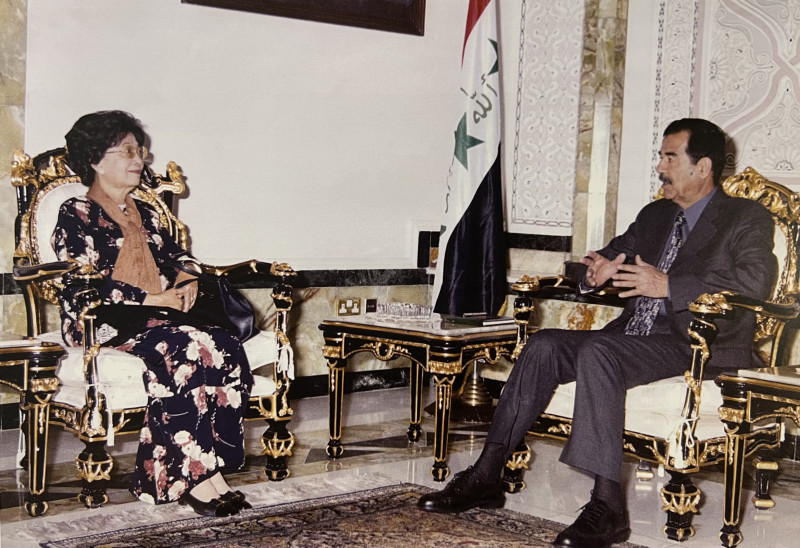
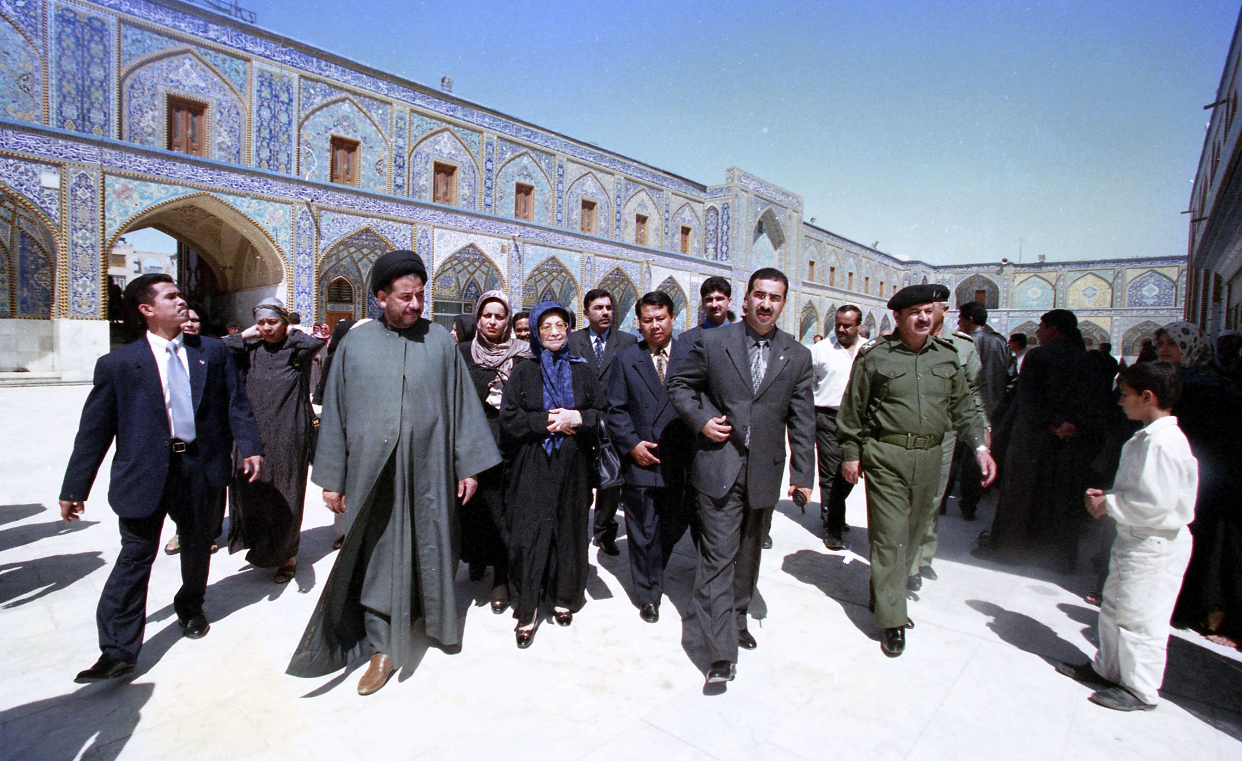
Most would already know by now that this visit was a momentous one, particularly when Dr Siti Hasmah was invited to meet Saddam Hussein, the then president of Iraq.
This event was so impromptu that even the head of her security team was not alerted until she was quietly escorted to be driven off to meet the world’s most controversial politician by herself.
“That was one of my best experiences and a privilege during the visit,” she said.
“Prior to the trip, Tun (Dr) Mahathir actually told me to not pay him a visit unless Saddam himself invited me and that is what happened. I was the only one that was able to see him in person, the rest of the delegates could not.
“I remember walking into the hall where Saddam was, together with translators. I approached him and he took my hand and shook it.
“He immediately thanked myself, Tun Mahathir and Malaysia for making that visit and supporting his request for the sanction on his country to be lifted,” added Dr Siti Hasmah.
According to her, irrespective of how Saddam was portrayed to the eyes of the world by western powers, his aura, or mystique, is of nothing but a grandfather.
“The dictator aspect and all other controversial elements that he carried with his name were not present," she said.
Details of Tun Siti Hasmah’s surprise meeting with Saddam are all documented in her latest book, from the sudden arrangement to the car ride and the subsequent engagement.
In it, she wrote: ‘I didn’t realise then that the farewell gesture was probably the last he would exchange with anyone from this part of the world...'
“We hear stories of Iraq then of course, from the news that we get in the media but fast forward to today, has there been any improvement or peace after they got rid of Saddam? It is sad to think about the consequences that have happened in Iraq,” she disclosed.
“The suffering of the people because of the sanctions, especially children, never left me even after 21 years.
“This is why having this book made available to all is important so that it would hopefully be a lesson, more so to Muslim leaders to fight a single cause – the cruelty and injustice against humanity,” added the wife to Malaysia’s fourth and seventh prime minister.
Era of destruction and a bitter pill to swallow
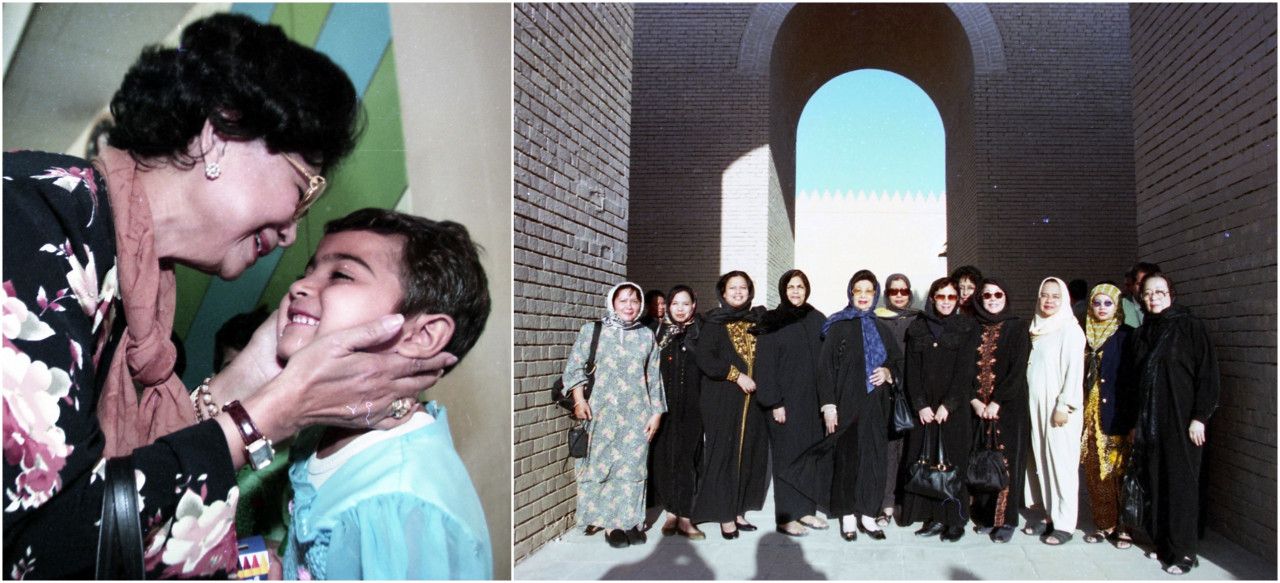
Dr Siti Hasmah highlighted that she and her delegation were very lucky to have been able to go to the hospitals, orphanages, old folks homes and schools to see the effects of the sanctions.
They even met with people on the ground, either assisting or receiving aid, despite the short three-day visit – doctors, mothers, patients and children, even UN officers who had to deal with the ordeal of the sanctions.
“We caught one UN officer on his last day, who told us that he was leaving because he could not stand the emotional distress of seeing the ongoing atrocity.
“He had served in Iraq one year already, his predecessor left after one year as well, and he was with the understanding that the sanctions were condoning, in his own words, a genocide.”
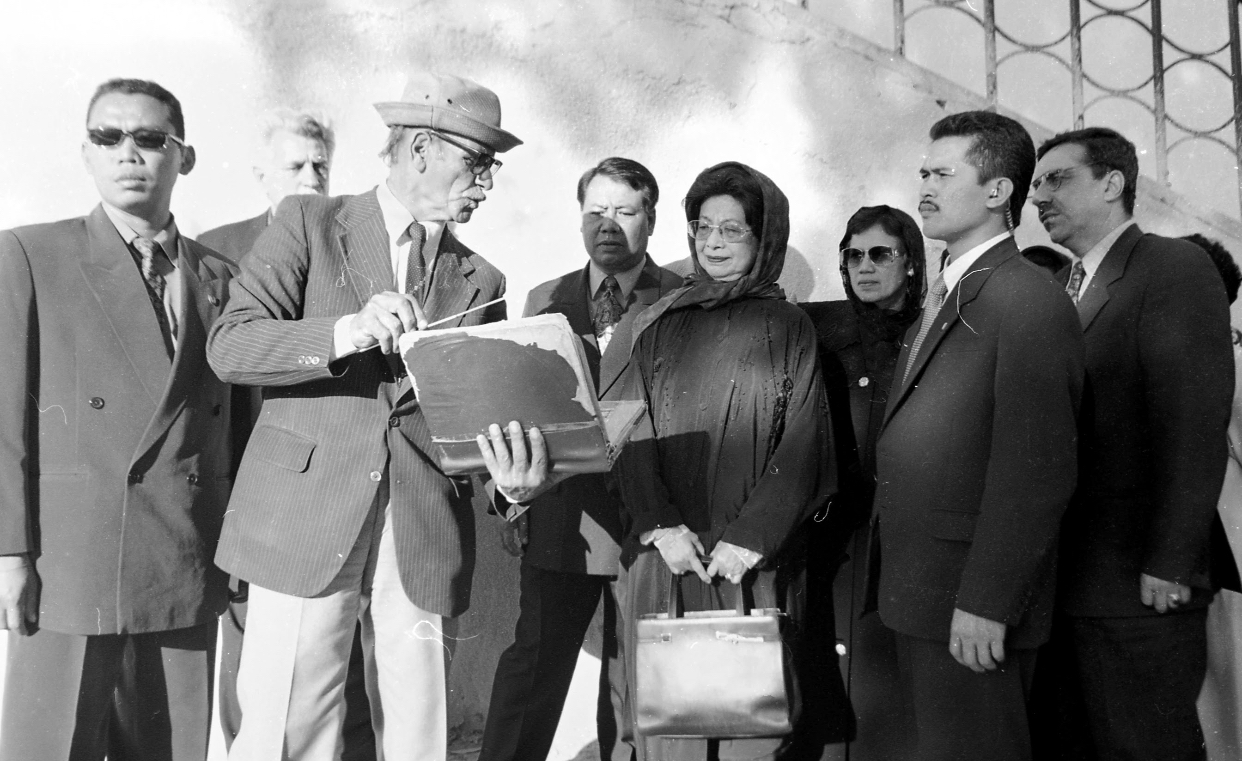
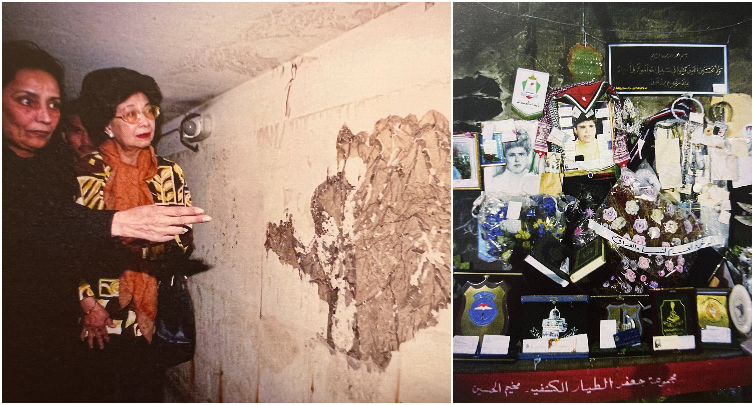
Another meeting that left a lasting memory, even after decades, was when the group met a lady who was in charge of an anti-nuclear air-raid shelter that was built for Saddam in Baghdad.
“This shelter was used by the public (men, women and children) to take refuge in the evenings, especially at night to sleep, and by morning, they would go about their day-to-day lives,” said Dr Siti Hasmah.
“It was built with multiple levels, including a basement, which was filled with boilers – to heat the shelter.
“We went to visit it because the US military deployed missiles into the chimney of the shelter thinking that Saddam was there,” she noted.
“The first explosion managed to burst the doors open and some were thrown out, in some ways saved a few lives. However, there was a second missile that went straight to the bottom of the shelter (basement) and blew up.
“It was very sad to see childrens’ palm prints imprinted on the walls of the shelter, some with visible human skin of the victims of who got caught in the explosion, and the boiling hot water that was in the basement,” she detailed.
“We were able to see this because there was a mother with three children who had put her children in the shelter for the night of the violent act. At the time she went out to wash clothes, and that was when the explosion happened. She survived but her children all died.
“You really can't imagine such atrocities could happen but it did,” stressed Dr Siti Hasmah.
“I think the closest I felt was more like ‘shock’ when Tun Mahathir asked me to bring a group of women along with me to Iraq for the mission.
“If your husband asks you for a favour, what else could you do?” she quipped when asked whether she had experienced any fear.
“But in seriousness, I was not scared at all. I was in my mid-70s, my eyes were still bright and I was healthy.
“I remembered my frame of mind at the time and that is if people dare to harm me, I would give them a good boxing,” she added, cracking a smile making the room around her laugh.
.jpg)
Iraq’s lifeline
The delegation who followed Dr Siti Hasmah was comprised of Toh Puan Dr Aishah Ong, Datin Noorhayati Kamaluddin, Datin Dr Mizan Adilian Ahmad Ibrahim, the late Datin Siti Aishah Ghazali, Datuk Dr Raj Karim, Datin Dr Sharifah Hapsah Syed Hasan Shabudin, the late Datuk Ruby Lee, Datin Dr Rashidah Shuib, the late Dr Cynthia Gladys Lopez, Aishah Ali and Ham Abu Bakar.
Aishah clarified that the mission, which was given a state visit status by the government of Iraq, was under the then prime minister’s request.
“The sanctions had happened for 10 years and millions of Iraqis had died, half of them were children.
“Western reports were always inclined to a certain bias, so Tun (Dr) Mahathir had asked Tun (Dr) Siti Hasmah to go with a group of us women because it would be misconstrued if he were to visit instead,” she said.
“When you asked about fear, we were genuinely not aware of the trip being quite dangerous even if we were in Iraq for a handful of days.
“Before Tun (Dr) Siti Hasmah made the humanitarian trip, the groups that went were mostly charity bodies, church groups etc. Basically, good samaritans who were keen on assisting to alleviate the conditions there,” noted Aishah.
“I believe we only knew of the risk, being the first government-level trip, the day we arrived back home because Madeleine Albright, who was the former United States Secretary of State had expressed publicly (when we were on the mission) that our trip with Dr Siti Hasmah was uncalled for.
“That said, we were heavily escorted everywhere we went by Iraqi security. We had up to 10 cars with four riders being assigned to each. Our visits were also well covered by the Iraqi national TV, which had us on the news each night we were there,” she added.
Aishah highlighted that the book looks at the sanctions' effects on health, education, infrastructure (sanitation) which caused diseases and negatively affected Iraqis' lifestyle (deteriorating living conditions).
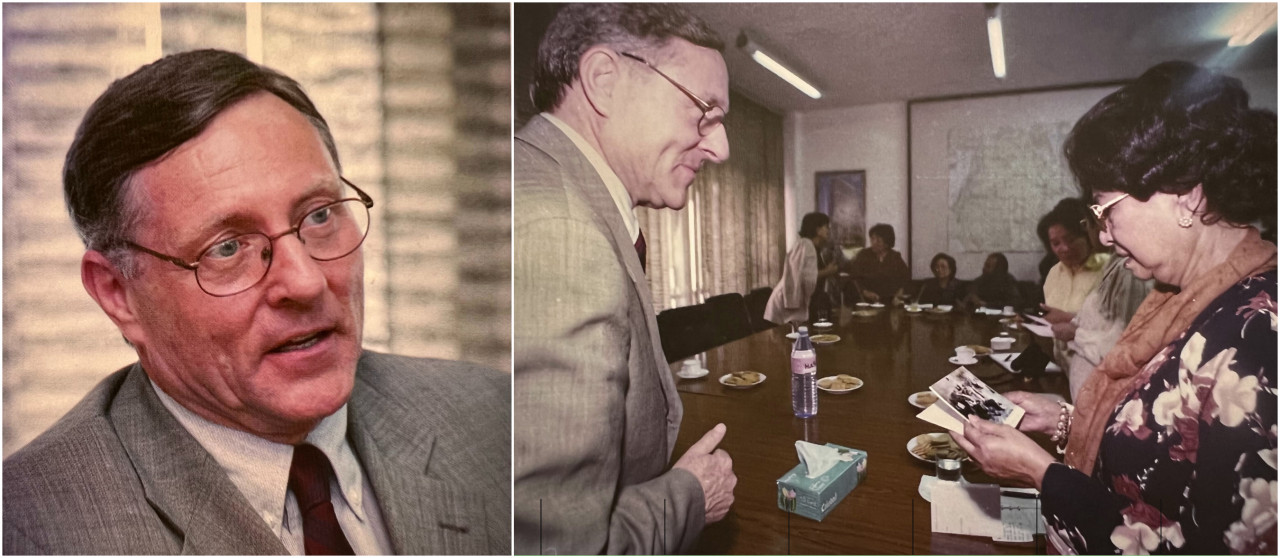
She also noted the project was an extension of the initial summary that was shared to the cabinet back in the early 2000s, “... but with further research and comprehensive accounts including from the delegations present during the mission”.
“Tun (Dr) Siti was such an inspiring leader that during the three days her focus was locked on the mission.
“I remember that on the last day of our trip, we had the opportunity to visit the Hanging Gardens of Babylon, and of course seeing that it was part of the seven wonders of the world the group was naturally excited.
“Tun (Dr) Siti however declined and stressed that we are here to work and not to see places. But when she saw how we had to control our faces, she then asked if there was a hospital nearby,” she shared.
“Visits to the hospitals were definitely among the highlights and this was because the sanctions also affected access to medicine.
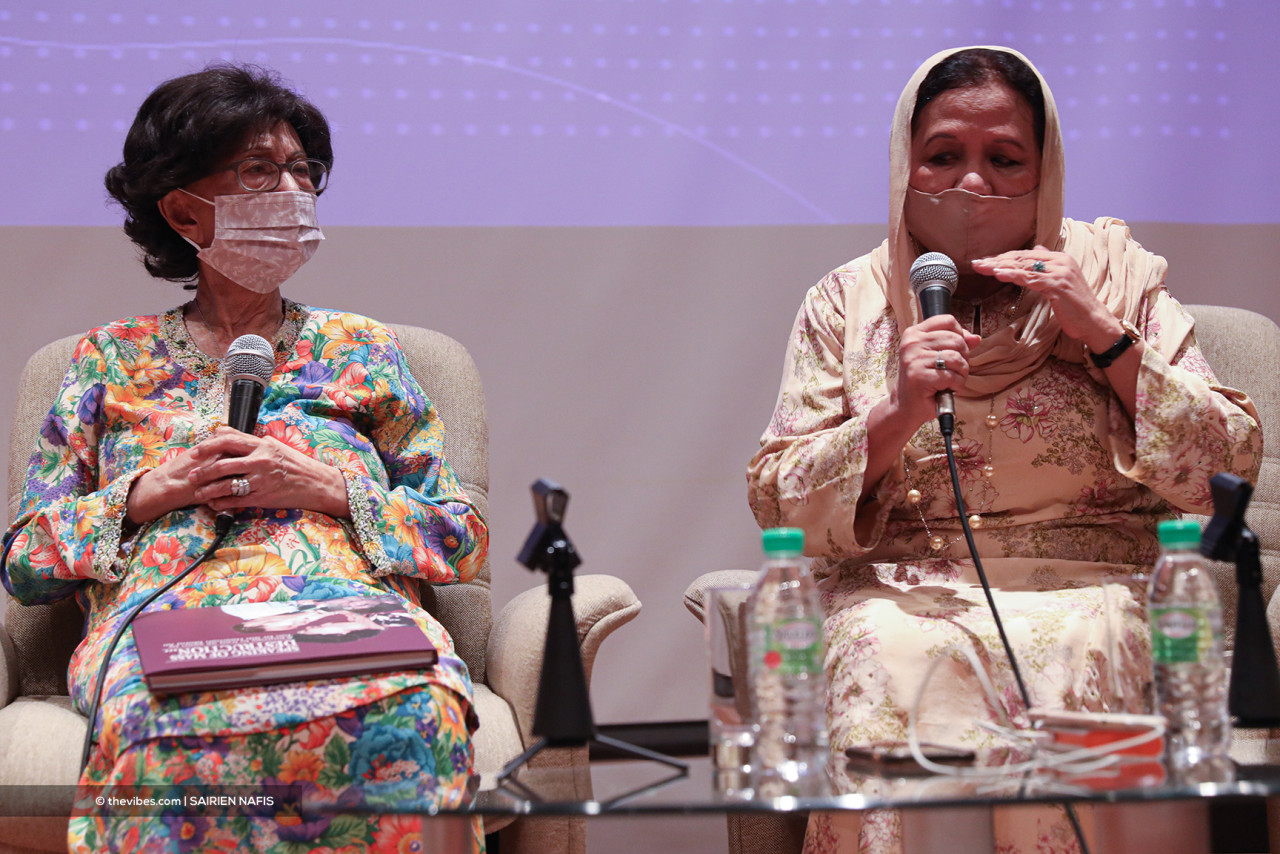
“Tun (Dr) Siti managed to bring the needed supplies travelling on a private jet, and at every hospital, we visited, we gave boxes of medicine, mostly antibiotics,” noted Aishah, adding that she found out during interviews with locals that leukaemia was greatly responsible for the death rate among children.
“At the hospital near the hanging garden, the doctor was so happy with the surprise as though Dr Siti Hasmah had given gold.
“I remember the doctor telling us that the children are going to live because it was the (third-generation) latest antibiotics for treatments at the time,” said Aishah, noting how dire conditions were for Iraqis.
“The young can’t even live normally, they can’t get married because they are poor, elderlies not able to go to hajj, Iraqis, in general, are completely impaired.
“All I know was that being there at the time, we just had to give everything we could to help them,” remarked Dr Siti Hasmah, ending the interview. – The Vibes, December 5, 2021
*‘Speaking of Mass Destruction... A Journey to Iraq as seen by Tun Dr Siti Hasmah Mohd Ali’ features photographs of the pain of Iraqis whom Dr Siti Hasmah and her delegation was fortunate to meet and speak with 21 years ago, gaining insights on the harshness of the sanctions implemented from 1990 up to the US-led invation of Iraq in 2003. The book retails at RM120 and proceeds go to charity organisations protecting children in conflict countries. For enquiries, contact Aishah Ali at [email protected] or call at 012-3163378.