WHILE disputes over song plagiarism are certainly nothing new, they were usually settled behind the scenes. But things have changed in the age of social media and streaming platforms, and accusations of plagiarism and the resulting lawsuits have multiplied in recent years.
This phenomenon doesn't seem to spare anyone. Just take Dua Lipa. The British singer has recently been threatened with two high-profile and costly lawsuits over her song Levitating. Songwriters L. Russell Brown and Sandy Linzer are accusing her of plagiarising two of their songs, Wiggle and Giggle All Night and Don Diablo. They claim that the opening melody of Levitating is a 'duplicate' of the melody of their own compositions. This part of the song is particularly important, because it has contributed to the track's viral success on TikTok, as stated in the official complaint of L. Russell Brown and Sandy Linzer, seen by Billboard.
The plaintiffs claim that Dua Lipa has admitted in the past to having "deliberately emulated prior eras" to create the retro sound she has been known for since her second album, Future Nostalgia. DaBaby, who appears on Levitating, and the Warner Music Group are also named in the lawsuit filed by L. Russell Brown and Sandy Linzer.
The two songwriters are not the only ones to claim damages from Dua Lipa over her hit song, Levitating. American reggae band Artikal Sound System has also filed a lawsuit against the 26-year-old singer. It accuses her of copying the band's 2017 track, Live Your Life, on her own song. The two songs are said to be so similar that it's "highly unlikely that 'Levitating' was created independently," according to Artikal Sound System. Warner Music Group, DaBaby and everyone else involved in the creation of Dua Lipa's hit are, likewise, named in the group's lawsuit.
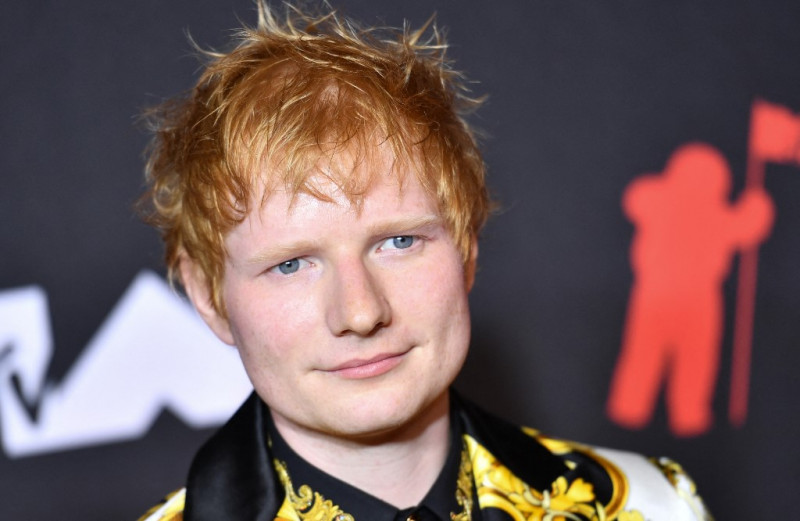
In an age where thousands of new songs are released every year, there are many similarities between tracks. But many cases of blatant similarity don't always end up in court... except in the case of Ed Sheeran. The English musician is in trouble over the copyright of his most-listened-to song, Shape of You. Sami Switch and Ross O'Donoghue say they noticed similarities between their 2015 track Oh Why and Ed Sheeran's hit.
Artificial intelligence to the rescue
This isn't the first time that the English singer has been accused of plagiarism. He was sued for similar reasons in 2016 for his song Photograph, and two years later for Thinking Out Loud. He thus joins a long list of artists involved in plagiarism cases, including Katy Perry, Led Zeppelin, Robin Thicke and Pharrell Williams. Faced with the scale of the phenomenon, the giants of the music industry are turning to artificial intelligence to help accurately determine when a tribute turns into a pallid copy. In recent months, Spotify has been working on an algorithm that could allow musicians to find out if their latest compositions have harmonic similarities with other existing songs.
This invention would scrutinise scores with rhythmic and melodic markers, in order to detect if they include elements of other songs hosted on the Spotify platform. The algorithm would thus alert the songwriter if their track is at risk of being sued for plagiarism. A link to the song resembling the creation analysed by the artificial intelligence system, could also be included to facilitate any rewriting work.
But would a plagiarism detector be enough to curb this scourge of pop music? Not necessarily. In fact, Damien Riehl and Noah Rubin developed in 2020 an algorithm exploring all possible melodic combinations across one octave and 12 beats. That's 68.7 billion pop-sounding melodies. Once recorded on a physical medium, such as a hard disk, these sequences of notes are considered protected by copyright.
In order to protect artists who might unknowingly compose a tune similar to one of these 68.7 billion melodies, Damien Riehl and Noah Rubin have posted them on the Internet Archive website, along with the code of the algorithm that composed them. They also used a Creative Commons Zero license, by which they waive their copyright. This will save many artists from long lawsuits, potentially with millions of dollars in damages. – ETX Daily Up, March 9, 2022