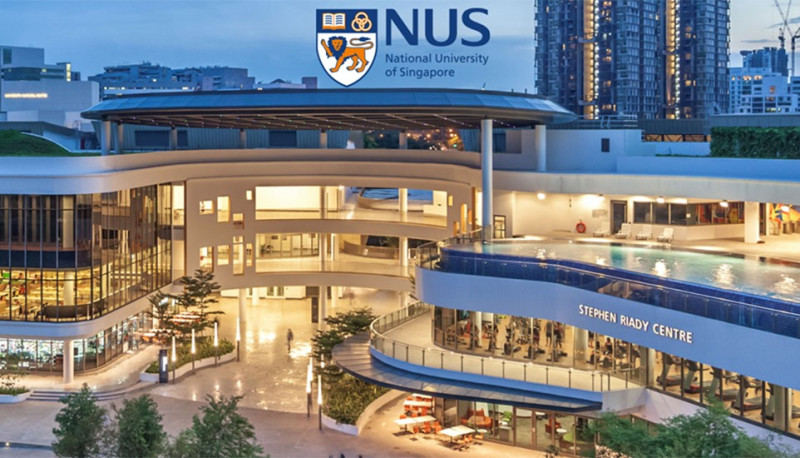
THE National University of Singapore (NUS) will require all undergraduates to complete at least two compulsory artificial intelligence courses before graduation from the August intake, as the university moves to make AI literacy a core part of every discipline.
Under its new AI strategy announced on Aug 11, all incoming students will take a compulsory introductory module, “Applied Generative AI: From Prompting to Evaluation”, while AI-related courses will also be incorporated into common curricula and individual majors.
The Straits Times, on Tuesday, reported NUS provost Aaron Thean saying the initiative was designed to ensure graduates could use AI effectively without losing the human capabilities needed to make sound decisions.
“The core business of a university is really to develop the human, not to develop the AI,” he said.
Thean said the aim was for all NUS students to become “AI fluent” by graduation, while a smaller group with deeper interest would develop advanced expertise in the field.
NUS has about 29,600 undergraduates across 15 colleges, faculties and schools.
Students from the College of Humanities and Sciences, College of Design and Engineering, Business School and Healthcare Professional Education will take compulsory AI-related courses as part of their common curriculum. Together, they account for more than 85 per cent of the university’s undergraduate population.
Business students, for instance, will take Decision Analytics using Spreadsheets and AI, while political science majors will study Artificial Intelligence and Public Policy.
Every major across NUS will also introduce at least one compulsory course examining how AI is transforming the relevant profession.
Students seeking deeper expertise will be able to pursue new minors or second majors in applied AI fields, including a Bachelor of Science in Geospatial Intelligence and a second major or minor in Applied AI under Design and Engineering, both starting in August.
NUS is also expanding access to AI tools. From Aug 31, all students, faculty and staff will receive baseline access to ChatGPT Edu, a university-controlled version of ChatGPT offering higher usage limits and enhanced privacy compared with the free version.
More advanced AI tools will also be piloted in selected courses requiring deeper use of the technology, including computing, as part of NUS’ collaboration with OpenAI.
The university is developing seven in-house AI tools for teaching, including a scenario generator that allows students to practise through AI-powered simulations and a Socratic coach that guides students through questions rather than simply providing answers.
Other tools under development will help instructors identify learning gaps and monitor class participation, while students will be able to use AI-assisted research tools designed to challenge them to identify weaknesses in AI-generated responses.
“Our AI strategy is centered around one thing, which is to build up human potential,” Thean said.
The strategy follows a similar move by Nanyang Technological University, which announced in April that AI literacy lessons would become compulsory for all students from August through a mandatory first-year course.
At NUS, the use of AI is already being incorporated into professional training, including nursing education.
Fourth-year nursing student Nicholas Lau, 29, said AI-powered simulations had helped prepare him for high-pressure clinical situations by requiring him to assess patients, make decisions and explain his reasoning as their conditions changed.
The simulations form part of a five-stage training programme that progresses from basic clinical skills and actor-based patient scenarios to AI simulations, virtual reality exercises and team-based assessments.
Lau said the experience had strengthened his confidence during clinical attachments by teaching him to remain calm, reason through unfamiliar symptoms and make decisions under time pressure. -August 11, 2026