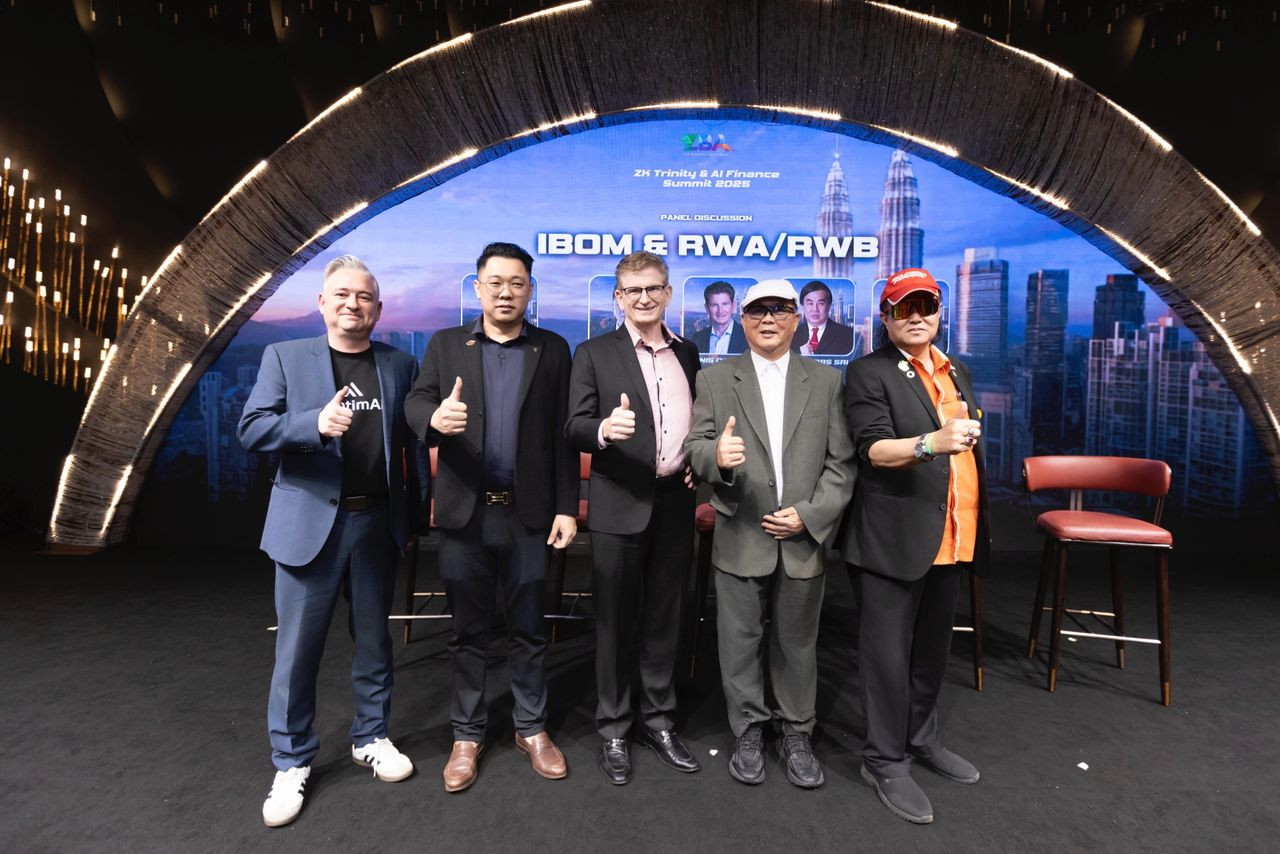
INFRASTRCUTURE builders, exchange architects, AI practitioners, and ecosystem operators came together recently at the ZK Trinity & AI Finance Summit 2025.
Held in Kuala Lumpur, the summit was aimed at examining how zero-knowledge technology and AI systems are reshaping the foundations of decentralised finance and real-world digital markets.
The summit also focused on system design choices, engineering trade-offs, and the operational realities behind deploying scalable, verifiable infrastructure at production scale.
The event was hosted by ZBA, powered by Caht.io, and co-hosted by CahtX, International Blockchain Organisation Malaysia (IBOM), and BRE3, with Hello Blockchain supporting the initiative as the Exclusive Event Partner.
According to IBOM founder, Ivan Lim a central theme throughout the summit was the transition of zero-knowledge proofs from experimental cryptographic tools into foundational infrastructure components.

Speakers explored how ZK systems are increasingly being used to verify execution without revealing sensitive data, enable non-custodial architectures without sacrificing performance and support order-book–based market structures previously limited to centralized systems.
“These systems are also used to provide cryptographic guarantees suitable for institutional participation,” he said.
Discussions emphasized that the next phase of ZK adoption will be defined not by novelty, but by latency, throughput, fault tolerance, and auditability under real-world load.
Several sessions addressed the limitations of earlier decentralized exchange architectures and what those limitations reveal about system design at scale.
One such perspective came from Sameep Singhania, a system builder with experience operating decentralized markets that have processed over US$200 billion in cumulative trading volume.
“Operating these systems exposed structural trade-offs between performance, custody, and trust, particularly as user demand and institutional interest increased,” said Lim.
Beyond cryptographic infrastructure, the summit also examined how AI-driven systems are moving from experimentation into daily operational use across financial and organizational workflows.
The consensus was that AI adoption is increasingly judged by reliability and integration, not theoretical capability.
According to Lim, the summit concluded with a shared outlook that the next 12–24 months will determine which zero-knowledge and AI systems transition from innovation to core digital infrastructure.
“As these technologies mature, their success will be measured less by narrative and more by system resilience, performance under load, and real-world utility,” he added. – December 20, 2025