MALAYSIA is moving beyond international health diplomacy and into a decisive phase of implementation, with the government focused on converting global commitments into measurable improvements for patients and communities across the country, Health Minister Datuk Seri Dr Dzulkefly Ahmad has said.
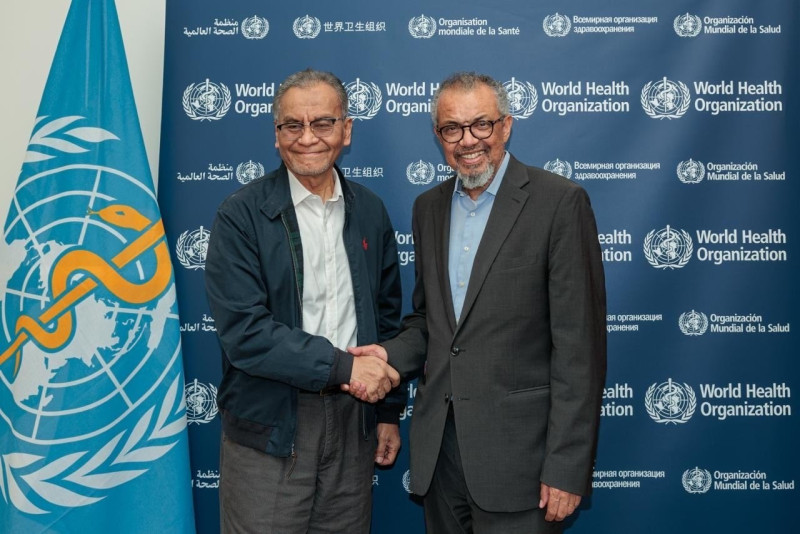
Reflecting on Malaysia’s participation at the 79th World Health Assembly in Geneva, Dr Dzulkefly said the country's objective was no longer merely to shape global health policy, but to ensure that international resolutions translate into practical benefits for ordinary Malaysians, from urban health clinics to remote communities in East Malaysia.
The minister said Malaysia’s healthcare diplomacy over the past several years has steadily elevated the country's standing on the international stage, enabling it to influence policy discussions while positioning itself as a contributor to global health solutions.
He noted that Malaysia's growing reputation was reinforced when the World Health Organization recognised the MySejahtera platform as an international reference model for pandemic management and digital health governance.
That recognition, he said, marked a significant transition for Malaysia from a policy recipient to an active participant in shaping the future of global digital healthcare.
Building on that momentum, Malaysia strengthened its influence further through its leadership role in ASEAN and its successful sponsorship of the world's first Integrated Lung Health Resolution during the previous World Health Assembly.
The resolution promotes coordinated action against asthma, chronic obstructive pulmonary disease (COPD) and lung cancer, diseases that continue to place growing pressure on healthcare systems worldwide.
Dr Dzulkefly said Malaysia is now concentrating on ensuring that such global achievements are translated into concrete healthcare improvements at the national level.
A key element of that strategy has been the use of bilateral diplomacy to secure practical collaborations that can deliver immediate benefits.
Over the past two years, Malaysia has expanded cooperation with Indonesia on genomic mapping, enhanced digital health surveillance partnerships with Oman and created opportunities for Malaysian specialists to train healthcare professionals in the Maldives.
Regional discussions on pooled procurement of medicines, initially pursued with Brunei, have also evolved into a wider ASEAN agenda aimed at improving access to essential treatments.
This year, Malaysia used meetings in Geneva to pursue more targeted objectives. Discussions with Spain focused on studying one of the world's most successful organ donation and transplantation systems, with the aim of adapting best practices to increase Malaysia's still relatively low organ donation rates.
Meanwhile, talks with Singapore, Vietnam and Bangladesh centred on building a stronger regional health security framework through improved data sharing and greater interoperability between digital health systems.
The minister, in a recent Facebook post, said such cooperation is essential to preparing the region for future cross-border disease threats while strengthening Malaysia's position as a leader in ASEAN health initiatives.
Malaysia also used the assembly to showcase its National Blueprint for Behavioural Sciences, a policy framework designed to apply behavioural insights to public health challenges.
The blueprint represents a shift away from traditional health promotion campaigns towards designing environments that make healthier choices easier and more accessible.
The approach forms the foundation of the ministry's "5S War" strategy targeting sugar consumption, smoking, excessive salt intake, stigma and sedentary lifestyles.
Dzulkefly argued that behavioural science should be viewed not only as a public health tool but also as a fiscal strategy capable of reducing the long-term burden of non-communicable diseases and protecting public healthcare spending from escalating treatment costs.
He said the ministry's ultimate objective is to function as a true "Ministry of Wellness", measuring success through improved health outcomes rather than the volume of treatment delivered.
Malaysia's growing international influence was also evident in the field of integrated eye health, where the country's cataract surgery programmes and nationwide outreach services have been recognised as global benchmarks.
During the assembly, Malaysia co-hosted a Global Eye Health Summit alongside Nigeria and Antigua, reinforcing its position as an emerging international reference point in ophthalmology and vision care.
Another major breakthrough involved regional efforts to improve treatment access for patients with rare diseases. Malaysia's advocacy contributed to the ASEAN Declaration on Rare Diseases, which aims to facilitate joint medicine procurement and greater sharing of diagnostic expertise across member states.
The initiative is expected to reduce costs and improve access to life-saving therapies for patients and families who have long struggled with the financial burden associated with rare disease treatment.
Malaysia's healthcare model has also attracted international recognition through the Medicines Patent Pool, which selected the country as a global case study for its management of HIV treatment programmes and efforts to maintain affordable access to medicines despite the complexities of international patent regulations.
For Dzulkefly, these achievements reinforce a broader principle that healthcare should be regarded as a strategic investment in human capital rather than a financial burden.
Throughout its engagements in Geneva, Malaysia consistently promoted the concept of a "Health Economy for All", aimed at creating an inclusive, sustainable and future-ready healthcare system under the MADANI framework.
The minister stressed that healthcare reform remains a long-term undertaking requiring continuity, perseverance and political commitment.
He said Malaysia has already established itself as a leader in digital health, driven major international resolutions and is now entering the crucial phase of delivering those commitments on the ground.
Ultimately, he argued, the success of Malaysia's global health diplomacy will not be measured by the number of declarations adopted or meetings attended, but by whether patients and communities experience meaningful improvements in healthcare access, quality and outcomes.
"The true measure of success is whether these global mandates can be translated into real improvements for people in clinics and hospitals throughout the country.
"We began with resolutions; now it is time for action," he said. - May 30, 2026