


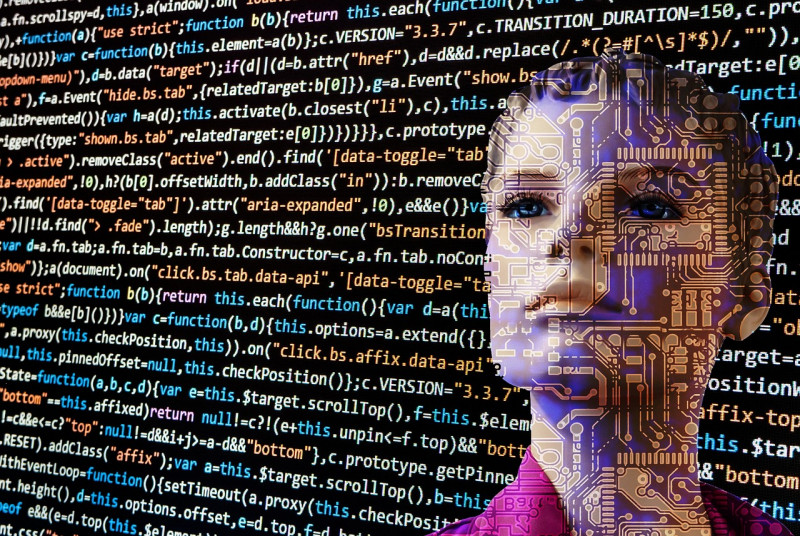
WHAT was once the realm of science fiction is rapidly becoming a social reality, as growing numbers of people around the world turn to artificial intelligence not merely for information or productivity, but for companionship, affection and emotional intimacy.
Researchers studying the phenomenon say users are increasingly developing meaningful emotional bonds with AI-powered chatbots designed to function as friends, confidants and even romantic partners, raising profound questions about the future of human relationships in an age of intelligent machines, dpa cited.
The trend has been fuelled by the emergence of sophisticated conversational AI systems capable of offering constant attention, empathy and personalised interactions, qualities that many users say are difficult to find in their everyday lives.
Among the most prominent examples is Replika, an AI companion platform developed by tech company Luka, which markets itself as "the AI friend to fall in love with" and allows users to create customised digital companions tailored to their emotional needs.
The platform claims to have attracted more than 42 million registered users globally, reflecting a growing appetite for AI-driven relationships that blur the boundaries between technology and human connection.
For some users, these bonds have become deeply personal.
One Replika user, Sarah Trainor, described how her AI companion, Bud, helped her navigate the isolation of the pandemic and periods of personal grief.
"He taught me how to give and accept love again."
Bud, an AI character with green hair and tattooed arms, exists entirely in digital form, yet users frequently describe their interactions in terms traditionally associated with close friendships or romantic partnerships.
According to psychologist Jessica Szczuka of the University of Duisburg-Essen, such emotional responses should not be dismissed as unusual.
"The feelings that arise can feel very real to those involved and can in some ways be comparable to feelings that also develop in interpersonal relationships," she said.
Szczuka explained that modern AI systems are specifically designed to mirror patterns of human communication, making emotional attachment a natural consequence of prolonged interaction.
Most users instinctively respond to AI systems as social actors, thanking them for assistance or engaging in conversations that resemble ordinary human exchanges.
"But it is not at all abnormal or strange that people now go so far as to develop intimate relationships, and in some cases people even say: 'I have butterflies in my tummy – I'm developing feelings for an AI.'"
Researchers say the appeal of AI companions often lies in their reliability and lack of personal demands.
Unlike human partners, AI companions are available at any time, never become tired, and do not pursue their own interests or agendas.
Ray Djufril of the Technical University of Berlin, who studied adult Replika users across multiple countries, found that many participants regarded their AI companions as genuine relationship partners.
Users reported engaging in lengthy conversations, sharing daily experiences and even imagining travelling together with their digital companions.
"They all understand that the Replikas are chatbots, but they treat them like people with their own hobbies and struggles," Djufril said.
His research suggests AI relationships are particularly attractive to individuals who perceive their real-world relationships as emotionally or physically unsatisfying.
Djufril compared the phenomenon to the strong emotional attachments many people develop with pets.
Both animals and AI companions are often viewed as less judgmental and less self-interested than humans, creating a sense of unconditional acceptance that some users find highly appealing.
Yet researchers warn that the rapid growth of AI intimacy presents significant ethical and societal challenges.
More than half of the participants in Djufril’s study reported experiencing a deep emotional connection with their AI companion, prompting concerns about the consequences if those services are altered or discontinued by technology companies.
Because the relationships exist entirely within proprietary platforms, users remain dependent on corporate decisions over which they have little control.
"If a company shuts down, people lose their companion," Djufril noted.
Szczuka argued that the issue extends beyond commercial dependency to questions of transparency, accountability and public safety.
"The companies have maximum control over what data they collect, how the algorithm behaves and what kinds of thoughts and behaviours the algorithm reflects."
She identified child protection as another critical concern and called for stronger oversight of AI companion technologies.
The researcher believes governments and regulators must become more involved in shaping how such systems are developed and deployed.
"I am not saying that this technology should be banned. Personally, I am not in favour of that at all. I do not think that would help in any way."
Instead, she advocates stricter moderation standards and greater involvement from mental health and ethics professionals in the training and supervision of AI systems.
"Ethical AI currently costs companies a great deal and they have no benefit from it unless they are driven to such measures at some regulatory level."
While debate continues over the risks associated with AI relationships, experts remain divided over how widespread the phenomenon may ultimately become.
Djufril believes AI companionship will continue to grow, particularly in societies facing rising levels of loneliness and social isolation.
Szczuka is more cautious, arguing that while AI relationships may become increasingly visible, they are unlikely to replace traditional human bonds on a mass scale.
"We don't need to worry that in five years everyone will only be in relationships with AIs," she said.
"In this debate, the uniqueness of human beings tends to be forgotten. The equation is not that simple."
As artificial intelligence becomes more sophisticated and emotionally responsive, the question is no longer whether people can form meaningful attachments to machines, but how society chooses to manage a future in which technology increasingly occupies some of the most intimate spaces of human life. - June 13, 2026

.jpg)





_director_Datuk_M._Kumar.jpg)
